
You are using an out of date browser. It may not display this or other websites correctly.
You should upgrade or use an alternative browser.
You should upgrade or use an alternative browser.
New British Army Rifle KS-1
- Thread starter Heym SR20
- Start date


LeftHandGuy
Well-Known Member
Not before time.Looks like we are finally dropping the bullpub ideal that we have pursued since the 1950s.
As the USA adopts the 277 fury we get another 5.56? Perhaps we have different enemys?
Mebbe' - AFAIK it's only the US Army who are adopting the 277 right now - and only their "tip of the spear" elements. The USMC I think is still equipping with the H&K 416. I am not aware of much appetite across NATO for replacing 5.56 en-masse - and there will be plenty of 5.56 being consumed by the various US armed services for plenty of years to come.
Buggadifino
Well-Known Member
Good points, well made.The L1a1 was turned to Imperial from metric by Enfield.
The L85 was designed in Enfield but is pretty much an AR18 cut up and turned into a Bullpup.
H&K upgraded/remanufactured them into the L85a2 standard. Which was mainly sorting out materials that had been made cheaply and a few other issues. But the overall design is sound if perhaps not ergonomic. It's a very simple stamped metal design that would be very easy to mass manufacture without requiring specialist tooling like forging. And easily supportable because you can easily/cheaply replace the receiver and TMH. It is now very reliable and highly accurate. It was also one of the first service rifles to be designed as a "flat top" rifle that could have various sights fitted as well as giving every infantryman a 4x scope years before anyone else did.
I would add that the L85 series of weapons give you a 20inch barrel for roughly the same overall length of the AR15 platform. This makes a real difference to the lethality of the 5.56mm round which drops rapidly below approx 720 m/s.
Also the highest through life cost of military small arms is the ammunition and I have been informed (by a lecturer at the Defence Academy - but don't have a reference) that the In service AR15s used a 5.56 round that used a cleaner burning propellant.
I would be interested to learn if this new rifle used the standard RG stuff or needs a different propellant.
As an aside I remember reading in 'The Black Rifle' that Eugene Stoner was informed he was to use ammunition using ball propellant (for manufacturing reasons) but he knew the AR15 would not perform well using it so ignored the directive. The rest is history.


hybridfiat
Well-Known Member
Check the all up combat weight of the new wonder rifle (277 Fury), 14lbs!Looks like we are finally dropping the bullpub ideal that we have pursued since the 1950s.
As the USA adopts the 277 fury we get another 5.56? Perhaps we have different enemys?
14lbs?!
It was bad enough carrying a 9lb SLR around.
8.4lbs +supressor and firecontrol unit =18lbs combat load?Check the all up combat weight of the new wonder rifle (277 Fury), 14lbs!
14lbs?!
It was bad enough carrying a 9lb SLR around.

14lbs isn't bad. Hell, I carried an M-249 SAW (FN made belt fed .223). That weighed 15.5 lbs, and that didn't include the 600rds (3 drums) of ammo we were supposed to carry as a "combat load" (which means you carried more than that, just in your pack, instead of the drum pouches on each hip). It also didn't include the spare barrel, bag and asbestos glove.Check the all up combat weight of the new wonder rifle (277 Fury), 14lbs!
14lbs?!
It was bad enough carrying a 9lb SLR around.
<shrug> It weighs what it weighs. When you're young you just adapt to it. It's part of being young; your muscles tend to adapt quickly.
I remember taking off my body armor, after having had it on for several weeks continuously (yeah, we were pretty ripe by that time, without any means to shower). I was amazed at how it felt as if I floated across the ground, no longer carrying (easily) 30 lbs of kit continuously strapped to your body. <shrug> When you're young, it is what it is, and you adapt. Not like you have much of a choice....
You would like to think so, at £10K a pop it surely can’t be just the weapon it must be support package, warranty etc, even Blazer might raise an eyebrow at that price. ( Or wished they had put in a bid)I'd imagine this figure includes spare parts, tools, training accessories, etc?

Heym SR20
Well-Known Member
Basic Infantry fitness test for British Army is a Bergan weighing 50kg, plus your standard kit and rifle for a fast walk / run over 6km followed by 2 km sprint with rifle and belt kit to be completed in under 15min.14lbs isn't bad. Hell, I carried an M-249 SAW (FN made belt fed .223). That weighed 15.5 lbs, and that didn't include the 600rds (3 drums) of ammo we were supposed to carry as a "combat load" (which means you carried more than that, just in your pack, instead of the drum pouches on each hip). It also didn't include the spare barrel, bag and asbestos glove.
<shrug> It weighs what it weighs. When you're young you just adapt to it. It's part of being young; your muscles tend to adapt quickly.
I remember taking off my body armor, after having had it on for several weeks continuously (yeah, we were pretty ripe by that time, without any means to shower). I was amazed at how it felt as if I floated across the ground, no longer carrying (easily) 30 lbs of kit continuously strapped to your body. <shrug> When you're young, it is what it is, and you adapt. Not like you have much of a choice....

It's a little bit more complex than that, scroll down at the link provided to GCC RFT.Basic Infantry fitness test for British Army is a Bergan weighing 50kg, plus your standard kit and rifle for a fast walk / run over 6km followed by 2 km sprint with rifle and belt kit to be completed in under 15min.
And the problem is?Basic Infantry fitness test for British Army is a Bergan weighing 50kg, plus your standard kit and rifle for a fast walk / run over 6km followed by 2 km sprint with rifle and belt kit to be completed in under 15min.

Our SOC qual (required before every deployment of a MEU) included what you laid out, but for 26 miles (along with completing 13 different mission types successfully; hostile airfield seizure, NEO, TRAP, etc.). We'd start at midnight, and have to move to the endpoint by the next morning. <shrug> "It doesn't matter how cold the water is, when you have to cross the river."
Not to hijack this thread entirely, but it interesting to see that most modern militaries are moving to more of a strength based evaluation of physical conditioning, rather than a speed/cardiovascular (i.e. running) based eval. It has been said that this has been based on the last 20 years of conflict, and the realization that size and strength (generally) are more advantageous than just speed and endurance. Pulling wounded away from danger, moving heavy loads over short distances (like mortar and artillery shells) and just being able to withstand the shock of an explosive blast (IED), are more easily done by bigger, more muscular guys. All of these learned lessons, have significantly changed people's thoughts on military fitness, and what works in a sustained combat environment.It's a little bit more complex than that, scroll down at the link provided to GCC RFT.
The days of schlepping your kit halfway across the countryside are largely and thing of the past for a modern mechanized military. I say largely, only because you never really know. I know that forced marches are still something the USMC trains incessantly. "Always train for the worst, and hope for the best."
Still, it is an interesting change to see happening everywhere...

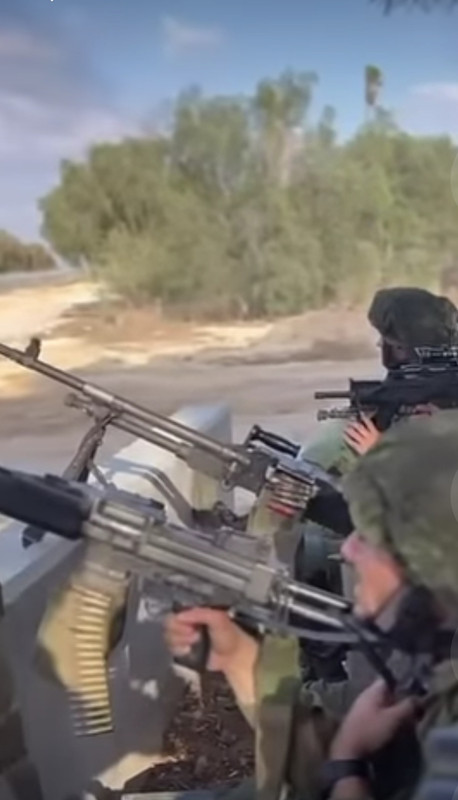
The "gun" or THE gun is an absolute showstopper in both the light role and even more so in the SF tripod role.The L7A2 GPMG is a real legend... it started its life back in 1957 as the FN MAG - Fabrique Nationale Mitrailleuse d'Appui Général (General Support Machine Gun), and still going strong. I would argue that it has its name in history as a machine gun is a way that is akin to the AK-47 (and its variants) as an a assault rifle.
It's 80% of your sections firepower right there.
It's the benchmark in belt fed man portable automatic weapons.
I say that because now and again a bright spark tries to get unwilling victims to man pack the HMG ,noooo thanks

I read a lovely analysis of infantry loads through history. Based on the best we can reconstruct, the basic load carried by regular line infantry has stayed essentially the same throughout recorded history. Every technological development that reduces weight in one area, or theoretically allows them to carry less or go without something, is immediately countered by increasing the load of something else.Not to hijack this thread entirely, but it interesting to see that most modern militaries are moving to more of a strength based evaluation of physical conditioning, rather than a speed/cardiovascular (i.e. running) based eval. It has been said that this has been based on the last 20 years of conflict, and the realization that size and strength (generally) are more advantageous than just speed and endurance. Pulling wounded away from danger, moving heavy loads over short distances (like mortar and artillery shells) and just being able to withstand the shock of an explosive blast (IED), are more easily done by bigger, more muscular guys. All of these learned lessons, have significantly changed people's thoughts on military fitness, and what works in a sustained combat environment.
The days of schlepping your kit halfway across the countryside are largely and thing of the past for a modern mechanized military. I say largely, only because you never really know. I know that forced marches are still something the USMC trains incessantly. "Always train for the worst, and hope for the best."
Still, it is an interesting change to see happening everywhere...
Even modern mechanised infantry are carrying more or less the same combat load as a Roman legionary - as you point out, a lot of it is made up by the body armour.
Someone must've told the US Marines. LOL! We used to have to hump the M2 Brownings. One guy for the receiver, one guy for the barrels, and one guy for the tripod and T&E mechanism. F*ck that thing was heavy! (Never mind the ammo!)I say that because now and again a bright spark tries to get unwilling victims to man pack the HMG ,noooo thanks
IIRC, the receiver alone was near 60lbs.
Heym SR20
Well-Known Member
I was watching Soldier on BBC iPlayer and there was a section on passing the test. Yes of course it will be more involved etc. i was just making the point that basic infantry are able to carry pretty good loads quite a long way. Much more than any deer stalker would consider.It's a little bit more complex than that, scroll down at the link provided to GCC RFT.
Buggadifino
Well-Known Member
All your reasons are, of course, correct but just to add an anecdote for interest value.Not to hijack this thread entirely, but it interesting to see that most modern militaries are moving to more of a strength based evaluation of physical conditioning, rather than a speed/cardiovascular (i.e. running) based eval. It has been said that this has been based on the last 20 years of conflict, and the realization that size and strength (generally) are more advantageous than just speed and endurance. Pulling wounded away from danger, moving heavy loads over short distances (like mortar and artillery shells) and just being able to withstand the shock of an explosive blast (IED), are more easily done by bigger, more muscular guys. All of these learned lessons, have significantly changed people's thoughts on military fitness, and what works in a sustained combat environment.
The days of schlepping your kit halfway across the countryside are largely and thing of the past for a modern mechanized military. I say largely, only because you never really know. I know that forced marches are still something the USMC trains incessantly. "Always train for the worst, and hope for the best."
Still, it is an interesting change to see happening everywhere...
I was talking to an infantry officer in 2012 and he informed me that the Commander Infantry had passed down a directive to, essentially, bulk up and prioritise strength and size.
The reason at the time was that a 150 lb infantryman might lose 20-30 lbs in a tour of duty in Afghanistan and be only marginally combat effective because of it but a 200-250lb guy losing 20-30lbs is still combat effective
Barrels are 16kg , I think a box of ammo was 8kg maybe per 100 link,tripod 18kg,soft mount 25kg.Someone must've told the US Marines. LOL! We used to have to hump the M2 Brownings. One guy for the receiver, one guy for the barrels, and one guy for the tripod and T&E mechanism. F*ck that thing was heavy! (Never mind the ammo!)
IIRC, the receiver alone was near 60lbs.
You can walk , i say walk and not patrol with a tactical awareness...for a short period .
Maybe to set a gun line.
After that it's just wondering when your shoulders are going to be ripped down to your buttcheeks.

Partly through experience - lessons identified (never truly learned though…). British Army fitness test was designed to increase resilience, reduce back and lower limb injuries which occurred too frequently because its cheap and easy to go for a 7 mile run instead of conditioning for role. Losing too many soldiers to preventable injury.Not to hijack this thread entirely, but it interesting to see that most modern militaries are moving to more of a strength based evaluation of physical conditioning, rather than a speed/cardiovascular (i.e. running) based eval. It has been said that this has been based on the last 20 years of conflict, and the realization that size and strength (generally) are more advantageous than just speed and endurance. Pulling wounded away from danger, moving heavy loads over short distances (like mortar and artillery shells) and just being able to withstand the shock of an explosive blast (IED), are more easily done by bigger, more muscular guys. All of these learned lessons, have significantly changed people's thoughts on military fitness, and what works in a sustained combat environment.
The days of schlepping your kit halfway across the countryside are largely and thing of the past for a modern mechanized military. I say largely, only because you never really know. I know that forced marches are still something the USMC trains incessantly. "Always train for the worst, and hope for the best."
Still, it is an interesting change to see happening everywhere...
Too late for my knees and back !
Similar threads
- Replies
- 44
- Views
- 4K


- Replies
- 95
- Views
- 16K


- Replies
- 0
- Views
- 366


- Replies
- 0
- Views
- 540

