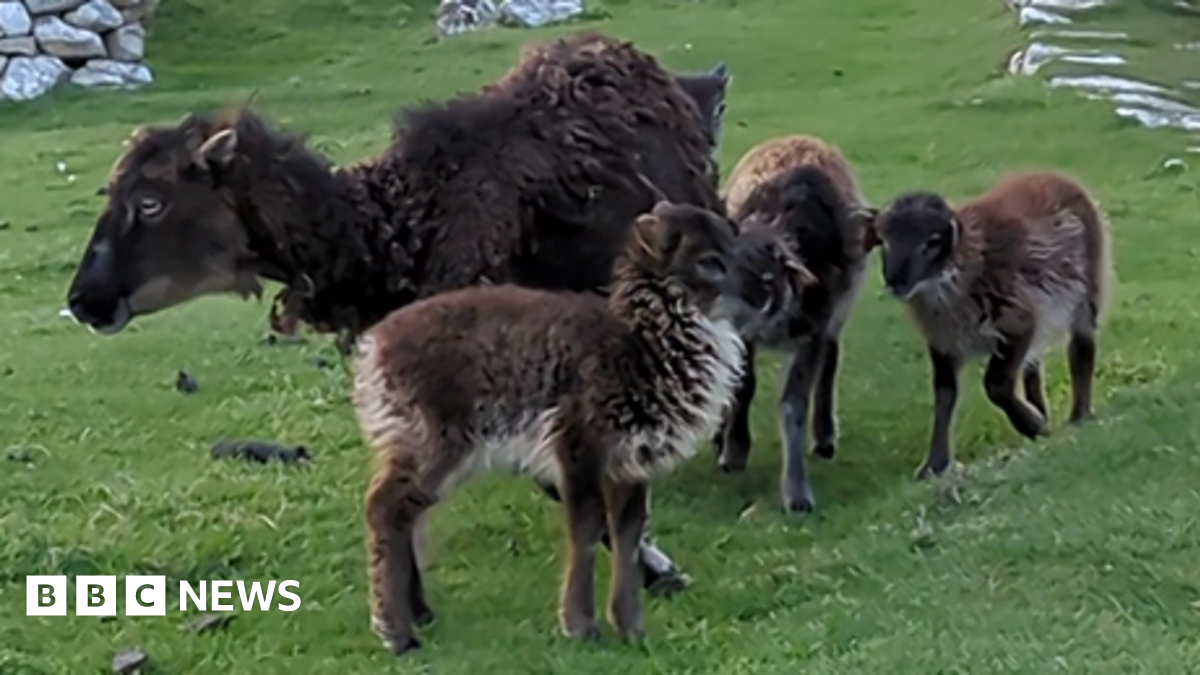
‘Wild sheep’ numbers St Kilda

The first study on Soay sheep was by Peter Jewell, from 1959 to 1967 not 1930s and there have been many more since run by various groups.
I also know 100% that Soay sheep were shot on the islands in the 1960s and 70s.
Correct. Peter Jewell did the first work on Kilda, but was unable to transform it into a sustained long term project of marked individuals. After he (and John Morton Boyd and Peter Grubb) finished, there was low level somewhat haphazard monitoring of the population through the 70s and early 80s.

It was Clutton-Brock who had the insight to realise that the real value lay in a project spanning life times, with marked individuals. More critically, he had the political nous and fund raising skill to make that happen. He got the project as it now exists going in 1985, and it’s run with a consistent protocol ever since.
 
Wot I find completely ironic and hypocritical is they moan about us shooting all manner of things from deer to foxes or even Cyril? the lion in Africa.
How the hell do they think most wild animals die in the wild? Of old age?
Starvation yes caused by old age as there teeth get worn out, an deer could starve to death in a field full of grass if teeth gone
But it's still starvation and a horrible way to die.

While it's not nice to see a lot of animals starve to death at the same time, and normally I would say they need culled.
But with the important scientific background probably not the right choice on this occasion.

And was said earlier in thread surely this is the ultimate rewinding experiment and now they want u to intervene, surely the oppisate of rewilding
 
A little extra context, given that this appears to be gaining media traction.

You will see claims that the Soay sheep were 'farmed' prior to the people leaving the island in 1930, and this is being used as the justification for calling them 'feral' rather than wild, and therefore the justification for saying there is a duty of care.

This is not the case. In 1930, the Soay sheep were restricted to the small island of Soay itself (hence the name of the breed). Soay is extremely difficult to access - really only possible in very calm weather, and certainly not somewhere people were going to systematically. The available records indicate that, at most, the islanders visited sporadically, opportunistically catching what they could for meat and wool. There are no records of any form of active husbandry or herd management - essentially, they were hunted like a wild animal, not farmed. The genetic data suggest that the sheep on Soay had been there for at least 1500 years, probably more - and are more closely aligned with mouflon than with modern domestic breeds.

There were sheep on the main island (Hirta), but there were from much more modern breeds. When the islanders were removed, they tried to take as many as they could - in fact, used sheep to partly pay for passage. There were a few left, but these were all shot in the following years, and were all gone by about 1933. Following that, animals were transferred from Soay and released onto Hirta. So these sheep are not just abandoned farm animals.
 
Local estate years back got some soay sheep then discovered they lawfully required blue tongue vaccinations every 6 months but as an ancient breed they star burst when trying to herd them ....they got rid
..I got a heap of haunches and saddles and was fantastic.meat !
Trim oile made some amazing "lamb burgers"

Paul
 

More about the sheep
The sheep on St Kilda have been going through natural "boom and bust" population cycles for hundreds of years. It's been thoroughly studied and well documented.
Nothing new there, and it doesn't need some do-gooder poking their nose in and trying to upset a centuries old natural balance.
Providing supplementary winter feeding would destroy the breed, which has largely survived unchanged since primitive times as a result of the natural selection brought about by periodic winter die-offs.
 
The sheep on St Kilda have been going through natural "boom and bust" population cycles for hundreds of years. It's been thoroughly studied and well documented.
Nothing new there, and it doesn't need some do-gooder poking their nose in and trying to upset a centuries old natural balance.
Providing supplementary winter feeding would destroy the breed, which has largely survived unchanged since primitive times as a result of the natural selection brought about by periodic winter die-offs.
That was then, and a steady supply was taken to be eaten. Now, as I understand it, they are just neglected. However, I've been reliably informed that there are plans
 
That was then, and a steady supply was taken to be eaten. Now, as I understand it, they are just neglected. However, I've been reliably informed that there are plans
That’s interesting. Are you able to explain the plans?

I’m conflicted on this: I have friends and colleagues who study the sheep, and any active management will have a profound effect on the long term project.

On the other hand, I increasingly understand the welfare argument. My wife (a vet) has always been sceptical of the ‘let them starve, it’s natural argument’, and she is very good at steadily applying the right amount of sustained patient pressure that changes minds!

More generally, I find the difference in attitudes to the various feral animals fascinating. The goats in the Moffat hills are an ecological disaster (see the picture below - hundreds of the buggers), but every time anyone suggests culling them, the local community go bananas and mount aggressive campaigns to save them.

Meanwhile sika deer are the devil incarnate and everyone and his bother wants them all dead.
 

Attachments

  • IMG_8738.webp
    IMG_8738.webp
    294.8 KB · Views: 21
No, sorry. I asked folk in the sheep vet world and was told this is under discussion.
I'm with your wife on this. If there is unlimited range, then perhaps a "benign neglect" approach can work, but these are effectively captive. And while I understand the ecological argument of the ecosystem only providing enough food for a stable population, that is usually a system with predators to remove the weak and feeble.

I personally think this has been a cop out between lots of departments. Culling would not be socially acceptable and might hit NTS coffers, but managing them would leave them open to prosecution if the animals suffered. So calling them "wild" allows everyone to be comfortable. Except the sheep
 
No, sorry. I asked folk in the sheep vet world and was told this is under discussion.
I'm with your wife on this. If there is unlimited range, then perhaps a "benign neglect" approach can work, but these are effectively captive. And while I understand the ecological argument of the ecosystem only providing enough food for a stable population, that is usually a system with predators to remove the weak and feeble.

I personally think this has been a cop out between lots of departments. Culling would not be socially acceptable and might hit NTS coffers, but managing them would leave them open to prosecution if the animals suffered. So calling them "wild" allows everyone to be comfortable. Except the sheep

Can I ask wot predator would predate sheep in an island environment??

I cant imagine the island is big enough to support large predators like wolf or bear without them becoming inbred.

If it was Red deer ud have the exact same problems.

Boom and bust is not that unusual if the habitat allows just its usually disease or parasites that crash the populations rather than starvation.
 
None, that's the point. Other than sea eagle.

There's culling on several Scottish island with deer (Rhum) so odd that they don't practice it here
Interesting you should mention Rum…

The same research group who study the Kilda sheep also run the red deer research on Rum. The deer in the study population (roughly the Northern quarter of the island) aren’t culled.

But, as you might imagine, there is an ongoing tension there too. NatureScot really want to start shooting the study population (they’ve shot the rest of island hard over the last few years).

Different dynamics to the sheep though: bigger area, much more to eat, and they can disperse.

I think the argument for shooting the deer in the study area on Rum is much weaker. But I can see why NatureScot want to do it: it makes it very difficult for them to be ordering private estates to undertake reduction culls when they have an unculled population themselves.

Unfortunately, there’s also a deep ideological motivation as well: within NatureScot there’s faction who are profoundly hostile to traditional sporting estates, and who see massive deer reductions as a tool to beat the estates with. I’ve had conversations with several of their senior exec, and they’re quite open about their determination to see the end of traditional land management patterns across the Highlands.
 
Back
Top