Any log burner fitters out there? Technical query/issue

The flexi liner should have been lagged with an insulation jacket. If it hasn't been it should not have passed HETAS regs.
They are insulated to prevent precisely the problem you appear to have of an extremely hot liner melting (or worse, igniting) old tar deposits in the brick flue.
An open unlined flue can be swept and cleaned, and if the worst happens and there is a chimney fire, it is accessible for the fire to be extinguished.

When a liner is fitted and the brick flue is sealed with a register plate in the fireplace and a capping plate at the top, there is no way to access the flue void, so a fire within the void could be catastrophic. Therefore it is imperative that it doesn't become overheated, hence insulation lagging. It is normal practice also to vent the flue void with a vent in the register plate in the fire place and a vent brick at the top of the stack outside above the roof, so any fumes within the void can be vented to the atmosphere (as a bricklayer I usually put vent bricks under the bottom course of corbel bricks on the stack cap just below the pots, where they won't be conspicuous and will have some protection from driving rain). This void venting prevents a build up of toxic fumes within the void which could leak into the living quarters if the mortar joints are old and loose. It helps keep the void cool and allows condensation to be vented, avoiding damp stains forming on the chimney breast from chimney sweat.

Liner insulation should also go right to the top of the stack and even to the top of the chimney pot. If it stops short in the stack, or the loft space if it's a cold roof construction, or the pot is uninsulated, that section of uninsulated liner can chill quickly in very cold weather which causes tars and creosote to solidify, building up layer on layer of rock hard resin, constricting the bore of the liner like a furred artery. I've seen 6" liners that have become so choked due to chilling that at the top of the stack the bore was barely 3" wide and the sweep couldn't get his brush up.

Personally, I don't like the sound of a live lined flue being capped off in the loft and twin wall joined to flexi within the roof space. Never heard of such a thing before and it just sounds like a bodge. In my view the chimney breast should have been rebuilt right up through the loft and out of the roof.

My advice would be to get Building Control to inspect the work. If they condemn it the contractor will have to put it right and if it doesn't comply with regulations he will lose his HETAS accreditation.
It doesn't sound right at all. Get it checked out.
 
Last edited:
The flexi liner should have been lagged with an insulation jacket. If it hasn't been it should not have passed HETAS regs.
They are insulated to prevent precisely the problem you appear to have of an extremely hot liner melting (or worse, igniting) old tar deposits in the brick flue.
An open unlined flue can be swept and cleaned, and if the worst happens and there is a chimney fire, it is accessible for the fire to be extinguished.

When a liner is fitted and the brick flue is sealed with a register plate in the fireplace and a capping plate at the top, there is no way to access the flue void, so a fire within the void could be catastrophic. Therefore it is imperative that it doesn't become overheated, hence insulation lagging. It is normal practice also to vent the flue void with a vent in the register plate in the fire place and a vent brick at the top of the stack outside above the roof, so any fumes within the void can be vented to the atmosphere (as a bricklayer I usually put vent bricks under the bottom course of corbel bricks on the stack cap just below the pots, where they won't be conspicuous and will have some protection from driving rain). This void venting prevents a build up of toxic fumes within the void which could leak into the living quarters if the mortar joints are old and loose. It helps keep the void cool and allows condensation to be vented, avoiding damp stains forming on the chimney breast from chimney sweat.

Liner insulation should also go right to the top of the stack and even to the top of the chimney pot. If it stops short in the stack, or the loft space if it's a cold roof construction, or the pot is uninsulated, that section of uninsulated liner can chill quickly in very cold weather which causes tars and creosote to solidify, building up layer on layer of rock hard resin, constricting the bore of the liner like a furred artery. I've seen 6" liners that have become so choked due to chilling that at the top of the stack the bore was barely 3" wide and the sweep couldn't get his brush up.

Personally, I don't like the sound of a live lined flue being capped off in the loft and twin wall joined to flexi within the roof space. Never heard of such a thing before and it just sounds like a bodge. In my view the chimney breast should have been rebuilt right up through the loft and out of the roof.

My advice would be to get Building Control to inspect the work. If they condemn it the contractor will have to put it right and if it doesn't comply with regulations he will lose his HETAS accreditation.
It doesn't sound right at all. Get it checked out.
Not my area of expertise, but from what I understand and read, HETAS do not require insulation of liners within the flue void. Vermiculite has fallen out of favour as it attracts water and makes chimneys damp, but as you say there are other insulation types.

In terms of it being a bodge, something is wrong but the parts are available out there to join flexi to twin wall,via a fixing plate in the loft, seems odd they would be available otherwise? But surely where this method is used you have got to insulate the flexi so you eliminate the fumes being created at all as they will end up in the house not outside it. I will contact hetas, but not sure how quick they will respond.
 
Depends on the building. I've rebuilt a lot of chimney stacks on listed buildings with thatched roofs and Hetas most definitely do demand full insulation all the way up on those.
All HETAS installers I've worked with on chimneys have always fitted full insulation. Vermiculite was always a shocking idea and at the very least it should never be used in the stack above the tray. But it's unnecessary because jacket insulation has been around for a long time. The best type is Chimwrap. It's expensive and has to be fully fitted to the liner before it's dropped down the flue.

You can of course join rigid vitreous liners to flexi flues. Sometimes when an already lined flue needs a stack rebuilb you have to join to what's there so you've got no choice. But I'd never choose to do it when I wasn't forced to because I've seen too many problems with it.
For one thing vitreous liners transmit rain water too easily. The helical ribbing of flexi liners slows down the descent of water allowing time for evaporation or burning off when the fire is lit. With smooth vitreous liners water races down much more quickly so it often finds its way all the way down to ground level.
And if a rigid liner is joined to flexi (or where any sort of liners are joined) the female joint must always face uppermost. That way any rain water that finds its way into the top of the pot and mixes with tar stays inside the flue where it can be burnt off and cannot leach out of the joints and run down the outside of the liner into the hearth and onto the outside of the stove where it makes a smelly mess.

I still don't like the idea of a live brick flue being terminated within the roof space. At the very least the rigid liner should be boxed in with fireproof board all the way up to the under side of the slates or tiles. Whether it complies with regs or not I don't know but it definitely strikes me as bad practice and I wouldn't do it.
I'd get the work checked by local authority building control rather than HETAS.
 
The problem with vermiculite is that very few people no the proper way to use it everyone just opens the bag and pours it down the flu which is what they are shown it’s supposed to be mixed with cement and put in as the chimney is being erected to keep the flue in the middle,you will probably find the liner is touching the tar substance just like What you thought has the fitter sealed the top of the old chimney where the flexible liner and the twinwall start,if not these fumes will have to be delt with it’s not called the silent death for nothing don’t light it until he comes and inspects it,hopefully it will just be the oil from the stove and liner burning off,the twinwall you Should be able to put your hand on it without gething burnt atb w
 
What you should have done was had the old chimney very thourogly swept before fitting the flexiliner. I had a similar problem with smells when we fitted the flexiliner to mine. Its a quite twisty stack and not helped by the pourus nature of the the circa 1940 mortar. Also you will need very good ventilation to the stack. I agree with others its probably caused by the liner heating up old tar and soot residues in the stack and they are not being adequately ventilated. Also depends on how efficient your burner is and the resultinfg flue liner temperature. In my case I have a Burley Debdale which is super efficient and the flue does not get that hot. Had smokey smells for a month or so but then resolved itself.

D
 
What you should have done was had the old chimney very thourogly swept before fitting the flexiliner. I had a similar problem with smells when we fitted the flexiliner to mine. Its a quite twisty stack and not helped by the pourus nature of the the circa 1940 mortar. Also you will need very good ventilation to the stack. I agree with others its probably caused by the liner heating up old tar and soot residues in the stack and they are not being adequately ventilated. Also depends on how efficient your burner is and the resultinfg flue liner temperature. In my case I have a Burley Debdale which is super efficient and the flue does not get that hot. Had smokey smells for a month or so but then resolved itself.

D
Skeet gun and two no9 shells 😁😁
 
So before he came out, the smoke subsided, but the same smell kept coming through. He was quite confident it was the oils on the flexi, and as we had the off cuts of ours outside, I duly smelt them and yes appears it is still that, smell is identical in the loft. The fact its stopped smoking would confirm. I am hoping the smell completely goes, as otherwise don't want to store stuff up there, but feeling the spare flexi we have, its completely greased up in like a waxy coating.
 
  • Like
Reactions: VSS
It’s previously been said many times before reference still being able to see the flexible liner in the loft. For the elimination of doubt why don’t you just post a couple of photos up, I’d be interested to see the connection from the flexible liner where it exits the remains of the brick chimney to the Selkirk connection. I don’t understand why the chimney had to be removed. This was mine last year, my original intention was only to re haunch the pots and drop a new liner down.45DF8027-0B29-4E8E-8F94-5298B6AD8D9E.webp
 
And yours is quite good @windygun .
I've lost count of the number of stacks I've looked at that you wouldn't risk leaning a ladder against and with water pouring through the corbelling in the loft, and which the owners thought could be fixed with a bit of repointing and a new flashing..
 
It’s previously been said many times before reference still being able to see the flexible liner in the loft. For the elimination of doubt why don’t you just post a couple of photos up, I’d be interested to see the connection from the flexible liner where it exits the remains of the brick chimney to the Selkirk connection. I don’t understand why the chimney had to be removed. This was mine last year, my original intention was only to re haunch the pots and drop a new liner down.View attachment 180545
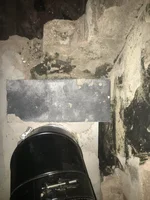
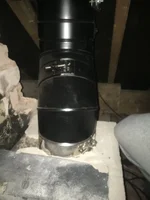
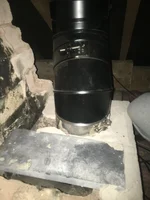
Pics attached, I cannot get my hands to the flexi but I can see it at an angle.

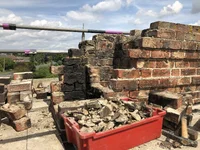
The decision to get rid of the stack is mainly due to weather here. In the last 10 years I’ve seen most of our road replace their stacks, the wind and prevailing conditions are awful. Ours was leaning and as far as I can tell, there’s no use to a stack when twinwall can deliver to the outside world, after all if we had no stack and wanted a log burner you’d go twin wall from the start.

HETAS recommendation is to cover the two gaps with a vent tile.
 

Attachments

  • 5479E726-06D3-4580-BC79-2B418DE444D7.webp
    5479E726-06D3-4580-BC79-2B418DE444D7.webp
    266.3 KB · Views: 44
  • 84842181-C92E-4307-A55C-FE4CB082BDFB.webp
    84842181-C92E-4307-A55C-FE4CB082BDFB.webp
    86.6 KB · Views: 43
  • BE115455-656C-4561-896C-968E519F1AC0.webp
    BE115455-656C-4561-896C-968E519F1AC0.webp
    120.5 KB · Views: 43
Actually looks good and not what I was expecting, the smoke and odour from the protective coating under normal installation conditions would just percolate to atmosphere through the small gap between the flexi liner and the top closure plate sitting under the chimney pot. In your case, because there isn’t a perfect seal and the closure plate is technically inside your building the burning odour is trapped in the roof void, the roofing felt and lack of ventilation in the roof space won’t help but it will clear eventually.
 
Back
Top