
You are using an out of date browser. It may not display this or other websites correctly.
You should upgrade or use an alternative browser.
You should upgrade or use an alternative browser.
help diagnosing quad battery/alternator issues
- Thread starter muddy42
- Start date


Smellydog
Well-Known Member
If that goes to the alternator it's most likely the the energising supply. Try a fuse, if it blows then you need to find that fault.I've just found a dead fuse, circled here in yellow. The fuse itself didn't have continuity across the prongs and one of the plugs has continuity to the battery positive, meaning something isn't getting power.
Sounds like you’re homing in on the fault.I've just found a dead fuse, circled here in yellow. The fuse itself didn't have continuity across the prongs and one of the plugs has continuity to the battery positive, meaning something isn't getting power.
Can you identify the colours on the wires for this particular fuse.
Worth checking in case there’s any continuity to earth on the wire on the other side of the fuse.
Usually all the fuses on Honda quads are located in the rear section of the battery compartment.

My 2010 TRX420 FA doesn't have a fuse there! PFA wiring diagram pictures from the 2009-2010 Honda Service Manuals:I've just found a dead fuse, circled here in yellow. The fuse itself didn't have continuity across the prongs and one of the plugs has continuity to the battery positive, meaning something isn't getting power.


PFA extract from the 2007-2014 TRX420 Clymer manual:My 2010 TRX420 FA doesn't have a fuse there! PFA wiring diagram pictures from the 2009-2010 Honda Service Manuals:
View attachment 437372View attachment 437373


Finally, extract of the Clymer FM wiring diagram:PFA extract from the 2007-2014 TRX420 Clymer manual:
View attachment 437374View attachment 437375View attachment 437376View attachment 437377
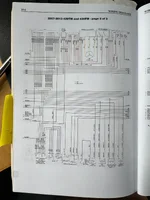
I should clarify that! There's no OEM fuse there but I picked up on a 12v positive supply there as shown in the Honda wiring diagram for my heated grips. A previous owner may have done the same.My 2010 TRX420 FA doesn't have a fuse there! PFA wiring diagram pictures from the 2009-2010 Honda Service Manuals:
@sikasako @smelldogI should clarify that! There's no OEM fuse there but I picked up on a 12v positive supply there as shown in the Honda wiring diagram for my heated grips. A previous owner may have done the same.
Imk afraid that 'fuse' ended up being a false trail. If I take it out the quad won't start, if I put it back it starts again. I'm a bit confused and embarrassed because I thought it was a broken fuse with no continuity across the fuse prongs. I don't have a spare that fits. we've owned the quad since new, but maybe the garage put this thing in whatever it is.
Thanks for the wiring diagrams.
The missing table 1:PFA extract from the 2007-2014 TRX420 Clymer manual:
View attachment 437374View attachment 437375View attachment 437376View attachment 437377

From the Honda manual, its trouble shooting guide:


My 2010 TRX420 FA doesn't have a fuse there! PFA wiring diagram pictures from the 2009-2010 Honda Service Manuals:
Sorry I think that 'fuse' is a diode. I've still no idea why its there. The diode needs to be inserted for the starter motor to work. Beats me
Progress Update - following new battery and regulator rectifier
thanks everyone for their help. I've now had the side plastic off to perform the following tests working back from the stator:
1. round plug just before stator. I resistance tested each of the three phases of the stator - c.0.5 ohmns which is fine.
2. round plug just before stator. Each phase isn't earthed, which is good
3. round plug just before stator. There is continuity from each of the three phases to the three phases at the rectifier/regulator.
4. At the rectifier / regulator. When idling, between the three phases there is c.15v, up to c.33v if reving. Youtube tells me this should be 18v at idle, so maybe the stator is a bit weak????
5. At the other end of the rectifier/regulator, there is continuity from each battery terminal to the battery.
6. No parasitic draw from the battery.
So I have now put everything back together and connected a trickle charging port. This also allows me to trickle charge easily and monitor the battery voltage when driving. I can only think that the stator is a bit weak. Google tells me that stators can have other problems other than those identified by a resistance check or earth check (tests 1 and 2 above).
This morning I got 13.7v dropping to 13.5v when driving. The voltage was quite variable, I guess it depends on the revs, but also my multimeter is probably a bit cr@p or needing a new battery. Also I had charged this battery overnight. I will monitor the voltage and see if I get dangerous drain or if I can keep it limping along.
Both the Honda and Clymer manuals say this should be 15.5v at 5000 rpm, not the 33v you are seeing. It's suggesting to me that your regulator isn't regulating.4. At the rectifier / regulator. When idling, between the three phases there is c.15v, up to c.33v if reving. Youtube tells me this should be 18v at idle, so maybe the stator is a bit weak????
When I was going through this with mine, I changed the rectifier - bought an expensive OEM replacement from my local Honda dealer but I see they are up on eBay/Amazon for much less. They are VERY easy to change.

Both the Honda and Clymer manuals say this should be 15.5v at 5000 rpm, not the 33v you are seeing. It's suggesting to me that your regulator isn't regulating.
When I was going through this with mine, I changed the rectifier - bought an expensive OEM replacement from my local Honda dealer but I see they are up on eBay/Amazon for much less. They are VERY easy to change.
Thanks. just to be clear 33v is AC pre-regulator (the grey three phase plugs going in to the regulator). I understand the engine can produce way more AC volts than this. I understand that the regulator should take down the engine AC voltage to 15.5v DC or so at idle. What I don't know is if its all proportional, meaning if you get lower AC in because the stator is weak, do you get proportionally lower DC out? Hence why I get 13.5v DC out not 14/15v ??
The regulator rectifier is new and OEM. I agree it was super easy to change.
Smellydog
Well-Known Member
How is the stator getting excited?
I have not seen where you have tested the exciter current!
If it is self excited there will be brushes in the unit and a tiny DC generator.
If externally excited by the reg then there will be an extra wire apart from the AC phases usually coloured the same.
I have not seen where you have tested the exciter current!
If it is self excited there will be brushes in the unit and a tiny DC generator.
If externally excited by the reg then there will be an extra wire apart from the AC phases usually coloured the same.
How is the stator getting excited?
I have not seen where you have tested the exciter current!
If it is self excited there will be brushes in the unit and a tiny DC generator.
If externally excited by the reg then there will be an extra wire apart from the AC phases usually coloured the same.
I think I follow what you mean. There is a wire coming out of the engine/stator with a female connector on the end of it. Yes this plug has two sets of wires. Three yellow wires from the windings inside the stator. Ive had the connector off and traced these back to the regulator and tested them at length.
But the connector also has a battery positive and negative receiving power to the stator. The quad wont fire with the connector disconnected. The positive had battery voltage and the negative had continuity to the earth. Is that what you mean by testing, what else should I be looking for?
I have not taken the stator off yet. I'm hoping the stator produces just enough to charge the battery, plus I'll trickle charge.
If this doesn't work, I'll consider replacing the stator.
Smellydog
Well-Known Member
There will be a resistance test for the stator windings.I think I follow what you mean. There is a wire coming out of the engine/stator with a female connector on the end of it. Yes this plug has two sets of wires. Three yellow wires from the windings inside the stator. Ive had the connector off and traced these back to the regulator and tested them at length.
But the connector also has a battery positive and negative receiving power to the stator. The quad wont fire with the connector disconnected. The positive had battery voltage and the negative had continuity to the earth. Is that what you mean by testing, what else should I be looking for?
I have not taken the stator off yet. I'm hoping the stator produces just enough to charge the battery, plus I'll trickle charge.
If this doesn't work, I'll consider replacing the stator.
I'd like to see the voltage changing from the regulator to the stator on the DC side when engine running... In other words to confirm the regulator is controlling the excitor current.
There will be a resistance test for the stator windings.
I'd like to see the voltage changing from the regulator to the stator on the DC side when engine running... In other words to confirm the regulator is controlling the excitor current.
Ive tested the resistance of the stator windings - all about 0.5ohms which is fine.
plus the windings arn't grounded.
I don't quite follow your last question?
If I test the AC voltage produced by the stator, it does vary with the revs. BUT it is lower than it should be across the range from idle to 5,000 revs. I don't know why
This then regulated and rectified to DC and sent to the battery at around 13.5v.
there is no feedback from the regulator back to the stator that I'm aware of?
the stator gets battery current, but that doesn't come from the regulator does it?
Smellydog
Well-Known Member
As far as I'm aware the regulator should control the DC supply to the alternator otherwise the alternator will supply full whack and something will get hot!Ive tested the resistance of the stator windings - all about 0.5ohms which is fine.
plus the windings arn't grounded.
I don't quite follow your last question?
If I test the AC voltage produced by the stator, it does vary with the revs. BUT it is lower than it should be across the range from idle to 5,000 revs. I don't know why
This then regulated and rectified to DC and sent to the battery at around 13.5v.
there is no feedback from the regulator back to the stator that I'm aware of?
the stator gets battery current, but that doesn't come from the regulator does it?
In post #39 it shows a two phase alternator and an excitor which is fed from the ICU unit which I bet varies the supply to the alternator excitor according to demand.
Thanks. I'm not sure my friend. Post 44 is the correct wiring diagram for the pre-2014 hondaTRX420. This shows that the 5 pin plug has 2 aspects - three phase stator and a "CKP sensor.' Google says this updates the brain about the position of the crankshaft for ignition timing etc. I was lying under the quad when I tested these two contacts, so I couldn't vary the rev. As far as I recall it was battery voltage at idle, so i'm baffled as to how the voltage can increase from this. I would need to take the plastics off and enlist my beautiful assistant to help with this.
Various googling says these stators can produce up to 90v and its purely driven by engine rev, which the regulator rectifier sorts out. I guess it this will result in heat and thats why this black box has fins and is on the outside of the quad. Plus it probably explain why these devices commonly get fried and go wrong.
The quad has sat unused without any trickle charge for a few days and is showing 13.2v. I think that's fairly decent. I'm going to re check for parasitic leakage (I'm not 100% sure I read the decimal places and greek letters ųA, mA etc. correctly!). Then I'll install a voltage gauge and just monitor the battery health for a while.
Similar threads


