Tightening scope rings: how much torque?

Thanks Oakridge - and everyone else who has taken the trouble to reply.

Unfortunately my scope (Wulf 4K day/night) isn't listed here. And - as noted in the original post - while the manual does state the recommended torque (30inch/lbs) to use when attaching the ring mounts to the rifle, it doesn't state anything as to how much to tighten the rings around the scope.

I went for 16 inch lbs for the rings around the scope - which is towards the bottom end what is recommended by other manufacturers but I am only attaching this to a rimfire not a howitzer so I should be OK.

Interestingly 16 in/lbs was a good deal tighter than I had previously judged by "feel". Previously I had always tightened up until the screw felt firm then added a "nip". But doing so was well under 16 in/lbs.
 
15in/lbs seems to be about standard for steel 6-48tpi screws (x4) into an aluminum material scope ring (not the base screws that attach the ring to the picatinny rail).

Anecdotally, the total torque for rings tends to be somewhere between 50-60ft/lbs. So, four screws at 15 in/lbs, 6 screws at 10 in/lbs, or single screw (ARC M-10's for example) 51 in/lbs.

As always, it's best to use your best judgement when looking at recommended ring torque settings, when compared to scope manufacturers' recommendations. Mounting the rings away from the main erector housing is generally an accepted best practice to prevent any potential binding of the erector assembly (especially in FFP scopes). Some scopes can be sensitive to this (older S&B's comes to mind). This became obvious as unimounts gained in popularity and use (such as Spuhr), and newer S&B's (as I understand it) have resolved this issue. Anyways, just something to bear in mind when mounting rings (unimount or tandem rings), positioning them on the scope tube, and torquing to spec.
 
which torque wrenches are people using? I have a 1/4“ wrench which goes down to 5nm but that’s too much really for scope rings. Seems fine for stock/action bolts but little too high for most other things.
 
I previously suffered the scope slipped through the rings due to undertightening. I’ve been using 20 inch pounds on ring screws which’s kept Zeiss V8 in its place for the last 3 years.
 
which torque wrenches are people using? I have a 1/4“ wrench which goes down to 5nm but that’s too much really for scope rings. Seems fine for stock/action bolts but little too high for most other things.
I use the "Fix-it-sticks" kit shown above with their torque limiters. Easy, compact, and fits nicely in a pack to have on hand at the range or in the field.
 
Torque alone does not hold a scope in its rings. It’s the friction between the ring and the scope tube, and get good friction you need good contact across the whole of the rings surface area.

If you consider the recoil forces on a typical they are pretty high. A typical deer rifle recoils with 15 ft lbs of recoil energy at the butt plate. That’s the equivalent of a 15 lb hammer dropping from the height of 1 foot.

You have the same sorts of energy and forces going through the mount and scope interface. I always lap scope mounts in with a lapping bar, and you very quickly see whether or not you have complete contact. Often you do not.

Once you have complete contact you don’t need a lot of clamping force on those little screws. Using the short end of a typical Allen or Torx wrench with finger pressure is more than enough.

And don’t forget a drop of oil on the screw to properly lubricate it and and ensure it doesn’t gall on the threads. Alternatively use a low strength threadlock - of the benefits of threadlock is that it lubricates during tightening.
 
Torque alone does not hold a scope in its rings. It’s the friction between the ring and the scope tube, and get good friction you need good contact across the whole of the rings surface area.

Something to note, not many scopes are finished in smooth, gloss black anymore... coincidence? :-|:norty:

If you consider the recoil forces on a typical they are pretty high. A typical deer rifle recoils with 15 ft lbs of recoil energy at the butt plate. That’s the equivalent of a 15 lb hammer dropping from the height of 1 foot.

But that is 'free recoil' energy, the shooter having the rifle in their shoulder and bracing the forend or shooting off a bipod with good technique absorbs most of this rearward force. What matters more is acceleration of the rifle system as the bullet leaves the muzzle and how the equipment reacts to it (things will flex!).

You have the same sorts of energy and forces going through the mount and scope interface.
More importantly, how are the mounts secured to the action?

A little bit of contemplation on the issue, that heavy things want to remain in place, hence the scope and mounting assembly effectively wants to move forward (towards muzzle) under recoil, makes the picatinny/1913/STANAG mounting base the most desirable due to recoil arresting cross slots, further supported by mounts that clamp onto the rail itself.

I always lap scope mounts in with a lapping bar, and you very quickly see whether or not you have complete contact. Often you do not.

Lapping rings is a thing of the past unless you are buying Chinesium mounts, if you were to lap a set of Spuhr rings they would be pretty much worthless as all the effort put into the design and manufacture of a quality product has been nullified by a 'kitchen gunsmith' who knows better... I'm sure Wheeler tools (like their crappy Chinese made torque wrench and scope lapping + levelling kits have caused more harm than good!)

And don’t forget a drop of oil on the screw to properly lubricate it and and ensure it doesn’t gall on the threads. Alternatively use a low strength threadlock - of the benefits of threadlock is that it lubricates during tightening.

But keep in mind 'wet torque' which is a culprit for snapping screws from over-tightening.
 
I torque mine up until the finish on the scope begins to crack, then slack off a hair.
If a screw strips before the above happens then I leave it as is and rely on the other 3 to hold it together.
My approach to precision work was shaped while working on Land Rover, Vauxhall and British Leyland products during my formative years.
I also keep full sets of metric, BSF and ASF spanner’s and sockets about just in case I develop Alzheimer’s and buy another one.
 
I torque mine up until the finish on the scope begins to crack, then slack off a hair.
If a screw strips before the above happens then I leave it as is and rely on the other 3 to hold it together.
My approach to precision work was shaped while working on Land Rover, Vauxhall and British Leyland products during my formative years.
I also keep full sets of metric, BSF and ASF spanner’s and sockets about just in case I develop Alzheimer’s and buy another one.
So it was you that fitted the passenger door to my defender :)
 
I torque mine up until the finish on the scope begins to crack, then slack off a hair.
If a screw strips before the above happens then I leave it as is and rely on the other 3 to hold it together.
My approach to precision work was shaped while working on Land Rover, Vauxhall and British Leyland products during my formative years.
I also keep full sets of metric, BSF and ASF spanner’s and sockets about just in case I develop Alzheimer’s and buy another one.
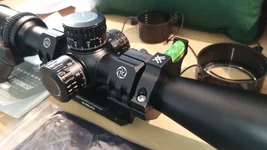
Thats me hahaha
 
I torque mine up until the finish on the scope begins to crack, then slack off a hair.
If a screw strips before the above happens then I leave it as is and rely on the other 3 to hold it together.
My approach to precision work was shaped while working on Land Rover, Vauxhall and British Leyland products during my formative years.
I also keep full sets of metric, BSF and ASF spanner’s and sockets about just in case I develop Alzheimer’s and buy another one.
Damn! I wish I'd taken the time to read all the way to the bottom of your post before following your instructions. I might have realised it was a wind up!
Anyway, anyone want to buy a nearly new, slightly marked scope....?
 
Friction between two surfaces isn’t as simple as contact area, it is also a function of the surface roughness. Lapping rings creates a smooth surface over the maximum contact area, therefore the contact force ( akin to pressure) is at an absolute minimum, possibly the worst scenario for countering the recoil action on a scope.
 
I always do the ring screws like a cylinder head diagonal tightening to "Feel" and then to 17.5 inch pounds with my Fatboy torque wrench.
 
Back
Top