
Viht N-135 in .303 SMLE MKIII

Tris88

Well-Known Member
Hi,
I’ve been reloading for about a year now, started to try and help the accuracy on the 303.
I’m still therefore pretty new to it all and stick like glue to the reloading manuals.

I bought some of the 125gr Sierra bullets to try but they have not been great, I now have a fair chunk of powder without much use.

I looked at the powder and it’s recommended up to 155gr, the other bullet heads I use are 150gr. I’ve seen reloading manuals that use n-135 in 308 with 150gr and from my understanding it’s the same case capacity and similar bullet head diameter (.308 vs .311). I realise there is probably a lot more that I’m missing but if anyone could point me in the direction I’d be very grateful.

It just seems wasteful not to use it if I can safely, safety is more important though, I like my fingers and face where it is!
 
Not too sure what you are asking here.

Is it the N135 that you want to use in .303 because you've seen load data for .308 using N135? If so that's not the way to go.

In .303 British the Vihtavuori website lists N135 for 174gr and 180gr bullets.
In .308 Winchester it lists N135 for 100gr and 155gr bullets.

The powders that Viht list for 125gr and 150gr for .303 British are N130 and N133.

Since you are at an early stage in the learning process go with either of the listed powders and follow the published data. You can either sell the N135 or get some heavier .303 bullets to try with it, assuming the twist rate of your barrel suits the heavier bullets and will stabilise them.
 
Not too sure what you are asking here.

Is it the N135 that you want to use in .303 because you've seen load data for .308 using N135? If so that's not the way to go.

In .303 British the Vihtavuori website lists N135 for 174gr and 180gr bullets.
In .308 Winchester it lists N135 for 100gr and 155gr bullets.

The powders that Viht list for 125gr and 150gr for .303 British are N130 and N133.

Since you are at an early stage in the learning process go with either of the listed powders and follow the published data. You can either sell the N135 or get some heavier .303 bullets to try with it, assuming the twist rate of your barrel suits the heavier bullets and will stabilise them.
I’m asking if anyone can point me towards some load data for 150gr bullets in 303 using N-135.

I understand that just because it’s in a similar caliber you can’t just build your own recipe on guess work. I’m just saying that if there is data for both lighter and heavier bullets in my caliber and the same weight in a similar caliber it makes sense that it should work. Like you say though I’m in my early days and want to get it right.

I’ve got it for the 125gr from Sierra’s data and like you say from Viht for the heavier bullet.

For hunting the 150gr bullet seems better and also has added advantage of being legal for deer.
 
. I’m just saying that if there is data for both lighter and heavier bullets in my caliber and the same weight in a similar caliber it makes sense that it should work. Like you say though I’m in my early days and want to get it right.

...

For hunting the 150gr bullet seems better and also has added advantage of being legal for deer.
No, no no.

Trying to read across .308 load data for .303 ? .308 is a 60,000 PSI MAX. Cartridge (SAAMI). .303 is 49,000 PSI. CIP differences are similar.

That's more than 18% more pressure. Which could be the equivalent of firing a proof round (20% over pressure) through your rifle every time.

If you are using a Lee Enfield made for .303 then use it at or preferably somewhat below its design limits. Pep your ammo up beyond that, or worse still have it "converted" to .308 and you could be into a world of problems. Unlikely to blow up but don't be surprised to soon discover that you have stretched and bowed the receiver beyond repair. It was never designed for such pressures, and, anecdotally, many cannot take them without gradually degrading, shot by shot.

Or if it is a late model like mine, 1954, it is possible that the steel might be stronger, as indeed used later on the .308 models made for military and police.

Or if it is a P14 then they are strong indeed.

As for deer legality, there is absolutely no problem in England, Wales etc. It will make 1700 ftlbs for large deer very easily. In Scotland they want 1750fpe combined with 2450 fps for large deer. The .303 can (just) do this at design pressures, even with the relatively heavy standard bullets, 174 grains etc. for which it was designed. Actually there is a story that the Scottish deer legislation was biased by some of the rich and powerful to let them keep on using their .303s.

BTW, the correct spelling is calibre, not caliber. But the word you should be using in this case is chambering.
 
No, no no.

Trying to read across .308 load data for .303 ? .308 is a 60,000 PSI MAX. Cartridge (SAAMI). .303 is 49,000 PSI. CIP differences are similar.

That's more than 18% more pressure. Which could be the equivalent of firing a proof round (20% over pressure) through your rifle every time.

If you are using a Lee Enfield made for .303 then use it at or preferably somewhat below its design limits. Pep your ammo up beyond that, or worse still have it "converted" to .308 and you could be into a world of problems. Unlikely to blow up but don't be surprised to soon discover that you have stretched and bowed the receiver beyond repair. It was never designed for such pressures, and, anecdotally, many cannot take them without gradually degrading, shot by shot.

Or if it is a late model like mine, 1954, it is possible that the steel might be stronger, as indeed used later on the .308 models made for military and police.

Or if it is a P14 then they are strong indeed.

As for deer legality, there is absolutely no problem in England, Wales etc. It will make 1700 ftlbs for large deer very easily. In Scotland they want 1750fpe combined with 2450 fps for large deer. The .303 can (just) do this at design pressures, even with the relatively heavy standard bullets, 174 grains etc. for which it was designed. Actually there is a story that the Scottish deer legislation was biased by some of the rich and powerful to let them keep on using their .303s.

BTW, the correct spelling is calibre, not caliber. But the word you should be using in this case is chambering.
Thanks for all that useful info.
I’d never dream of changing it, I wanted a 303.

The data I’ve got only just pushes a 180gr at max to 2450, either way I like the 150gr so far.

Can you just run something past me if you’d be so kind. If the powder is used in the 303 load data for lighter and heavier bullets then why (theoretically) could it not be used for the middle weight?
 
Sorry I may not have made it clear. There is data for the 125gr, 174gr & 180gr but I can’t find any for the 150gr.
not on the current page? however in that case I would go for the 174 grn based on the fact that there is published data, and the barrel was originaly expected to use a 174gn bullet, over the ranges you would normally hunt with a Lee Enfield I can't see any downside ?
 
sorry if I am being dim here, but why not use the Viht Data?
Seconded, I use N140 under a 174gr bullet and it’s spot on. What kind of accuracy are you trying to achieve? It is an old battle rifle after all and the iron sights are designed to be used with the issued ammunition at the time. So it might be more worth your while trying to replicate that load using a 174gr bullet.
 
Sierra have the published data on the 125gr

I’m just looking to make it as accurate as I can.

The 150gr has been the best bullet head I’ve used so far. As I said at the beginning I basically have a full 1kg of N-135 that I’d like to use if possible. I just can’t find the data.
 
Might be better posting your question on one or more of the dedicated Lee Enfield forums of which there are many excellent ones.

You state that your rifle is a Mk3, these were superseded by the MK3* in 1916 making it likely your rifle is over 104 years old. Wartime manufacturing standards varied widely, tread lightly and treat the rifle with respect.
 
Might be better posting your question on one or more of the dedicated Lee Enfield forums of which there are many excellent ones.

You state that your rifle is a Mk3, these were superseded by the MK3* in 1916 making it likely your rifle is over 104 years old. Wartime manufacturing standards varied widely, tread lightly and treat the rifle with respect.
Good idea, thanks. I couldn’t find the star on the keypad. My one was made in 1943 according to the stamp.
 
@Tris88 I would have no problem with using N135 for a 150gr bullet considering that there's Viht data for the 174gr bullet. The 150gr bullet will produce lower pressures using the data for the 174gr bullet so you will be able to exceed the max charge if desired (obviously working up and ensuring that there aren't any signs of excess pressure). A chronograph would be handy to check that your 150gr velocity is roughly what load data shows for 150gr loads.
 
@takbok thanks for this. I didn’t expect it to be a massive issue, it would just be nice to see some data. I feel I’m too inexperienced in the reloading to just make stuff up. I might just contact Viht directly and ask them the question.
 
@takbok thanks for this. I didn’t expect it to be a massive issue, it would just be nice to see some data. I feel I’m too inexperienced in the reloading to just make stuff up. I might just contact Viht directly and ask them the question.
Good idea. Yes, if you're not comfortable then it would be good to seek further advice. I'm constantly extrapolating and figuring out load data for powders or bullets with no load data so am confident with it.

Some bullet manufacturers like Sierra have data for Viht powders so you might still find something.
 
Thanks for all that useful info.
I’d never dream of changing it, I wanted a 303.

The data I’ve got only just pushes a 180gr at max to 2450, either way I like the 150gr so far.

Can you just run something past me if you’d be so kind. If the powder is used in the 303 load data for lighter and heavier bullets then why (theoretically) could it not be used for the middle weight?

I would say that it should be suitable, but maybe not ideal. If you look at the loads for the 125gr and the 174, then I expect you will find the 174gr load will be less than the 125. I don't have it in front of me. You should be quite safe going all the way up to the max. 174 gr load using your preferred 150 gr. bullet and your N135.

TBH I don't reckon that N135 would be ideal for everything from 125 to 174 gr. That is quite a range of bullet weight. Actually it might just be that your 150gr preference is right in the sweet spot for that powder :)

I use N140, with the heavier bullets.

Regarding deer legality, Sellier&Bellot publish the data for their ammo as:

180gr soft point. muzzle velocity 726 m/s, energy 3,083 Joules.
150gr soft point 809m/s, 3,174 Joules.

That's 2382 fps, 2,274 fpe in 180gr.
Or 2654 ft/s and 2,341 fpe in 150 gr.

So be in no doubt that the good old .303 can be absolutely deer legal throughout the UK. Albeit needing the 150gr bullet to get past the Scottish minimum 2450 fps requirement.

Reminder: England and Wales just need 1700 fpe for any deer. No minimum velocity.

Scotland requires 1750 fpe, min velocity 2450 fps. Which it seems the .303 will not do with the old service ammo, but certainly can with e.g. factory 150 gr loads.
 
I would say that it should be suitable, but maybe not ideal. If you look at the loads for the 125gr and the 174, then I expect you will find the 174gr load will be less than the 125. I don't have it in front of me. You should be quite safe going all the way up to the max. 174 gr load using your preferred 150 gr. bullet and your N135.

TBH I don't reckon that N135 would be ideal for everything from 125 to 174 gr. That is quite a range of bullet weight. Actually it might just be that your 150gr preference is right in the sweet spot for that powder :)

I use N140, with the heavier bullets.

Regarding deer legality, Sellier&Bellot publish the data for their ammo as:

180gr soft point. muzzle velocity 726 m/s, energy 3,083 Joules.
150gr soft point 809m/s, 3,174 Joules.

That's 2382 fps, 2,274 fpe in 180gr.
Or 2654 ft/s and 2,341 fpe in 150 gr.

So be in no doubt that the good old .303 can be absolutely deer legal throughout the UK. Albeit needing the 150gr bullet to get past the Scottish minimum 2450 fps requirement.

Reminder: England and Wales just need 1700 fpe for any deer. No minimum velocity.

Scotland requires 1750 fpe, min velocity 2450 fps. Which it seems the .303 will not do with the old service ammo, but certainly can with e.g. factory 150 gr loads.
Thanks. To me it makes sense that it would be the sweet spot because it’s what Viht quote with bullet weights.

My concern is the minimum loads. The data I’ve got is:

125gr - Min: 40.1 & Max: 45.2 - Sierra
174gr - Min: 35.3 & Max: 38.4 - Viht

With going straight in on the maximum loads for 174gr data would I be at risk of below minimum load for 150gr?
 
Thanks. To me it makes sense that it would be the sweet spot because it’s what Viht quote with bullet weights.

My concern is the minimum loads. The data I’ve got is:

125gr - Min: 40.1 & Max: 45.2 - Sierra
174gr - Min: 35.3 & Max: 38.4 - Viht

With going straight in on the maximum loads for 174gr data would I be at risk of below minimum load for 150gr?
I have little idea of how the figures for start or minimum loads as they are now called, are set.

It always used to be the rule of thumb that you should start no lower than ten percent below the max. load when using rifle powder, otherwise bad things might happen for partially understood and not necessarily very repeatable reasons. But apparently some more scientific method must now be in play, judging by those numbers.

Even being the wild and reckless guy that I am, mad bad and dangerous to know, I couldn't possibly suggest that you simply take a view and split the differences between the 125 and 174gr figures to get a feel for what might be in the ballpark for 150gr. E.g. min. 37.7 max. 41.8. that would surely be extreme recklessness ;) Whilst chronoing, to at least look out for stupidly high velocities. Just take it up just far enough to just satisfy your conscience that you are deer legal, not that anyone will be checking.
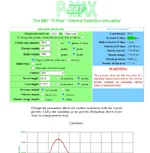
As you will see, my absolutely not in any way a recommendation, to just start at the 174gr max load of 38.4 ties in pretty well with my handwaving surmise that 37.7 might be an approximate starting point for the 150gr projectile. Or just save time and start off halfway between min and max, say in-between 38 and 42 i.e. 40. And, BTW observe that these (absolutely not recommended) numbers fit well with my rule of thumb, i.e. min. is approximately 10% less than max.

Of course you could also put out a plea for someone with Quickload or GRT to model it for you, and see what they come up with.

Then, once you have your load, if you really want to know what you are doing, Birmingham Proof House will pressure test twenty rounds for you for £54 plus VAT. These could be four different loads, five rounds each (they like at least five for a statistically meaningful result). Maybe include a couple of batches above your chosen load, to see what margin you still have if you later want to find tune charge weight for accuracy. You get back a report with pressure and velocity for each round.

And don't forget that load data nowadays must always be expressed to the nearest 0.1 grains, and dispensed likewise to within say one part in 4000 as in this case. It is a wonder how we used to manage back in the day.
 
Last edited:
Thanks so much @takbok for that calculator. A nice member with some software has contacted me with some calculations so hopefully I’ll have a good best safe guess t

@Sharpie thanks again for lots of insightful information. Also your “not at all recommendations” are greatly received. Good idea about the proofing house tests after some development.
 
Back
Top