Dutch City Banning Meat Advertising - maybe.....

Feugh

Well-Known Member
Typical click bait from the BBC nowadays, suggesting that something may happen - but it probably won't.
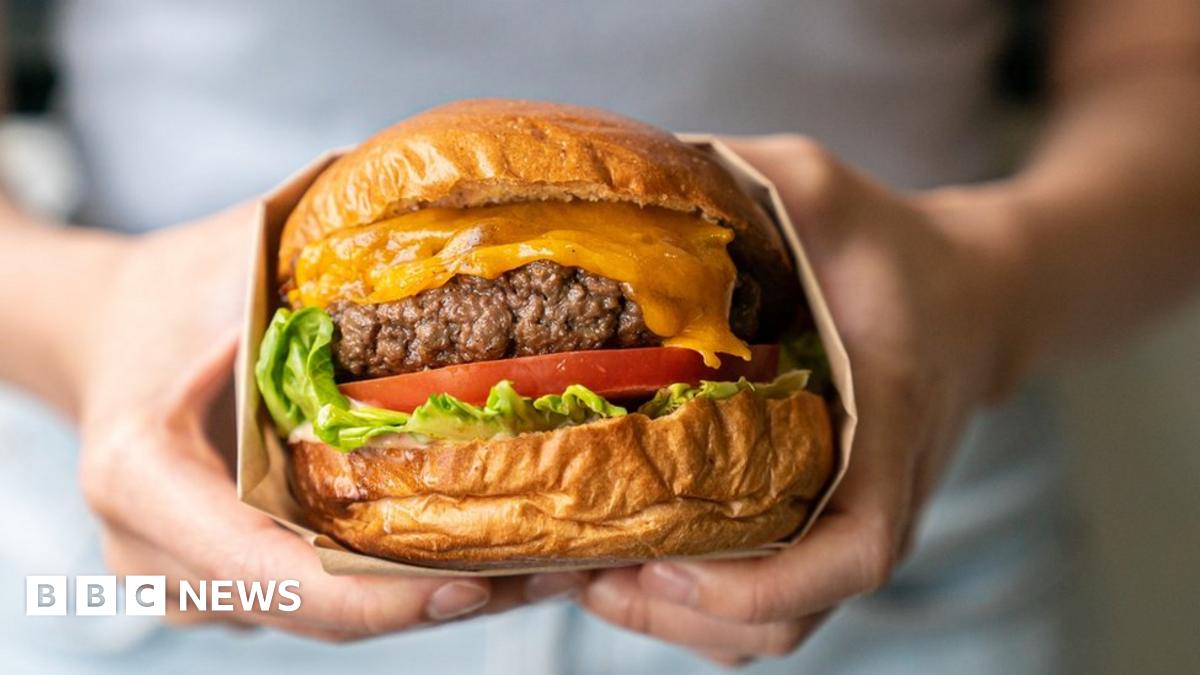
However, that is not what concerns me about this article. In it there is the statement: "The UN says livestock generate more than 14% of all man-made greenhouse gases, including methane.". Really? I get sick of misinformation posted on the internet and really wish that folks would spend 5 seconds fact checking before, for example, reposting a meme that confirms their particular bias, despite the meme containing no factual basis. I find that figure of 14% coming from livestock mentioned in the article hard to take when considering the numbers of planes in the air every second of every day, and the numbers of cars on the road. Can this really be true, or is this a report written by a vegan using dodgy data who just wants us all to stop eating meat? I'd be interested to know either way.
For the record, the red meat that I consume has about 6 food miles and requires no fossil fuel usage for feedstock, but it probably does fart occasionally.
 
It's amazing isn't it? There are currently 1.5 billion head of domesticated cattle on the earth and someone has taken the trouble to measure how much C02 and methane their burping and exhalation contributes to global greenhouse gas emissions. And they have concluded that we must stop eating meat and take to plant based milk to save the planet from this bovine menace. Yet no one pauses to consider why there are 1.5 billion belching and farting cattle in the world. They didn't get there by themselves. They exist because there are 9 billion human beings on the earth and whether their favoured source of liquid protein is lactose or soya based isn't going to make a damn of difference in the grand scheme of things. It's the 9 billion people bit that is doing the damage because they must industrialise the planet to feed themselves. The Earth's biosphere couldn't support 9 billion hunter-gatherers. It couldn't support one billion. So we farm. If we don't want the agriculture and it's by-products, we can't have 9 billion people who will never be able to feed and clothe themselves by any other means. There is no way to square this circle. No way to have your cake and eat it. There will never be a cost-free way to mitigate the way we have out-bred this tiny and finite world we live on. Why do so many find this so hard to understand?
It's ostrich environmentalism.
 
Last edited:
Typical click bait from the BBC nowadays, suggesting that something may happen - but it probably won't.
However, that is not what concerns me about this article. In it there is the statement: "The UN says livestock generate more than 14% of all man-made greenhouse gases, including methane.". Really? I get sick of misinformation posted on the internet and really wish that folks would spend 5 seconds fact checking before, for example, reposting a meme that confirms their particular bias, despite the meme containing no factual basis. I find that figure of 14% coming from livestock mentioned in the article hard to take when considering the numbers of planes in the air every second of every day, and the numbers of cars on the road. Can this really be true, or is this a report written by a vegan using dodgy data who just wants us all to stop eating meat? I'd be interested to know either way.
For the record, the red meat that I consume has about 6 food miles and requires no fossil fuel usage for feedstock, but it probably does fart occasionally.
87% of people believe what the BBC tells them.
 
It's amazing isn't it? There are currently 1.5 billion head of domesticated cattle on the earth and someone has taken the trouble to measure how much C02 and methane their burping and exhalation contributes to global greenhouse gas emissions. And they have concluded that we must stop eating meat and take to plant based milk to save the planet from this bovine menace. Yet no one pauses to consider why there are 1.5 billion belching and farting cattle in the world. They didn't get there by themselves. They exist because there are 9 billion human beings on the earth and whether their favoured source of liquid protein is lactose or soya based isn't going to make a damn of difference in the grand scheme of things. It's the 9 billion people bit that is doing the damage because they must industrialise the planet to feed themselves. The Earth's biosphere couldn't support 9 billion hunter-gatherers. It couldn't support one billion. So we farm. If we don't want the agriculture and it's by-products, we can't have 9 billion people who will never be able to feed and clothe themselves by any other means. There is no way to square this circle. No way to have your cake and eat it. There will never be a cost-free way to mitigate the way we have out-bred this tiny and finite world we live on. Why do so many find this so hard to understand?
It's ostrich environmentalism.
I think youll find hardcore ecoloons agree with your analysis, and would like a significant population reduction.

Not them, obvs.
 
I think youll find hardcore ecoloons agree with your analysis, and would like a significant population reduction.

Not them, obvs.
I've never advocated some sort of crazy cull. That would tip the whole world into mayhem and anarchy. A whole planet of failed states would do far more damage than a planet of functioning industrial ones, even if they are ultimately unsustainable. To say nothing of the morality.
But we have to challenge the global economic model which assumes endless growth and endless expansion. That is driving over-population and the exhaustion of natural resources. Nature itself works in continuously repeated cycles. It's a circle not a straight line trajectory from now into the infinite future. But the socio-economic model of the entire modern world assume just this impossibility.
In political discussions everyone despairs that everything seems to come around again and history keeps repeating itself. Well of course it does. That is how things works. Life on this finite and impermanent world is cyclical and circular not linear and infinite and we should order our lives, our economies and our societies in a way that fits with these cycles, as pre-industrial man did. But we do not. We constantly think we can reinvent the wheel and confound the natural order instead of turning with it. The collective mindset cannot grasp this and so misdiagnoses the problem and is not capable of finding solutions.
 
Back
Top
