I know the answer in broad terms is that an inch at 200m doesn't make a huge difference BUT does twist rate make a big difference to accuracy in ,30-06? Looking for a lead free bullet for roe in a 1 in 11 twist and interested whether I should go 130g ish for expansion or whether 150/180g will be better. Have tried a search but if I have missed the answer please let me know and apologies!
You are using an out of date browser. It may not display this or other websites correctly.
You should upgrade or use an alternative browser.
You should upgrade or use an alternative browser.
.30-06 and twist rate
- Thread starter GBR66
- Start date


The common rifling twist rate for a .30-06 is 254mm (1:10).
The rifle is suited for 130 to 200gr bullets, you can fire lighter bullets and possibly heavier, however, the stability suffers when the bullet becomes too long at a given rotational speed.
It's very complicated.
Lead has a higher density than brass or copper so for a given weight a solid brass or copper bullet will be longer than one made of lead with a copper jacket.
At a certain rotational speed, a projectile, over a certain length will start to 'tumble' and become unstable.
Look up "Miller Stability factor" to find some easy to use calculators.
Here is the technical bit;
 en.wikipedia.org
The rifle is suited for 130 to 200gr bullets, you can fire lighter bullets and possibly heavier, however, the stability suffers when the bullet becomes too long at a given rotational speed.
It's very complicated.
Lead has a higher density than brass or copper so for a given weight a solid brass or copper bullet will be longer than one made of lead with a copper jacket.
At a certain rotational speed, a projectile, over a certain length will start to 'tumble' and become unstable.
Look up "Miller Stability factor" to find some easy to use calculators.
Here is the technical bit;
Miller twist rule - Wikipedia
Thanks for that - gets me further down the rabbit hole and has me sweating about my C Grade O-Level maths....however I get the idea! Now the other factor is whether 150g or 180g lead free open up enough at the slower speeds, vs 130g.....!The common rifling twist rate for a .30-06 is 254mm (1:10).
The rifle is suited for 130 to 200gr bullets, you can fire lighter bullets and possibly heavier, however, the stability suffers when the bullet becomes too long at a given rotational speed.
It's very complicated.
Lead has a higher density than brass or copper so for a given weight a solid brass or copper bullet will be longer than one made of lead with a copper jacket.
At a certain rotational speed, a projectile, over a certain length will start to 'tumble' and become unstable.
Look up "Miller Stability factor" to find some easy to use calculators.
Here is the technical bit;
Miller twist rule - Wikipedia

enfieldspares
Well-Known Member
I see no benefit and much disbenefit in a 130 grain bullet in a .30-06. Simply put why are you trying to create the .270 Winchester with a loading that has a worse ballistic co-efficient and sectional density? Light for calibre bullets in rifles perform badly as they drop like stones (well I exaggerate) beyond 150 yards. A non-lead bullet as it lighter for length and diameter will make it worse notwithstanding that any drilled nose cavity will slightly beneficially alter the BC and SD.
Generally I would agree. I am a fan of a big bullet and a big hole.....however if having to shoot lead free expansion seems to come into the equation....do the bigger rounds expand enough - my ideal is anywhere between 150-180g as long as they expand on roe?I see no benefit and much disbenefit in a 130 grain bullet in a .30-06. Simply put why are you trying to create the .270 Winchester with a loading that has a worse ballistic co-efficient and sectional density. Light for calibre bullets in rifles perform badly as they drop like stones (well I exaggerate) beyond 150 yards. A non-lead bullet will make it worse notwithstanding that any drilled nose cavity will slightly beneficially alter the BC and SD.
enfieldspares
Well-Known Member
The heavier weight bullet will retain it's velocity better down range and, so I understand, the "X" type alloy bullets kill by the "X" cutting like an arrowhead rather than by the fragmenting effect (and resultant cutting) that a lead bullet and its pieces of jacket does as it partly breaks up. So as long as the 150 grain has enough velocity to make that "X" it'll kill just as well as 130 grain "X" type bullet?
As I have to be lead free on some groundGenerally I would agree. I am a fan of a big bullet and a big hole.....however if having to shoot lead free expansion seems to come into the equation....do the bigger rounds expand enough - my ideal is anywhere between 150-180g as long as they expand on roe?
enfieldspares
Well-Known Member
I couldn't find direct comparison between a 130 vs a 150 grain bullet in a .30-06 loading but did find this for the .308 Winchester. The worry I'd have (I have no practical knowledge of it, this all copper bullet) in actual use) is that the 130 grain is being started at such a high velocity that a roe deer shot at fifty yards would be the worse for damage? So not ideal for a twenty-five yard shot from a high seat?
130 grain Barnes VOR-TX - BC = .350. SD = .196
150 grain Barnes VOR-TX - BC = .440. SD = .226
The higher a bullets BC and SD the more energy it will retain at range. A while energy alone doesn't kill a higher energy is, IMHO, more desirable than a lower energy. So the 130 grain at 100 yards has 2,342 ft/lbs and the 150 grain at 100 yards has 2,409 ft/lbs. At 200 yards the figures are 130 grain = 1,932 ft/lbs and 150 grain = 2,062 ft/lbs. Maybe neither here nor there but the heavier bullet will retain that energy better even though it started slower!
130 grain Barnes VOR-TX - BC = .350. SD = .196
| VELOCITY (FPS) - MUZZLE | VELOCITY - 100 YD | VELOCITY - 200 YD | VELOCITY - 300 YD | VELOCITY - 400 YD | VELOCITY - 500 YD |
|---|---|---|---|---|---|
| 3125 | 2848 | 2587 | 2341 | 2109 |
150 grain Barnes VOR-TX - BC = .440. SD = .226
| VELOCITY (FPS) - MUZZLE | VELOCITY - 100 YD | VELOCITY - 200 YD | VELOCITY - 300 YD | VELOCITY - 400 YD | VELOCITY - 500 YD |
|---|---|---|---|---|---|
| 2900 | 2689 | 2488 | 2295 | 2111 |
The higher a bullets BC and SD the more energy it will retain at range. A while energy alone doesn't kill a higher energy is, IMHO, more desirable than a lower energy. So the 130 grain at 100 yards has 2,342 ft/lbs and the 150 grain at 100 yards has 2,409 ft/lbs. At 200 yards the figures are 130 grain = 1,932 ft/lbs and 150 grain = 2,062 ft/lbs. Maybe neither here nor there but the heavier bullet will retain that energy better even though it started slower!
Last edited:
Thanks Enfield Spares I agree with that, just asking if anyone has experience of 1x11 twist and lighter rounds as I have been told "stay heavy" (I do!) and also "you must go light and fast with non-toxic"...but want to find out if 1x11 and light really loses accuracy is right as I have been told without buying several boxes of rounds to try!The heavier weight bullet will retain it's velocity better down range and, so I understand, the "X" type alloy bullets kill by the "X" cutting like an arrowhead rather than by the fragmenting effect (and resultant cutting) that a lead bullet and its pieces of jacket does as it partly breaks up. So as long as the 150 grain has enough velocity to make that "X" it'll kill just as well as 130 grain "X" type bullet?

Brave Echo Niner
Well-Known Member
This depends on the bullet you choose.Generally I would agree. I am a fan of a big bullet and a big hole.....however if having to shoot lead free expansion seems to come into the equation....do the bigger rounds expand enough - my ideal is anywhere between 150-180g as long as they expand on roe?
With non lead there are two main ‘schools’ if you like; deforming and fragmenting.
Deforming (Barnes TTSX, Hornady CX, Nosler E-tip) like high impact velocity, typically in the range of 2200-3300 FPS. This means a lower weight bullet than with lead is advantageous as it typically yields greater range before you drop below the optimal operating window.
Fragmenting (Yew Tree TLR, Virtus Precision Merlin, Lehigh Controlled Chaos) are more tolerant of lower velocities, with the optimal impact velocity varying by design, but generally being much lower than a deforming design.
Depending on which design you want to use will dictate the weight chosen so as to match the velocity. BC will come into the decision if you regularly shoot to extended ranges with the rifle, in which case for you I would recommend a Yew Tree 148 TLR, which will at a fairly moderate velocity of 2900FPS give over 2000 FPS (the suggested minimum fragmentation velocity) to circa 450-500m.
If you typically shoot sub 300m I would recommend a 130 TTSX at around 3200 FPS, which will give you a flatter trajectory and excellent terminal results out to around 360m.
Hope this helps!
Ben
Thanks again - Enfield - the MV and damage doesn't seem to be the issue, my friend was shooting .243 lead free and they weren't dying as you would hope, he has switched to .30-06 light rounds is very happy, but my .30-06 has different twist rate and I have read 1 x 11 may not be good. I would rather stay 150-180g and lead free as long as they expand....I couldn't find direct comparison between a 130 vs a 150 grain bullet in a .30-06 loading but did find this for the .308 Winchester. The worry I'd have (I have no practical knowledge of it, this all copper bullet) in actual use) is that the 130 grain is being started at such a high velocity that a roe deer shot at fifty yards would be the worse for damage? So not ideal for a twenty-five yard shot from a high seat?
130 grain Barnes VOR-TX - BC = .350. SD = .196
VELOCITY (FPS) - MUZZLE VELOCITY - 100 YD VELOCITY - 200 YD VELOCITY - 300 YD VELOCITY - 400 YD VELOCITY - 500 YD 3125 2848 2587 2341 2109
150 grain Barnes VOR-TX - BC = .440. SD = .226
VELOCITY (FPS) - MUZZLE VELOCITY - 100 YD VELOCITY - 200 YD VELOCITY - 300 YD VELOCITY - 400 YD VELOCITY - 500 YD 2900 2689 2488 2295 2111
Ben thank you, I am Lowland out to 300m (50-200m ideally) and my friend had suggested 130 TTSX. I would go for that but would generally be larger at 150-180 but no one has answered on accuracy vs. rifling twist vs. weight which was the original question as the suggestion was 130g lead free in 1x11 twist would be disappointing whilst doing the job if it hit on its random path!This depends on the bullet you choose.
With non lead there are two main ‘schools’ if you like; deforming and fragmenting.
Deforming (Barnes TTSX, Hornady CX, Nosler E-tip) like high impact velocity, typically in the range of 2200-3300 FPS. This means a lower weight bullet than with lead is advantageous as it typically yields greater range before you drop below the optimal operating window.
Fragmenting (Yew Tree TLR, Virtus Precision Merlin, Lehigh Controlled Chaos) are more tolerant of lower velocities, with the optimal impact velocity varying by design, but generally being much lower than a deforming design.
Depending on which design you want to use will dictate the weight chosen so as to match the velocity. BC will come into the decision if you regularly shoot to extended ranges with the rifle, in which case for you I would recommend a Yew Tree 148 TLR, which will at a fairly moderate velocity of 2900FPS give over 2000 FPS (the suggested minimum fragmentation velocity) to circa 450-500m.
If you typically shoot sub 300m I would recommend a 130 TTSX at around 3200 FPS, which will give you a flatter trajectory and excellent terminal results out to around 360m.
Hope this helps!
Ben
Brave Echo Niner
Well-Known Member
The accuracy will depend on the load rather than bullet weight of 130 vs 150. 180 on the other hand is likely to be too long for your twist rate, so may not stabilise.
The 150 will be closer to the limit of your twist rate then 130, but both should be comfortably Stable.
The 150 will be closer to the limit of your twist rate then 130, but both should be comfortably Stable.
Thanks Brave Echo - importer suggests 180g but I was dubious and would rather 150g all round....as long as they expand, a bit nervous about copper for first time.The accuracy will depend on the load rather than bullet weight of 130 vs 150. 180 on the other hand is likely to be too long for your twist rate, so may not stabilise.
The 150 will be closer to the limit of your twist rate then 130, but both should be comfortably Stable.
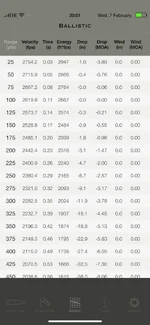
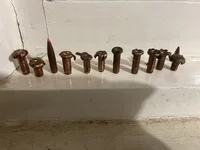
I shoot 175 Barnes LRX out of my .30-06, getting just shy of 2800fps with superformance powder.
It’s a very efficient bullet, and stays well above its minimum expansion velocity out past 600m
I’ve only ever shot a deer out at 340, the majority are inside 250.
It’s a very efficient bullet, and stays well above its minimum expansion velocity out past 600m
I’ve only ever shot a deer out at 340, the majority are inside 250.
Attachments
Brave Echo Niner
Well-Known Member
At UK altitudes the 175 LRX is likely to be marginally stable or fully unstable in a 1-11”.I shoot 175 Barnes LRX out of my .30-06, getting just shy of 2800fps with superformance powder.
It’s a very efficient bullet, and stays well above its minimum expansion velocity out past 600m
I’ve only ever shot a deer out at 340, the majority are inside 250.
It does work acceptably for terminal effect though, though I found the 150 TTSX to be better for smaller deer personally.
Ben
Stabilises fine in my 1-10At UK altitudes the 175 LRX is likely to be marginally stable or fully unstable in a 1-11”.
It does work acceptably for terminal effect though, though I found the 150 TTSX to be better for smaller deer personally.
Ben
 .222 and 6.5x55 for smaller deer
That’s probably where I am heading - thank youAt UK altitudes the 175 LRX is likely to be marginally stable or fully unstable in a 1-11”.
It does work acceptably for terminal effect though, though I found the 150 TTSX to be better for smaller deer personally.
Ben
Similar threads

- Replies
- 2
- Views
- 298


- Replies
- 7
- Views
- 718