
You are using an out of date browser. It may not display this or other websites correctly.
You should upgrade or use an alternative browser.
You should upgrade or use an alternative browser.
Killing Power?
- Thread starter Cranborne
- Start date


I don't agree. Additional bullet weight means that more of the front of the bullet can be "lost" as there still remains more bullet that isn't lost. That's to say that a 100 grain bullet losing half its weight is now a 50 grain bullet. A 200 grain bullet losing half its weight is now a 100 grain bullet. Also the argument that, seemingly, penetration is sufficient means that we could kill a deer, dead right there, with a knitting needle slowly pushed into the lungs? No. For without velocity to "scramble" the lung tissue penetration is not it itself a instant killer.

Brave Echo Niner
Well-Known Member
I understand the authors point of view, and I think they make a very good point - most stalkers are woefully unaware of the correlation between shot placement, shot reaction and terminal performance. This means with a given calibre they may be able to see better results than they currently see, or may get more consistent/predictable results.
I do however disagree that maths and physics do not come into. All calibres are not made equal, which is why we recognise that a .22 LR is not a suitable deer rifle and a .308 Win is not a good choice for dangerous game.
Shot placement is of course incredibly vital, but consideration does still need to be applied to bullet choice and calibre, ensuring they are suitable for the application.
Ben
I do however disagree that maths and physics do not come into. All calibres are not made equal, which is why we recognise that a .22 LR is not a suitable deer rifle and a .308 Win is not a good choice for dangerous game.
Shot placement is of course incredibly vital, but consideration does still need to be applied to bullet choice and calibre, ensuring they are suitable for the application.
Ben

Smellydog
Well-Known Member
Ive used a swede, a 243, a 270 and 308 but a 30-30 has took them just as well.
More is not always better.
Sometimes I think the maths is a kind of soother, for those not doing enough...
Should of seen the **** shower I got from my air pistol hunting episodes, or dear.....
More is not always better.
Sometimes I think the maths is a kind of soother, for those not doing enough...
Should of seen the **** shower I got from my air pistol hunting episodes, or dear.....
Smellydog
Well-Known Member
Plenty deer have been taken with a 22 buddy, promise...I understand the authors point of view, and I think they make a very good point - most stalkers are woefully unaware of the correlation between shot placement, shot reaction and terminal performance. This means with a given calibre they may be able to see better results than they currently see, or may get more consistent/predictable results.
I do however disagree that maths and physics do not come into. All calibres are not made equal, which is why we recognise that a .22 LR is not a suitable deer rifle and a .308 Win is not a good choice for dangerous game.
Shot placement is of course incredibly vital, but consideration does still need to be applied to bullet choice and calibre, ensuring they are suitable for the application.
Ben
Brave Echo Niner
Well-Known Member
Plenty deer have been taken with a 22 buddy, promise...
I am fully aware, but just because something can be done, doesn't mean it's a good idea.
Smellydog
Well-Known Member
Aye, or experts thought they should cover their arses hence we have a normalisation of now thinking we all need a sledge hammer to crack a nut when in actual fact a 357 magnum would probably suffice most of the time for the majority of shots.I am fully aware, but just because something can be done, doesn't mean it's a good idea.
Brave Echo Niner
Well-Known Member
Agree to disagree there I think.Aye, or experts thought they should cover their arses hence we have a normalisation of now thinking we all need a sledge hammer to crack a nut when in actual fact a 357 magnum would probably suffice most of the time for the majority of shots.
Personally I would say some people have a normalisation over how much a deer should run, partially driven by the idea a .243 or 6.5 is the 'big rifle', when in reality it's pretty marginal for the job.
My view is any deer making it beyond 10M or more is an excessive run, so by using appropriately sized calibres and bullets I can curb the typically run distances to well beneath that, even at extended range.
I see no tangible benefit to going beneath a 6.5 when recoil is already non-existent and terminal performance is already noticeably weaker than seen in the slightly larger calibres.
Ben
Last edited:
Smellydog
Well-Known Member
I've seen deer run more than 10m shot with a 270 & 308 buddy.Agree to disagree there I think.
Personally I would say some people have a normalisation over how much a deer should run, partially driven by the idea a .243 or 6.5 is the 'big rifle', when in reality it's pretty marginal for the job.
My view is any deer making it beyond 10M or more is an excessive run, so by using appropriately sized calibres and bullets I can curb the typically run distances to well beneath that, even at extended range.
I see no tangible benefit to going beneath a 6.5 when recoil is already non-existent and terminal performance is already noticeably weaker than seen in the slightly larger calibres.
Ben
Ive seen them drop to lesser cartridges.
Real life is or can be very different to theory.
ATB


Cranborne
Well-Known Member
Finn Aagaard was a PH in Kenya; he's clearly of the same school of thought as WDM Bell who shot 1,000+ plus elephants with a .275 or similar; this was due to him studying their anatomy. It seems plausible that energy plus shot placement work in conjunction. A badly placed shot from a .375 or similar is unlikely to result in an instaneous kill on any animal (deer sized or above).
Last edited:
Brave Echo Niner
Well-Known Member
You will get outliers, no question about it, but very clear trends can be seen from analysing previous data (as in many deer culled) to compare calibres, so far from pure theory.I've seen deer run more than 10m shot with a 270 & 308 buddy.
Ive seen them drop to lesser cartridges.
Real life is or can be very different to theory.
ATB
That trend is larger calibre with more energy = reduced run distance on average for the equivalent shot placement.
Also respectfully, I ain't your buddy, it comes across as incredibly condescending.

Smellydog
Well-Known Member
Chum then ?You will get outliers, no question about it, but very clear trends can be seen from analysing previous data (as in many deer culled) to compare calibres, so far from pure theory.
That trend is larger calibre with more energy = reduced run distance on average for the equivalent shot placement.
Also respectfully, I ain't your buddy, it comes across as incredibly condescending.

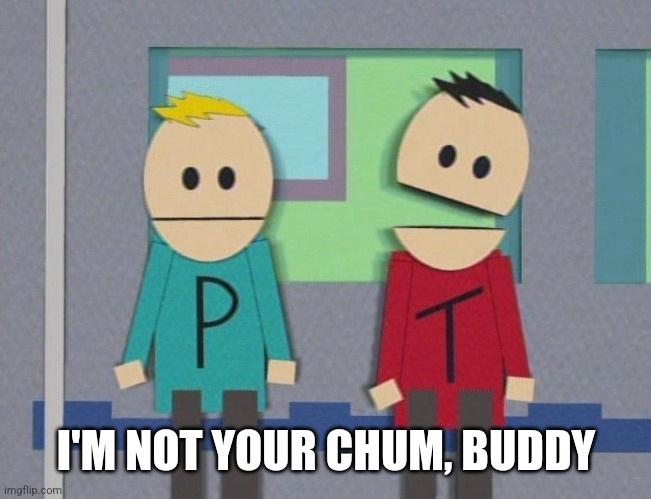

Urban Dictionary: I'm not your friend, buddy
I'm not your friend buddy is an internet phenomenon that was inspired by an episode of "South Park". Usually occuring on message boards, the first person says "I'm not your friend buddy" and the next person will use the use the last word in the first comment as the first word in their comment...
 www.urbandictionary.com


I’ll quite happily use the .222 for roe here in Scotland and I’ve also seen a fox taken at 150+yds with a .22 rimmy (the fox ran 15-20yds).Agree to disagree there I think.
Personally I would say some people have a normalisation over how much a deer should run, partially driven by the idea a .243 or 6.5 is the 'big rifle', when in reality it's pretty marginal for the job.
My view is any deer making it beyond 10M or more is an excessive run, so by using appropriately sized calibres and bullets I can curb the typically run distances to well beneath that, even at extended range.
I see no tangible benefit to going beneath a 6.5 when recoil is already non-existent and terminal performance is already noticeably weaker than seen in the slightly larger calibres.
Ben
So placement does play a big part.
Purely personal preference and I am not up for an argument but I like making big holes in deer and having them properly dead. Had .308 and now.30-06 - most happy with 150gr lead and never had a distressing situation with either. Have missed my placement and been too high, low, back…but never not killed them even if needing second shot. I think big wounds (.30) with a heavier bullet (150 ish) kills them more reliably although I am sure plenty of people are happy .243 or whatever. I’d rather lose a shoulder - which I don’t do often - and be sure.
HonestJohn
Well-Known Member
Killing Power is another way for the marketeers to sell and reinvent the wheel to continue growing sales. Whilst ballistic improvements are a good thing through innovation, the truth and reality is that any modern day calibre suitable for a deer/game species range, with the right bullet construction for the intended game, and placed in the right place, at a range where it will deliver the sufficient terminal performance through penetration and expansion, will more than adequate. You can deliver this with a .222 on roe with the right bullet and placement, yet have poor performance with a 6mm-30cal with poor choice of bullets, placement and terminal velocity.
Killing power is about understanding how to correctly mix the variables into application. It is as the author notes, not necessarily about the size of the bullet
I agree entirely
Killing power is about understanding how to correctly mix the variables into application. It is as the author notes, not necessarily about the size of the bullet
I agree entirely
Similar threads


