
You are using an out of date browser. It may not display this or other websites correctly.
You should upgrade or use an alternative browser.
You should upgrade or use an alternative browser.
Custom knives and steel
- Thread starter Sniper308
- Start date


And the answer I would give you from my point of view is because of it's price and availability, I have made a few knives using ELMAX another powder steel, and yes they have superior edge retention, but the steel is a lot more difficult to find, and it is a bit harder to work with because of it's wear resistant properties.
If you speak to any custom knife maker they should be able to make a knife in the steel you want, if you are willing to pay the price, but for most of the 'hand made' knives that are made they are of a design the the knife maker regularly makes and they are made of a good known steel, for it to be a true custom knife, speak to your chosen maker and ask them to make you a custom knife to your requirements.
For a little more info, AEB-L and SF100 and more or less the same steel composition, just made buy different producers.
If you speak to any custom knife maker they should be able to make a knife in the steel you want, if you are willing to pay the price, but for most of the 'hand made' knives that are made they are of a design the the knife maker regularly makes and they are made of a good known steel, for it to be a true custom knife, speak to your chosen maker and ask them to make you a custom knife to your requirements.
For a little more info, AEB-L and SF100 and more or less the same steel composition, just made buy different producers.

I think a key factor is price. Magnacut cost 3-3.5 times more than Aebl, so if you add extra 40-50 pounds to aebl made knife price someone should do it for you. Yes, it would be superior in comparison to aebl, but there is a lot better steels you probably never heard of coz they aren't overhyped and no one invested in their marketing.
N
If you had well made k390 it will be hard to experience much better steel to cut, but for sure it won't be magnacut
No, not that much, 40 pounds difference in hardened billet, plus a bit more time for a blade finish.yeah I should imagine magnacut would be more expensive but not too much more. I had a k390 which was awsome. Took a while to notice a difference when sharpening mind
If you had well made k390 it will be hard to experience much better steel to cut, but for sure it won't be magnacut

Rafter
Well-Known Member
Tougher or more abrasion resistant steels also burn up more belts, take longer to grind and are harder to polish.... all adding to the cost.
They are harder for the client to sharpen too.
The reality of knives is that the grind and bevel angles are more important to usability and edge longevity than the steel in 99% of cases. In my opinion, of course.
They are harder for the client to sharpen too.
The reality of knives is that the grind and bevel angles are more important to usability and edge longevity than the steel in 99% of cases. In my opinion, of course.

I agree with your observations, blade geometry is a key factor, of course, depending on the knife purpose.Tougher or more abrasion resistant steels also burn up more belts, take longer to grind and are harder to polish.... all adding to the cost.
They are harder for the client to sharpen too.
The reality of knives is that the grind and bevel angles are more important to usability and edge longevity than the steel in 99% of cases. In my opinion, of course.
I've noticed a tendency to hide the variable geometry of the cutting edge with a variable sharpening angle.
Regarding steel, the volume, type, and size of carbides are crucial, as they are ultimately responsible for the cutting, also sharpening grid. There are steels that will shave but not cut tomato skin because they lack the cutting aggression when overpolished – and carbides are also responsible for this. If you're comparing steels of the same composition in your experience, then I agree. The difference is minimal, assuming the same blade geometry, custom heat treatment might make a difference.
Of course you are if you comparing Elmax to Aebl.I have been amazed by the edge retention on my Elmax steel blade from Peter Eaton. Truly impressive

Different knife steels have different ups and downs . We don't ( or should not) get drawn into " bang this is wonder do it all steel " . There is no best steel choice its a case of what you specifically need it to do . Then we have availability of sizes of stock .I have noticed some what of a trend going on with Aeb-l steel being used for hunting knives. I can’t help but think magnacut would be superior in comparison. However I don’t see anyone using this steel?
We need how the tool is to be used to decide the best steel for the job at hand and we should balance that further with the Heat treat NOT JUST , THIS IS THE BEST without the specifics of many things like getting the best for purpose heat treat within the intended purpose .
Now to the multi metal mix in a modern Damascus ? it wont ever be even indeed there is a claim to the Damascus cutting effect .kind of hard to prove if its worse or better at anything on that one .
Let me explain for pure example how a cheap 1095 hc can beat all previous steels in the above , this steel by the way was actually first made to be the best clock spring way beck when Big Ben was being built. As its been moonlighting on the side a very long time since then though ! Take a machete ! It needs in no real order of imporance 1. to take an edge that is sharp as it is used to hack trough a jungle , it needs to be easy to re sharpen fast and well with a simple flat stone or similar . No fancy knife grinders in a jungle and you don't want to brake your blade into two parts through so we build in flexibility - just the job for a spring steel ! Now the downside , it isnt full of hard carbides so you will be sharpening more frequently , it corrodes pretty fast , so it needs more frequent attention .
Now the swing to The SF100/Aebl above as i type this both are pretty much getting onto twins . Its the very last jungle machete you would want frankly . Harder to sharpen without good skills and a decent set of stones and good light .
Do either reach a better sharpening state ? No! not really but they will hold a good edge longer but i serious chiping will be the first problem and the less fexible high carbides would end with a snapped blade
Back in the real word again The 1095 hc with a hotter / faster quench normally water over oils
Back to stalking knives now , tell your knifemaker what you want to achieve with the knife , rather than chase numbers and brands .
Yes I understand that there’s a reason why there’s so many different types- for different tasks. I was just meaning for example a 4” blade used for skinning, not cutting through bone, just to process a deer in the fieldDifferent knife steels have different ups and downs . We don't ( or should not) get drawn into " bang this is wonder do it all steel " . There is no best steel choice its a case of what you specifically need it to do . Then we have availability of sizes of stock .
We need how the tool is to be used to decide the best steel for the job at hand and we should balance that further with the Heat treat NOT JUST , THIS IS THE BEST without the specifics of many things like getting the best for purpose heat treat within the intended purpose .
Now to the multi metal mix in a modern Damascus ? it wont ever be even indeed there is a claim to the Damascus cutting effect .kind of hard to prove if its worse or better at anything on that one .
Let me explain for pure example how a cheap 1095 hc can beat all previous steels in the above , this steel by the way was actually first made to be the best clock spring way beck when Big Ben was being built. As its been moonlighting on the side a very long time since then though ! Take a machete ! It needs in no real order of imporance 1. to take an edge that is sharp as it is used to hack trough a jungle , it needs to be easy to re sharpen fast and well with a simple flat stone or similar . No fancy knife grinders in a jungle and you don't want to brake your blade into two parts through so we build in flexibility - just the job for a spring steel ! Now the downside , it isnt full of hard carbides so you will be sharpening more frequently , it corrodes pretty fast , so it needs more frequent attention .
Now the swing to The SF100/Aebl above as i type this both are pretty much getting onto twins . Its the very last jungle machete you would want frankly . Harder to sharpen without good skills and a decent set of stones and good light .
Do either reach a better sharpening state ? No! not really but they will hold a good edge longer but i serious chiping will be the first problem and the less fexible high carbides would end with a snapped blade
Back in the real word again The 1095 hc with a hotter / faster quench normally water over oils
Back to stalking knives now , tell your knifemaker what you want to achieve with the knife , rather than chase numbers and brands .

When you get 5 minutes @Sniper308, maybe follow the link below and have a read, towards the end is my own opinion on the subject.
 www.stuartmitchellknives.com
STEEL — Custom Knives - Stuart Mitchell Knives
www.stuartmitchellknives.com
Very interesting enjoyed itWhen you get 5 minutes @Sniper308, maybe follow the link below and have a read, towards the end is my own opinion on the subject.
STEEL — Custom Knives - Stuart Mitchell Knives

Rafter
Well-Known Member
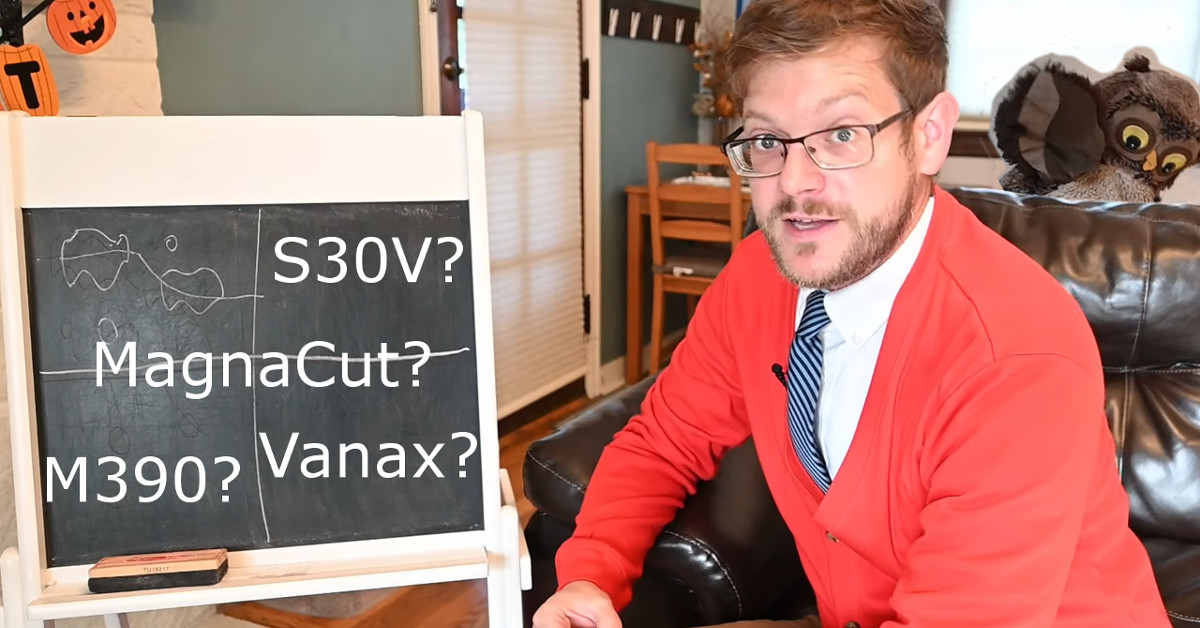
This guy knows a thing or two about steel, and helps explain the relationship between steel type, hardness, toughness, blade shape, corrosion resistance carbide size and type...... there is a bit to it.
 knifesteelnerds.com
Knife Steels Rated by a Metallurgist - Toughness, Edge Retention, and Corrosion Resistance - Knife Steel Nerds
Steel Metallurgist Larrin Thomas uses tests of knife steels to rate the steels and explains the factors that control performance.
knifesteelnerds.com
Rafter
Well-Known Member

This is the direct comparison between AEB-L and Magnacut.
Magnacut edge retention is better, but toughness (resistance to chipping) is improved with AEB-L. For pure meat cutting edge retention is more important as it means longer between sharpening, but for a knife that could be hitting bone - especially at an angle, toughness is the quality to look for.
I’m comparing to super gold powder steel laminate from Fallkniven, D2 tool steel and others I can’t recall. Elmax has impressed me greatly.Of course you are if you comparing Elmax to Aebl.
@Peter Eaton knives are nicely made and from what I've seen, they have good blade geometry, so I no wonder you're so impressed. It's good thing that some users want to test steels other than the popular ones, to have own opinions.I’m comparing to super gold powder steel laminate from Fallkniven, D2 tool steel and others I can’t recall. Elmax has impressed me greatly.
Similar threads

- Replies
- 13
- Views
- 1K


- Replies
- 7
- Views
- 706


