6.5x55mm Viht N160 overpressure at 44gr - any wisdom?

So thanks to all for their input. My next bout of testing now has these components per the test sheet below:

  • Compare 0.002" shoulder bumped loads vs neck resized only
  • try Viht N160 loads around the 42.0 to 42.5gr range that delivered good MV and no over-pressure
  • Do not apply neck crimp during bullet seating [neck resizing is measured to take internal diameter down to 0.261" which grips 0.2645" Barnes tightly]
Neck_vs_full_resize_6.5_42.2-42.6.webp
 
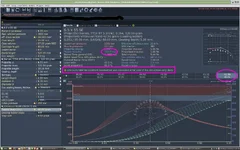
I have just downloaded the free and apparently well specified GRT ballistics app and loaded up the 6.5x55mm data I have. Of concern is that my chrono-verified MVs for reloads at 42.5gr N160 range do not match the GRT app. My range obtained test data [2776fps] does match the Viht reloading page table. But GRT pegs it at 2503fps/763m/s. [?]

However, one thing the GRT flags is that 42.5gr N160 in a 6.5x55mm cartridge delivers a low and unpredictable burn rate. Interesting! It further indicates that 46gr N160 is close to max loading which hgappily aligns to the Viht tables.

The point at which GRT no longer flags "low burn rate" is 43.5gr.

Hmmm....I am going to progress with test laid out in the spreadsheet in the previous post, but GRT seems to echo other loaders experience that I may need to leapfrog these middle load values and work somewhere nearer the 46gr max load. TBC

GRT_indicates_42.5gr_too_low_for_consitent_burn.jpg
 
Zambezi, what's your COAL? If it isn't around 3.15", you are seating them bullets way too deep.
Also, what is your case length? It should be less than 2.16". If it isn't, you need to trim them down.

I've read through the thread thoroughly and there seems to be something amiss... I've run your load through QL and GRT and both show pressures <15% below p-max.

Possible causes:
1. Way too soft cases. Bad batch maybe? Sako soft, yes. But not this soft.
2. Dimension error. Case length or COAL. A too long case will get pinched at the throat and a too deeply set bullet will increase pressure.
3. Too much powder in these two cases. Measurement error.
4. Faulty barrel. Unlikely since it's a Blaser and why not then with factory ammo...
5. Something happened to these two rounds. Dropped, bumped etc.

Just some thoughts...
 
Excuse my tongue in cheek reply, but I think the problem is spelled Blaser.

No seriously. VV160/560 are a bit slow when loaded low in 6.5x55. If you then over calibrate the case to facilitate Blasers locking mechanism it will increase the problem.

So, less calibration and stouter load. :)

And if I mistakenly found a Blaser where there was none. I apologize. The conclusion remains the same.
This made me sit up! I had exactly the same problem with 45.5 gr of vit n160 with Barnes TTSX 120gr at col of 2.885. Extremely accurate and but all of a sudden it’s started feeling very hot, headstamping and jumping off sight with recoil. On second load with new Lapua brass I had 4 near case head separations. Wtf?!?! Velocity was well above book and QL forecasts. Since backed off to 44gr and much better. Shot through a Blaser 6.5x55
 
Then you need to check the "locking ring" in the barrel for wear and make sure everything is mechanically all right.
Soot buildup in/at the throat will pinch the case and cause over pressure.

I also rescind that comment. If something is worn out of spec, more power is not the answer...
 
Zambezi, what's your COAL? If it isn't around 3.15", you are seating them bullets way too deep.

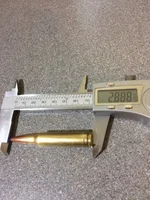
The barrel's breech-to-lands dimension has been measured to be 2.589". I cannot overstress this: All reloads are built to a ogive length of 2.337". Their COAL is 2.888". There is zero engagement in the lands. I have 0.200" jump available.

2.888_COAL.webp


what is your case length? It should be less than 2.16"

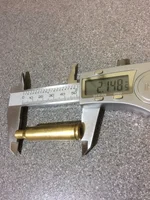
Once again, per earlier statements, even the twice fired brass has not grown to 2.16". The mean value measured for all reloads is 2.15".

IMG_4027.webp

1. Way too soft cases. Bad batch maybe? Sako soft, yes. But not this soft.
2. Dimension error. Case length or COAL. A too long case will get pinched at the throat and a too deeply set bullet will increase pressure. Ruled out by repeat measurement
3. Too much powder in these two cases. Measurement error. Ruled out by repeat measurement
4. Faulty barrel. Unlikely since it's a Blaser and why not then with factory ammo... Three different commercial rounds perform flawlessly with near same POI
5. Something happened to these two rounds. Dropped, bumped etc. Unlikely. I showed images for 2 cartridges. The batch was 5 rounds. All showed some over-pressure


I appreciate all the suggestions. And I have revisited all my reloading steps to verify no measurement error. I have measured powder loads of dissasembled unfired 45gr rounds. All good. I have calibrated scales against known weights. All good. In addition to digital micrometer adjudication of case length, I also offered cases up to Lee case trimmer: blades did not engage with case neck confirming sub 55mm/2.16".

Please keep the ideas coming, but let's park the COAL and powder weight questions. Those two parameters I have re-measured to distraction. I am hoping that the test rounds I have made with just neck-sizing will perform really well. If I get the MV I need plus accuracy, I won't need to take powder charge weights any further. I can then start tinkering with the jump.
 
I had exactly the same problem with 45.5 gr of vit n160 with Barnes TTSX 120gr at col of 2.885. Extremely accurate and but all of a sudden it’s started feeling very hot, headstamping and jumping off sight with recoil. On second load with new Lapua brass I had 4 near case head separations. Wtf?!?! Velocity was well above book and QL forecasts. Since backed off to 44gr and much better. Shot through a Blaser 6.5x55

Hallelujah! So that's at least two of us getting near same results. And our experience differs from ballistic app pressure predictions. The common factors are powder, bullet and rifle. Two different brass manufacturers in view. Matt, did you resize brass? Full length or just neck?
 
Full length sized the brass from new, then full re-size again for the second reload. I was using an rcbs competition die set witch gave a good neck tension, so much so it took several ass-twichingly hard whacks with a kinetic hammer to pull them. I tried a increasing col to miss binding onto a cannula and the pressure was still too much and my SD was still all over the place. I contacted a knowledgeable reloading friend and loaded a batch in front of him to check my process and sanity and mv on my V3 was still way over book values for the load. Backing down to 44gr and back to 2.885 seems to be working nicely. I still need to chrono to confirm speed.
 
rcbs competition die set witch gave a good neck tension, so much so it took several ass-twichingly hard whacks with a kinetic hammer

I am using the standard RCBS die and it delivers an inside neck dimension of 0.261 on the Sako brass. The 0.2645 Barnes bullets sit very snuggly.
 
7DB77198-B1EB-4294-959E-A860046F5348.jpeg9C6D8359-0ED9-46D2-B4CA-488AC1B731EC.jpeg
Was a little more than soot on my cases! This case stress was after the second firing of the Lapua brass. Good bullet performance... but not worth the risk!
 
Last edited:
Doesnt look like pressure, looks like case to chamber fit issue. Blasers need fl sizing every time. Do yourself a favour and buy some new lapua brass
 
@zambezi those photos of a measured cartridge and a case that you posted yesterday evening both look to have early signs of head separation.

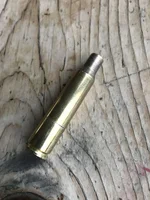
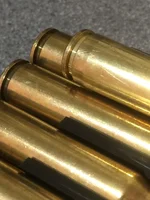
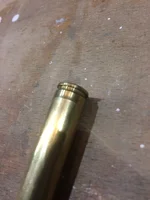
In the image below is one of the once-fired Sako factory rounds lying on top of a box of its unfired stable-mates. I cannot discern any ridge parallel to the head on any of the unfired rounds. Clearly the ridge in the fired case is obturation of the brass up and until a hardness/thickness that did not stretch upon firing. I can verify that the case heads measure 0.474 whereas the ridge above measures 0.4785 - 0.479.

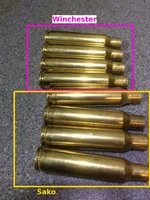
Case obturation is desirable/neccessary. However I take Malmick's point: the line looks awefully abrupt/ridge-like. Compare with Winchester once-fired below...

IMG_4047.JPG


By contrast, once-fired Winchester brass has a less stepped profile at the point where obturation meets the harder head:

IMG_4050.JPG

Also, the less obvious, integrated, step that is the Winchester "bulge" is just 0.002" greater than the brass immediately above. Compare with Sako's 4 to 5 thou stretch...

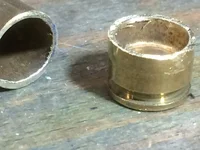
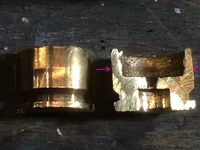
What I will do now is hack open one of the Sako once-fired cases that has the largest ridge presenting [0.479"] and I will share images of the cross-section later.
 
I have now sliced open an example of the once-fired Sako factory ammunition that exhibited the greatest obturation above the head [0.479"]. To my eye it looks fine. But I am no metallurgist. Certainly there is no obvious cracking and the girth of the brass looks to be fine.

Logically, if the once-fired brass has been obturated to something approaching breech dimensions, surely using it as-is means it will benefit from the breech wall support sooner in the firing cycle? What I am thinking is that FL sizing is more rather than less likely to excercise the brass in this area.

IMG_4051.webp IMG_4052.webp IMG_4055.webp
 
Back
Top