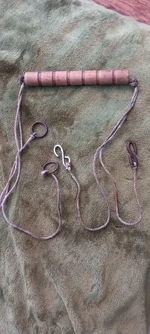
Can anyone identify this?

Frank Homes

Well-Known Member
I found this in a large array of salmon and trout fishing gear I am trying to sort out for a friend.Any ideas...
 

Attachments

  • 20250102_145529.webp
    20250102_145529.webp
    387.7 KB · Views: 150
I'm looking forward to help identify any otters that you find. They'll be likely round, lead on one edge, hole in the middle and a flap that you can close once you've passed your line through and into the hole.
 
I'm looking forward to help identify any otters that you find. They'll be likely round, lead on one edge, hole in the middle and a flap that you can close once you've passed your line through and into the hole.
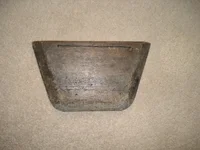
Such as this one? Inherited from my Dad, who inherited it from his Dad, so probably over a hundred years old....DSC01950.webp
 
It doesn't look like the ones my father used, but it would do the same task yes. My father used the round wooden tops from the bobbins from his mill. For those that come late to the conversation an "otter" is used to free a lure (as in a spinning lure) that had become trapped in rocks when salmon fishing. The idea is that the "otter" is put on the line and then allowed to float downstream. Thus giving a pulling force to the snagged lure in an opposite direction to that which the angler has unsuccessfully applied to try to free the lure.

You Tube shows a plastic bottle being used.

 
It doesn't look like the ones my father used, but it would do the same task yes. My father used the round wooden tops from the bobbins from his mill. For those that come late to the conversation an "otter" is used to free a lure (as in a spinning lure) that had become trapped in rocks when salmon fishing. The idea is that the "otter" is put on the line and then allowed to float downstream. Thus giving a pulling force to the snagged lure in an opposite direction to that which the angler has unsuccessfully applied to try to free the lure.

You Tube shows a plastic bottle being used.


Close to how we pulled up the boat anchor on the dive rib, a running ring attached to a decent buoy then drive fwd at pace the line would pull through the ring and the end chain would have weight to stop the pick going back down.
Just like in the film Jaws and the barrels... :doh:

Here's to swimming with bow legged women

 
Close to how we pulled up the boat anchor on the dive rib, a running ring attached to a decent buoy then drive fwd at pace the line would pull through the ring and the end chain would have weight to stop the pick going back down.
Just like in the film Jaws and the barrels... :doh:

Here's to swimming with bow legged women

It always amused me how trout fishing boat anglers attached their anchor chain to the bottom of the anchor! What did they think the top hole was for? Playing I-Spy for the quite moments when the fish weren't catching?

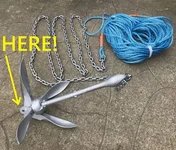
Some just used a rope and no chain at all. Instead of attaching it with a u-bolt to to eye at the top of the anchor near the grapnel legs and then leading the chain down the shaft and using a cable tie to then attach the chain with some slight slack there to the bottom of the anchor. Then when it did snag they couldn't pull it out.

Mine if it snagged would break the cable tie and then pull the anchor loose from the top end. This below is at least using an attempt at a resasonable length of chain rather than just rope but the correct attachment point should be as "HERE" as noted above then some slack and a cable tie to the bottom ring.

Anchor.jpg

These guys know!

 
Last edited:
Back
Top