
Interesting to read these figures now, a few years later, in light of the more recent trend to sell broken down carcasses for much less on Facebook forums, groups, etc. I often see butchered fallow carcasses advertised or sold on these groups for less than £200. Each to their own, but I guess there’s a fine line between making venison more accessible and selling at prices that undercut (significantly) those who are hoping to sell at the prices discussed in this thread.A fallow doe with a larder weight of 36kg (guts out, head & legs off, skin on) will yield about 20kg of saleable meat (all boned out).
For budgeting purposes, you can roughly assume that the larder weight in kg, multiplied by 10, will give you the approximate retail value in £s of the butchered carcass.
(So a 36kg larder weight doe retails at around £360).
That formula seems to work fairly accurately with fallow and reds. Not tried it with other species.
(Obviously the return on the carcass goes up if you do further processing, such as burgers, sausages etc).
You are using an out of date browser. It may not display this or other websites correctly.
You should upgrade or use an alternative browser.
You should upgrade or use an alternative browser.
Carcass Efficiency - Meat Yield
- Thread starter @theroedeerguy
- Start date


What's the quality of the butchery, the presentation and the packaging like, on those cheap ones you're seeing on Facebook etc?Interesting to read these figures now, a few years later, in light of the more recent trend to sell broken down carcasses for much less on Facebook forums, groups, etc. I often see butchered fallow carcasses advertised or sold on these groups for less than £200. Each to their own, but I guess there’s a fine line between making venison more accessible and selling at prices that undercut (significantly) those who are hoping to sell at the prices discussed in this thread.
They seem to vary, and
What's the quality of the butchery, the presentation and the packaging like, on those cheap ones you're seeing on Facebook etc
They seem to vary, and as you’d expect they seem to appear more frequently come Feb/March.What's the quality of the butchery, the presentation and the packaging like, on those cheap ones you're seeing on Facebook etc?

We are using everything except the green gralloch, hide, head and feet.
I butcher the deer I shoot to give:
A. European food:
Africans also eat a lot of goat meat. They are paying about £160 for a leg of goat, which is about £23/kg. I need to register with DEFRA ...
Most of my deer are lower neck shot, with some head shot. All areas with haemorrhaging are fed to the owls / buzzards / foxes. In a neck shot, it is only a very small region that is destroyed.
I butcher the deer I shoot to give:
A. European food:
- The haunch, rump and shank, with a soup bone.
- Front legs, (roast as pairs they are great)
- Fillet (Mignon),
- Sirloin fillet.
- Kidneys, lungs, heart, liver: they use it for Jolloff rice, fried rice and stews.
- Neck,
- Ribs, minus the sirloin,
- Flank,
- Pelvis
Africans also eat a lot of goat meat. They are paying about £160 for a leg of goat, which is about £23/kg. I need to register with DEFRA ...
Most of my deer are lower neck shot, with some head shot. All areas with haemorrhaging are fed to the owls / buzzards / foxes. In a neck shot, it is only a very small region that is destroyed.
Last edited:

Deermanagement
Well-Known Member
I know you can't create something from nothing but I thought I'm getting much better that the 50% that seems to be suggested. This is not anything boned out and all trimmings used for mince. Based on a 30kg Sika, I think I'm left with around 20kg of joints and edible partsIf your not to fussy in the butchery room about 50% is about right if your fussy I’m sure more could be achieved.
 I'll have to pay more attention next time anddo some weighing before and after

40-50%

Phil fox man
Well-Known Member
I've obviously got to much time on my hands 
everything I shoot be it deer ,birds or rabbits gets deboned first then the bones are boiled for soup or stock anything left gets minced and geletin added to make dog food.
also when my mate has butchered a cow I pick up the fresh carcass and trim the excess meat , usually get about 4 kg of mince.
takes time but keeps me busy


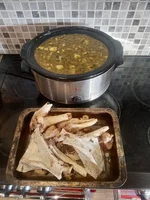
everything I shoot be it deer ,birds or rabbits gets deboned first then the bones are boiled for soup or stock anything left gets minced and geletin added to make dog food.
also when my mate has butchered a cow I pick up the fresh carcass and trim the excess meat , usually get about 4 kg of mince.
takes time but keeps me busy


Utectok
Well-Known Member
I was talking all boned out and tbf I am not fussy I shoot a lot of deer and am never short of venison so the carcasses isn’t picked clean.I know you can't create something from nothing but I thought I'm getting much better that the 50% that seems to be suggested. This is not anything boned out and all trimmings used for mince. Based on a 30kg Sika, I think I'm left with around 20kg of joints and edible parts
Deermanagement
Well-Known Member
Neck or ribs? Hocks and shanks?View attachment 452294Posted this before, from a clean shot animal.
Slow roasted shank one of the best parts

Ended up bringing a complete animal home last night - normally eviscerated on the ground. I was surprised to see that for a 23.6kg young fallow pricket (in skin) in the chiller the guts, head, feet amounted to 11.5kg! Approximately a third. On past performance I'm expecting less than 10kg from the carcass in the chiller.
Antonyweeks
Well-Known Member
I've been noting the percentage return on larder carcass weight (head, feet gralloch etc but skin on) vs what I then put in the freezer / gets used. Anything that I don't put for human consumption (blood meat, oomsk etc) goes into caddy bags at 1kg a pop and I give to a couple of neighbours for their dogs. I still count the weight of this though in my overall calculations. Sometimes I will not bones out a muntjac haunch and keep it whole (split into both legs). Occasionally for smaller roe I also butcher the rear legs as a whole leg. Keeping haunch joints on the bone clearly impacts the percentage you then 'keep'. With all of the above taken into account my average for kept meat is about 58%. Sometimes I've had a 75% return (but inevitably one or two joints bone in). I've seen similar threads elsewhere and I think 50%+ is decent for amateur butchery. 
BTW, I don't count the offal (which is often used).
BTW, I don't count the offal (which is often used).
Deerkeeper2
Well-Known Member
A couple of times over the years I have done very detailed breakdowns of weights and values.
I’ve even go as far as to weigh the animal within seconds of being shot then again after bleeding.
I’ve weighed them daily in the chiller to see the weight loss during hanging.
I’ve worked with very experienced Master Butchers, Executive Chef’s and Accountants to break the costings down to the last penny.
I’ve done all this with both red and fallow. It is hours and hours of hard work.
I could answer any question on this subject if it wasn’t for one problem….. I never saved all that info in a place that I can now lay my hands on it!
I’ve even go as far as to weigh the animal within seconds of being shot then again after bleeding.
I’ve weighed them daily in the chiller to see the weight loss during hanging.
I’ve worked with very experienced Master Butchers, Executive Chef’s and Accountants to break the costings down to the last penny.
I’ve done all this with both red and fallow. It is hours and hours of hard work.
I could answer any question on this subject if it wasn’t for one problem….. I never saved all that info in a place that I can now lay my hands on it!
What was larder weight though?not much left on this fallow
shakey jake
Well-Known Member
Whats oomsk?I've been noting the percentage return on larder carcass weight (head, feet gralloch etc but skin on) vs what I then put in the freezer / gets used. Anything that I don't put for human consumption (blood meat, oomsk etc) goes into caddy bags at 1kg a pop and I give to a couple of neighbours for their dogs. I still count the weight of this though in my overall calculations. Sometimes I will not bones out a muntjac haunch and keep it whole (split into both legs). Occasionally for smaller roe I also butcher the rear legs as a whole leg. Keeping haunch joints on the bone clearly impacts the percentage you then 'keep'. With all of the above taken into account my average for kept meat is about 58%. Sometimes I've had a 75% return (but inevitably one or two joints bone in). I've seen similar threads elsewhere and I think 50%+ is decent for amateur butchery.
BTW, I don't count the offal (which is often used).
Phil fox man
Well-Known Member
sorry I've absolutely no idea but it was fcuking heavy lifting itWhat was larder weight though?
 .
.I just weighed the vac packs.
Similar threads

- Replies
- 41
- Views
- 2K


- Replies
- 22
- Views
- 1K

- Article
- Replies
- 17
- Views
- 2K

