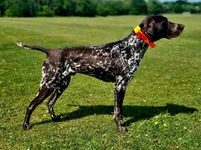
Exercise requirements for a GSP?

RifleTuner

Well-Known Member
I am thinking about getting a GSP for deer hunting. I have had other dog breeds, but never a GSP. I hear about their high energy levels and the need to exercise them daily to keep them from destroying your house/garden/eat your clothes/etc. I dont have a large block of land or the ability to run them through the bush each day, so an exercise program is going to have to be something I do actively each day with the dog aside from days I am out hunting. But what is the actual requirement people find with their GSPs? I hear 1-2 hours per day - but just trying to get some real word info from people in a similar situation.
 
Depends on age & the dog. Less than 2 hours a day seemed to leave them feeling shortchanged in my experience. They're bred to work all day & cover huge distances so you're trying to replicate that through your exercise programme (assuming for birds), but if you want one for deer I'd be looking for a fairly passive one & you might get away with a bit less then. When I've been short of time & have to give a shorter walk I often take a dummy, drop it & walk a long way away & send the dog back for it, then repeat.
 
I have four of them hence why I have the physique of a racing snake:rofl:
Seriously though ,Yes they do need a fair bit of execise! How much? Its hard to say as they are all individuals, what
I would say mental stimulation is every bit as important as physical exercise ,they are an intelligent breed and
without that stimulation they quickly become bored ,and that is when you will get the destructive behaviour you
describe.
They are great dogs but they do require a fair bit of attention and are not for everyone.
 
No experience with GSP’s directly but from my experience - if you just do a lot of exercise you will end up with a very fit dog but one that may still be bored.

Mental exercise is just as important and also builds up your bond with the dog - even daft things like teaching it tricks will help tire it out.
 
Mental stimulation is definitely needed when exercise is short, ours hates being left alone too. But I think it’s as much about what’s there normal routine.
Mines quite happy to walk all day, usually happy to go for a walk or down the stables first thing then lay in the sun or in front of the fire recharging the batteries. As soon as the door opens he’s ready to go again if required, unless it’s for a run he just sits by the front door:lol:
 
Not a GSP but Slovak in my avatar....part GWP, so splitting hairs really.
As has been said before, routine and mental stimulation is the key. Mine was a grade A PITA before i worked out he could run all day long and then run a bit more....was taking the bugger out 3 times a day to try to tire him out...the sod just got even fitter and could run even further !
Now he never "goes for a walk" every outing involves training/hunting/retrieving of some kind.....comes home after an hour absolutely bo******ed spends the rest of the day pottering and happy to be left alone if needed.
Hope that helps.
Regards, Rob.
 
GSPs certainly do need a great deal of exercise, as do all working dogs. Anyone who works dogs for a living will know that it's really quite difficult to tire a working dog out!

Certain breeds like Labs will be quite happy doing as little as possible but again trying to really get them really tired will take more energy than a lot of people have. Not such a problem as the dog ages, but when they're in their prime, if they are let with lots of surplus energy, problems will sometime arise and some GSPs can be a bit touchy!
 
I am thinking about getting a GSP for deer hunting. I have had other dog breeds, but never a GSP. I hear about their high energy levels and the need to exercise them daily to keep them from destroying your house/garden/eat your clothes/etc. I dont have a large block of land or the ability to run them through the bush each day, so an exercise program is going to have to be something I do actively each day with the dog aside from days I am out hunting. But what is the actual requirement people find with their GSPs? I hear 1-2 hours per day - but just trying to get some real word info from people in a similar situation.

This is going to be the kind of answer that you see on here when someone asks about the qualities of a particular .22 rimfire to be told its not as good as a .308.

I do not have a GSP, but I do have a Viszla and she never gets tired. I live on 80 acres so am lucky enough to be able to run her around quite a bit and she can run and run and run. I would not have such a dog without having the ability to give them significant amounts of regular exercise and for exercise, I mean running. I have heard from the owners of the others in the litter and some of them have been very destructive. One went through two sofas. Mine has not been at all destructive and I put this down ( to a certain extent ) to the availability of outdoor space.

All the best.
 
In my opinion there is a big difference in how much exercise they need and how much they will take! As stated they are bred to run all day and they will but I think all you are doing by giving them hours a day is creating a fit dog and one that finds it difficult to “settle” quietly. I’ve had them for nearly 30 years and have 5 at present. They are worked on the grouse moors and used for picking up. During the shooting season they will happily work all day but outside of the shooting season they get daily exercise for 45mins to an hour and that’s it. They settle quietly for the rest of day without any bother.
I think it’s important that they learn to switch off and do nothing!
 
I have this guy, the wirey cousin, 8mths old he will run all day.
86ECBC8A-DBCF-4029-A188-8BCCDB372003.webp
his special chair,

D79355AF-3236-4F11-855B-44C1ED2129D0.webp
He‘s very intellegent ,but doesn’t like being left alone . He has destroyed a few bits and pieces ( or to pieces) as a result. I would echo the views of others mental stimulation is very important. If He’s pottering around with you he’s quite happy to throw himself down And balm out. They seem to have a Very strong prey drive, so harnessing that is important . I understand they consider ”cat “ to be a delicacy.
If you don’t have the space then maybe find a local farmers field nearby that you can use on daily basis. The very best.
 
I have this guy, the wirey cousin, 8mths old he will run all day.
View attachment 156737
his special chair,

View attachment 156738
He‘s very intellegent ,but doesn’t like being left alone . He has destroyed a few bits and pieces ( or to pieces) as a result. I would echo the views of others mental stimulation is very important. If He’s pottering around with you he’s quite happy to throw himself down And balm out. They seem to have a Very strong prey drive, so harnessing that is important . I understand they consider ”cat “ to be a delicacy.
If you don’t have the space then maybe find a local farmers field nearby that you can use on daily basis. The very best.
[/QUOTE
By the looks of him, butter wouldn't melt in his mouth lol, cracking photograph of him in his chair :thumb:
ATB.
 
In my opinion there is a big difference in how much exercise they need and how much they will take! As stated they are bred to run all day and they will but I think all you are doing by giving them hours a day is creating a fit dog and one that finds it difficult to “settle” quietly. I’ve had them for nearly 30 years and have 5 at present. They are worked on the grouse moors and used for picking up. During the shooting season they will happily work all day but outside of the shooting season they get daily exercise for 45mins to an hour and that’s it. They settle quietly for the rest of day without any bother.
I think it’s important that they learn to switch off and do nothing!
I agree ,

I have just been thinking about this ,

1 hr before work and 1.5 hrs after work running are Mack( he usually gets 20 mins before work and 40 mins after work , but coz I'm working late hrs at the moment , I give him and myself a bit more excersise)

He will still come in the garden panting like a good un and wants to bring u his ball, coz he,s still wired lol

I say " Enough" and he will settle

You get a hunting dog , you will always have a hunting dog lol

Learn it to turn off the switch / hunting mode , when " YOU " say so

Kjf
 
Last edited:
Thanks for the comments so far. So understanding the need for stimulation in addition to exercise, what do people suggest as activities within a somewhat urban environment? I will be getting a pup and bringing it up from around 8 weeks old. I think getting a pup at that age is important to build a good bond. I am looking for a pup from parents that have proven themselves on deer.

During the day I would have some flexibility to spend time with the pup since I am self employed. So I could bring him to work with me, but that would mean they would have to sit in an office the majority of the time. I could give them a bed in my office, so it would have some company, though not a lot to get excited about during my work day.
 
It depends how much space you have, but i wouldn't be tempted to do too much too soon training wise. Let them be a puppy....but be warned they can take a while to mature....mine was at least 18 months before he "settled down". He's 10 years old now and still very much "ready to go".
I'm sure he/she will appreciate the one to one attention you'll be able to give in the early days and once you start training with him/her I think one of the hardest things you'll find is as KJF above says....switching them off is far harder than switching them on.
It will very much depend on the temperament of the individual dog.......
They can be a handful and are very intelligent and can have a very high prey drive.....as has been said before mine considers cat/squirrel/rabbit as one of the main food groups !
Buckle up and enjoy the ride !!!
Regards, Rob.

Thats him after cornering a squirrel !!! Squirrel 1....Slovak 3 👍
 

Attachments

  • IMG_0614.webp
    IMG_0614.webp
    195.3 KB · Views: 32
Similar to what I along with others have said in a few threads of the same nature over the years on here,
1.. Do your thinking and research "obviously you are some way along that line as your asking questions on here 👍"
2.. Research the difference in breeders "you will find many"
3.. Remember it's a dog with its own personality and traits an not a clone. I've seen enough dogs in my time to realise that even dogs from the same litter can when adults differ immensely in many ways including their nature. One wangy and pumped an a litter mate so laid back you'd think it was Jamaican.
It's a lottery, but by doing research "which like I've said obviously you are" you can get a little bit more clued up on things.
Suffice to say that if "I" wanted a GSP purely for deer I'd be looking for the lazy one in the litter, others may say different.
Good luck finding a pup from what is in my opinion one of the best breeds of Hunting companion.
Jimmy
 
During the day I would have some flexibility to spend time with the pup since I am self employed. So I could bring him to work with me, but that would mean they would have to sit in an office the majority of the time. I could give them a bed in my office, so it would have some company, though not a lot to get excited about during my work day.

I do not own a GSP so apologies for my two-penneth. I think all of the advice regarding stimulation is good, what type of mental stimulation can depend on you individual dog but you will realise this once you've got to know the pup. The devil will find work for an idle mind!

Just looking at the above comment regarding 'sit in the office'. I think a reality check might be required. If you are lucky, you could get a pup that would 'sit in the office' but I wouldn't mind betting that sitting still is the last thing a working bred pup of any breed will want to do until it's a year old. As you are your own boss and can spend your time focusing on the pup, all well and good, but trying to get real work done with a sub 1 year pup in the office could be a testing time. Not impossible but go into it with your eyes wide open. I wish you every success.
 
My GWP pup is coming up for a year old. I would echo all the statements about the importance of mental stimulation. In my experience so far, a good 30 minute training session has him more tired than an hour long ‘walk’ - and by training I mean ‘exercise with a purpose’ in the early months. A couple of these sessions a day works well for us. I also quickly came to see something Guy Wallace wrote about ‘a leisurely walk in the country spoiling a good dog’ (to paraphrase) - so many variables out of your control that can set back or undo lots of your focused training.
Another point I would make is not to make a rod for your own back by introducing scenarios that are unsustainable or not practical when the dog becomes older/larger - I’ve tried taking my pup to work during the early days so he could have some company- it was a nightmare, he was in amongst everything interesting and I didn’t get much done! I quickly realised that getting him used to being left for periods of time and settling was the more important lesson.
I wish you well in your deliberations and search for a suitable pup - the first time they come back with a dummy after a blind retrieve or follow a blood trail accurately is a great moment for the owner who has trained them!
 
My GWP pup is coming up for a year old. I would echo all the statements about the importance of mental stimulation. In my experience so far, a good 30 minute training session has him more tired than an hour long ‘walk’ - and by training I mean ‘exercise with a purpose’ in the early months. A couple of these sessions a day works well for us. I also quickly came to see something Guy Wallace wrote about ‘a leisurely walk in the country spoiling a good dog’ (to paraphrase) - so many variables out of your control that can set back or undo lots of your focused training.
Another point I would make is not to make a rod for your own back by introducing scenarios that are unsustainable or not practical when the dog becomes older/larger - I’ve tried taking my pup to work during the early days so he could have some company- it was a nightmare, he was in amongst everything interesting and I didn’t get much done! I quickly realised that getting him used to being left for periods of time and settling was the more important lesson.
I wish you well in your deliberations and search for a suitable pup - the first time they come back with a dummy after a blind retrieve or follow a blood trail accurately is a great moment for the owner who has trained them!


I’ll echo what Auroch said - walks spoil dogs. My latest GWP gets a lead walk, until we get to a recreational park then it gets let off to riot with my older GWP, while I stand relatively still. After 5 minutes they‘re fairly calm, and i might do some training with them. In addition I try and get out on a one to one basis.

I’m lucky because I have a second fairly young dog, and they play hard so that’s a lot of exercise taken care off. The down side is that I have to compete for the attention of my pup with the distraction of the other dog. As a result, recall training is needing some special attention, mainly in the one to one sessions, but thats all part of the flexibility you need when training dogs - each one is an individual and I don’t think it’s ever the same twice, unless you are training loads of dogs a year.

The more I train dogs, the more I realise Guy Wallace covered off everything so well. Still don’t agree with every thing he said, inparticular, I don’t put dogs “on ice” until they are old enough for serious training - but I do try and avoid letting a pup learn bad habits by keeping them on a lead or a long line.

Paul Michaels is another good resource - and another one that restricts the exercise he gives his young dogs. Check out the big game indicating blue print or his youtube channel and podcast.

Basically, more short (15-30 minute) training sessions are better than one long uncontrolled walk.
 
I have four of them hence why I have the physique of a racing snake:rofl:

Lucky baastard!


GSPs certainly do need a great deal of exercise, as do all working dogs. Anyone who works dogs for a living will know that it's really quite difficult to tire a working dog out!

Exactly mate and even harder when they are as fit as a mountain trout too.
You know old keep that only yesterday I noted that again it was around the one kilometre mark from home that the dogs had their fourth schite. They basically hold off until released from pen or chain and drop the first egg within 100 yards and then continue to drop them until empty.
When one reads of people taking the dog 'around the block" for a walk it is showing that they don`t understand the requirements of an athletic hunting dog (and wonder why they have so much dog schite in the back yard ) My older two dogs get a lift in the ute when its deemed necessary whereas the young dog just wants to run and explore when we go out on trap runs and daily get about`s. He devours distance and will run,trot,walk over a five k trip up to the back of the joint and back and then be ready to rumble again in no time if I head back out with the chainsaw for an hour or two. He thrives and NEEDS three outings a day and I feed him twice as much as the other two get also as he burns it off. He will eat a six pound lump of deer meat with bone and look for more,he is a true gannet.

I will insert your sage words again.

"
Anyone who works dogs for a living will know that it's really quite difficult to tire a working dog out!
 
Last edited:
Back
Top