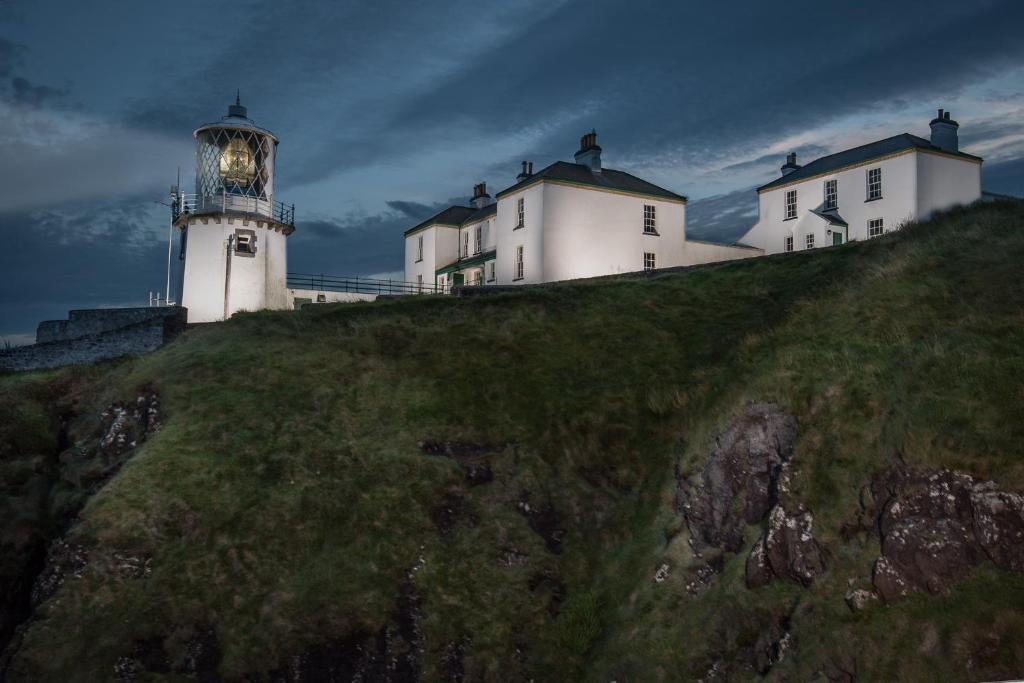
Great Lighthouses Then an Now

User00035

Well-Known Member
Anyone been watching this on Channel 5?
Captivating programme about the lighthouse heritage of Ireland, with beautiful photography of the Irish coast and seemingly impossible structures built in scarcely believable locations. Narrated largely through the first hand accounts of former lighthouse keepers with vintage footage of the solitary job they used to do. There's also a fascinating account of the building of the notorious Fastnet Rock lighthouse and a probably little known history of Ireland's role in pioneering navigation and meteorology during the days of the British empire and of the collaboration in weather monitoring and planning between the Irish Lights Association and British intelligence in the run-up to the Normandy landings.

Series 1 being reshown on 5 Select now with catch-up viewing available on My5. Thoroughly recommended. If you've got a massive super HD TV, turn off the lights and the phone and sit down and immerse yourself in this.

 
I do love a lighthouse. Sailed round most of them in UK & Ireland. Have to take my socks off to count the number of times I’ve raced around the Fastnet. Even managed to hit it once 🤣

Thanks for this, I will have a watch.
I find them utterly fascinating. I'd love to stay alone for a week in the most desolate one imaginable to find out what I'd learn about myself.
The engineering feats to put them there (and keep them there) is remarkable in itself.
 
I find them utterly fascinating. I'd love to stay alone for a week in the most desolate one imaginable to find out what I'd learn about myself.
The engineering feats to put them there (and keep them there) is remarkable in itself.
Hmmm. My home town has one which marks the entrance to Belfast Lough, not the most desolate place at least not since the Good Friday Agreement but certainly lettable and a 3/4 mile coastal walk from the town of Whitehead which importantly has one and a half pubs (!) and a very good yacht club.
So there you go sir! You are welcome.
🦊🦊
 
We use to visit the Mull of Galloway lighthouse often. Overlooking Man and Ireland and the Luce bay.
It can't of been an easy life.
Keeping the boilers going for steam to power stuff like fog horns. Just getting coal to them would of been a fair job! Painting them all the time.
We often develop romantic idyllic scenarios of such livelihoods but I think the reality was very very different!
 
We use to visit the Mull of Galloway lighthouse often. Overlooking Man and Ireland and the Luce bay.
It can't of been an easy life.
Keeping the boilers going for steam to power stuff like fog horns. Just getting coal to them would of been a fair job! Painting them all the time.
We often develop romantic idyllic scenarios of such livelihoods but I think the reality was very very different!
I don't think it was idyllic at all. But that in part is the fascination. On Fastnet, a lot of the time you wouldn't be able to go outside. You wouldn't be able to open the door, which is huge steel watertight thing, like a submarine hatch or the door to a bank vault. Sometimes keepers were marooned well past the end of their shift because no vessel could get near them to get them off. And in the old days, there was no communication with the land. And then there's the question in the back of your mind about whether the structure will survive the battering. Many of them move and sway and if it fails, there's no escape.
But then the storm abates and you've got a completely different environment. And of course, having a solitary holiday in a lighthouse is a different matter to being a keeper because they weren't alone. There were always two of them on duty. You'd have to get on.
Rather than romantic, the whole idea is just fascinating. It's mankind venturing somewhere where he really should not be. On Fastnet in a huge storm you're as isolated and as unreachable as you would be if you were on the bottom of the ocean or on the moon.
 
Last edited:
We use to visit the Mull of Galloway lighthouse often. Overlooking Man and Ireland and the Luce bay.
It can't of been an easy life.
Keeping the boilers going for steam to power stuff like fog horns. Just getting coal to them would of been a fair job! Painting them all the time.
We often develop romantic idyllic scenarios of such livelihoods but I think the reality was very very different!
Actually, for me, what's really mind bending is how they ever managed to build them.
This is Skellig Micheal in County Kerry. I mean how, just how, do you build that there? Never mind getting to it to man it...
To me, this lighthouse is one of the wonders of the modern world.

1659864394997.png
 
At least lighthouses are on dry(ish) land! Imagine on a lightship floating out in the approaches God knows how many miles offshore and an Atlantic storm comes in?
This one - Petrel, now over a century old, is now used as a clubhouse for Down Cruising Club in beautiful Strangford Lough. The Committee Room is the skipper’s cabin complete with bunk and chart desk (and charts) and still holds the ship’s log from the time it was a functioning lightship.
Lovely to see her still afloat and in use.
🦊🦊
 
Fished around them out of carsheveen skellig Micheal is deep water & some of the other out crops have lil churches on 🤷‍♂️🤷‍♂️ Mad catholic thing beautiful part of the world must go back
 
Actually, for me, what's really mind bending is how they ever managed to build them.
This is Skellig Micheal in County Kerry. I mean how, just how, do you build that there? Never mind getting to it to man it...
To me, this lighthouse is one of the wonders of the modern world.

View attachment 267852
I sometimes contemplate how many men lost their lives in their construction too ! Do any of them have plaques mounted to acknowledge this loss of life and that of the lighthouse keepers who may have died 'on duty' ?
 
I don't think it was idyllic at all. But that in part is the fascination. On Fastnet, a lot of the time you wouldn't be able to go outside. You wouldn't be able to open the door, which is huge steel watertight thing, like a submarine hatch or the door to a bank vault. Sometimes keepers were marooned well past the end of their shift because no vessel could get near them to get them off. And in the old days, there was no communication with the land. And then there's the question in the back of your mind about whether the structure will survive the battering. Many of them move and sway and if it fails, there's no escape.
But then the storm abates and you've got a completely different environment. And of course, having a solitary holiday in a lighthouse is a different matter to being a keeper because they weren't alone. There were always two of them on duty. You'd have to get on.
Rather than romantic, the whole idea is just fascinating. It's mankind venturing somewhere where he really should not be. On Fastnet in a huge storm you're as isolated and as unreachable as you would be if you were on the bottom of the ocean or on the moon.
In ‘98 racing round Britain we went past the Fastnet with 65 knots of wind blowing over the deck. The rock at its most brutal. A very impressive sight and a demonstration of just how powerful the sea is.
 
Actually, for me, what's really mind bending is how they ever managed to build them.
This is Skellig Micheal in County Kerry. I mean how, just how, do you build that there? Never mind getting to it to man it...
To me, this lighthouse is one of the wonders of the modern world.

View attachment 267852
If you think that was difficult to build, how about the lighthouse on Ilha da Queimada Grande in Brazil. It is literally surrounded by thousands of the most venomous snakes in South America.
When I raced solo around the world in ‘95 I was shipwrecked there after 80 knots of wind blew me onto the rocks and I had to spend a few nights amongst the snakes before I fixed my boat and went on to win the race.
1659894012149.webp
 
My very first, proper patrol at sea was the Fastnet race disaster in 1979. I was on the 00:00 to 04:00hrs watch, when the word of all the yachts in trouble came, we were southwest of the Fastnet at the time. Spent the next couple of days trying to render assistance to any yachts we could find. Up on the flag deck (young) eyes peeled, one moment at the top of a skyscraper (could see for miles) the next at the bottom of a pit, with the sea well over our heads (quite exhilarating). Found quite a few abandoned yachts, so very sad. Impressed upon me how potentially dangerous life at sea can be and how much of a contribution lighthouses had made to navigation and the safety of life at sea.
 
If you think that was difficult to build, how about the lighthouse on Ilha da Queimada Grande in Brazil. It is literally surrounded by thousands of the most venomous snakes in South America.
When I raced solo around the world in ‘95 I was shipwrecked there after 80 knots of wind blew me onto the rocks and I had to spend a few nights amongst the snakes before I fixed my boat and went on to win the race.

BOC? Class 2?
 
The one off the south end of Tiree was a great tale of construction.

Built on a rock that was submerged at high tide, they cut sockets in the rock and embedded the ties in beeswax which kept them in place and would not wash out, and then poured the lead the next low tide which melted out and displaced the wax. Fixing the tie in a dry socket.

In order to stockpile the masonry for ferrying out to the build they had to build a harbour and jetty, and then build an ingenious system of aquaducts to collect water in the hinterland and keep the harbour flushed clear of silting up. Still working a few hundred years later

The stone was shipped over from Mull cut to size and shape and then carried over from the harbour on a just in time basis.

Those Stevensons were clever blighters.

Alan
 
The one off the south end of Tiree was a great tale of construction.

Built on a rock that was submerged at high tide, they cut sockets in the rock and embedded the ties in beeswax which kept them in place and would not wash out, and then poured the lead the next low tide which melted out and displaced the wax. Fixing the tie in a dry socket.

In order to stockpile the masonry for ferrying out to the build they had to build a harbour and jetty, and then build an ingenious system of aquaducts to collect water in the hinterland and keep the harbour flushed clear of silting up. Still working a few hundred years later

The stone was shipped over from Mull cut to size and shape and then carried over from the harbour on a just in time basis.

Those Stevensons were clever blighters.

Alan
 

Attachments

  • IMG-20220717-WA0019.webp
    IMG-20220717-WA0019.webp
    89.7 KB · Views: 11
Skerrymore lighthouse. Was there a few weeks ago visiting my daughter, took the trip to see it 12 miles out in the Atlantic, highest recorded waves were just below the light (157ft) god only knows how it's still standing!
 
Back
Top