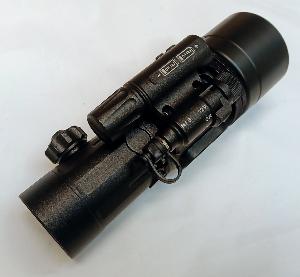
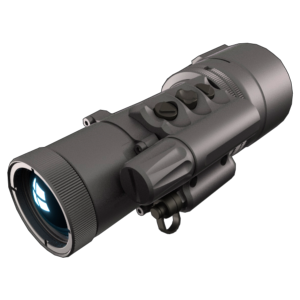
Night vision, add on or straight scope

alled12

Well-Known Member
Hi ladies & gents
I a mstarting to look at getting into night vision, what is the best way to go, i have used starlights system which seems to be a really good idea, just from what i can gather poor customer service, i am aware there are others, thats the only one i have played with, what are peoples experiences with this type of setup, any issues wtih zero shift for front mounted systems etc.?
Or do I go for a straight scope and zero every time i swap?
Alternatively another rifle and create a dedicated setup, if thats the case which calibre etc?
The floor is yours on this one, I have no budget in mind I am looking for the practical solutions and not an appendage measuring session, just honest experiences?
I look forward to your thoughts.
 
Hi Greenmist do you find it awkward given the extension at the back of the rifle scope and stock position?

It depends on the add on, some are ridiculous and prevent any form of comfortable shooting, others add very little and allow natural head position. You also have the option of the NVUK type which have a screen mounted above the scope. Also consider your current scope, higher end scopes tend to be less effective with add ons due to lens coatings etc.
 
It depends on the add on, some are ridiculous and prevent any form of comfortable shooting, others add very little and allow natural head position. You also have the option of the NVUK type which have a screen mounted above the scope. Also consider your current scope, higher end scopes tend to be less effective with add ons due to lens coatings etc.
thanks for the information, yes i missed that off the original post, generally i use swarovski, i take it this will be a problem? Which one are you using?
 
I have a dedicated unit on a separate rifle currently.
In the past I've used a Pard which was good and a ward which was very good, a correctly set up archer is hard to beat but the ward unit probably adds the least. Have a look on the NV forum, lots of info on there, some people are doing homebuilds which exceed the range of commercial units
 
Swaro scope will be a potential issue with a digital NV add on.

The best add on I have used and still do use is a Vulpine Mk3. I used a Ward for years. It was good but not in the same ballpark as the Vulpine which is shorter, better designed, better button, better performance, better focusing. Just set up once and point and shoot but it probably will be compromised with your Swaro.

I use Delta and March scopes, both of which work very well with digital add ons.

Over the years I have swapped between dedicated units and add ons. I always go back to the add ons because I value having decent optics during the day, which is when I also do lots of shooting and I only have space for 5 rifles in the cabinet and cannot be bothered to get a bigger one. If you do not mind tying up a rifle, I would say dedicated is the best option. If you are only shooting at night very little, an add on is hard to beat but might mean changing your day scope to be compatible. If most of your shooting is during the night, then maybe a digi NV dedicated scope would be fine for day use as well?

Then you have return to zero mounts so you can swap a dedicated NV scope and your normal dayscope on and off when needed. This is fine if you are shooting relatively large targets with both scopes at normal distances (so deer and foxes out to say 150yds or so) My concern with swing off mounts is the slightly POI shift which is vital when shooting small pests at extended distances like 350yds or so. At those distances, I don't want/need a half MOA shift in precision.

You have lots of options. Plump for the best compromise I guess.
 
Hi ladies & gents
I a mstarting to look at getting into night vision, what is the best way to go, i have used starlights system which seems to be a really good idea, just from what i can gather poor customer service, i am aware there are others, thats the only one i have played with, what are peoples experiences with this type of setup, any issues wtih zero shift for front mounted systems etc.?
Or do I go for a straight scope and zero every time i swap?
Alternatively another rifle and create a dedicated setup, if thats the case which calibre etc?
The floor is yours on this one, I have no budget in mind I am looking for the practical solutions and not an appendage measuring session, just honest experiences?
I look forward to your thoughts.
Hi Alled,

If you have a parallax adjustable scope, I would 'dip a toe' with this:


if you have a German scope with an IR eyebell, we can supply suitable bayonets from Rusan for Z6, Z8, V8, etc.

If it's for foxing, I would definitely add one of these:


That will give you a very solid system for not a lot of money that you can use on all your rifles (depending on the day scopes). It also is very short mounted so won't affect your shooting position.

Moving on, if you don't have parallax adjustment on your day scopes, but have a minimum mag of 3-4x then a front add on would be the next step:


With this recommended IR for it:


We also do a thermal version, if you are feeling more extravagant:


Our front mounts are done properly and don't have POI issues.

For a dedicated NV rifle scope there is loads of choice from Pulsar, Pard and Iray, etc.

What I personally use, after 20 odd years of NV shooting is...

Most of the rifles have picatinny rails and I swap this around all of them on a standard mount, but use a torque wrench and repeatable procedure. There is no loss of zero:


For the stalking rifle, and occasionally the .22LR when going from evening to night this time of the year, I use this:


If you can let us know what day scopes you have and what sort of shooting it is for and required ranges...things can be narrowed down.

Hopefully this helps.


Cheers


Clive
 
Does your definition of "night vision" include thermal imaging?
If so, then the first and most important thing to buy is a thermal spotter
Even if you finish up buying a dedicated digital night vision scope or rear add-on, the thermal spotter will be the tool you use most often
As far as devices to allow you to actually shoot at targets in darkness, these can be divided into 3 main categories:
a. Tubed (image intensifying) night vision such as the Archer, longbow etc. This type of NV equipment is less and less common nowadays and I would not recommend it
b. Digital night vision is the most commonly used type of kit these days since it's available as dedicated scopes, rear add-ons and front add-ons
c. Thermal imaging is more expensive, but becoming more and more popular as prices drop and performance improves. These are available as dedicated scopes and front add-ons (thermal rear add-ons are not possible)
What's best for you depends on the type of shooting you do, the equipment you already have and how much you want to utilise that existing equipment for night shooting
If you have a really good daytime set up with top quality glass, I recommend you dedicate it to daytime work and put together a dedicated set up for night time work using either digital night vision riflescope or thermal imaging riflescope
If you are not in a position to put another set up together, then the options are some form of add-on that fits your existing scope or to swap between your day scope and a dedicated nv or thermal scope using QD mounts
Digital NV is cheaper than thermal so lets looks at digital NV options:
Bear in mind that digital NV always requires the use of an IR illuminator.
Some devices come with an IR illuminator built in while others do not and a separate IR illuminator and mount will have to be purchased
a. Digital NV rear add-on - plenty of choice at good prices with the PARD 007 being the most common choice and best "bang for your buck".
Beware that with any rear add-on, the scope it's used with can make a huge difference to how well the set up works.
In particular, the scope should have parallax adjustment down to 10 yards or less, a low base magnification (around x2 - x4), a big objective lens (50mm or bigger) and IR friendly lens coatings. That last point eliminates top end European glass like Swaro, Zeiss and S7B since their lens coatings don't work well with the infra red light that will be needed to illuminate potential targets
b. Dedicated digital NV scope - again plenty of choice but at a higher price point. The pick of the bunch is the Pulsar C50, although the PARD 008 series are also worth considering. I would not recommend any of the 4k (ATN 4k, Wraith 4k, Wulf 4k) scopes since, although they have excellent daytime performance, their NV performance is poor compared to the C50 and PARD
c. Digital NV front add-on - this is the choice if you have a top quality dayscope such as a Swaro, Zeiss or S&B that does not work well with a rear add-on. Relative to other digital NV devices they are expensive and work best on scopes with low base magnification (x2-x3) and will only give a usable image up to x8 at best. I've had both digital NV and thermal front add-on and frankly find them to be a PITA
If you go thermal, the options are dedicated scope or front add-on and given the choice, I'd have a scope before a front add-on every time
Thermal scopes are expensive with the current "best bang for your buck" being the HIK MicroThunder TQ50
That scope will work on air rifles, rimfire and centrefires. I have one and have shot bunnies within spitting distance and foxes at 300 yards
If you go thermal I'd stick with Pulsar, HIK, T-Ceptor and Senopex brands. Some of the Iray kit is OK and some of it not. As always, avoid anything made by ATN like the plague.

Cheers

Bruce
 
i think its all down to the shooter and your budget. i just couldnt get on with the sightmark wraith on 1 rifle and day scope on the other and it busted my confidence tbh always swapping rifle between a nv scope and a standard meopta sfp scope for roe. settled for wulf add and kept the 22-250 with meopta and absolutely love the set up both scope only and adding the wulf add on. as matt says above NV coupled with thermal and its got all bases covered. pretty sure some will have the opposite opinion, try as many options as you can, get out with folk who use whatever set up you fancy trying.

bonus selling another rifle frees up cash for other shooting purchases 😎🤣
 
i think its all down to the shooter and your budget. i just couldnt get on with the sightmark wraith on 1 rifle and day scope on the other and it busted my confidence tbh always swapping rifle between a nv scope and a standard meopta sfp scope for roe. settled for wulf add and kept the 22-250 with meopta and absolutely love the set up both scope only and adding the wulf add on. as matt says above NV coupled with thermal and its got all bases covered. pretty sure some will have the opposite opinion, try as many options as you can, get out with folk who use whatever set up you fancy trying.

bonus selling another rifle frees up cash for other shooting purchases 😎🤣
Gr cz527 thank you for the comments, which meopta do you use with the add on please? Any issues with the high quality glass etc?
 
optika 6. 56mm lens. no issues at all with clarity with nv. i use a pbir with it as i know its on the money. great glass too without Nv.
 
Hi alled 12.
If you have used a starlight archer or longbow, "performance wise " none of the n/v's being sold now will equal or beat it.
Lots of good advice has already been given above, what i would say is ask on here if some one local enough to you will let you look through their n/v at live quarry, its only when you look and compare at live quarry that you can then make a judgment as to what you think is best for you.
A Pard 007 i consider is a starting n/v with correct scope and a solaris or sirius laser will get you out to 300 yds on a good n/v night, the vulpine mk3 is probably the best add on but it is "no Archer beater".
As a general rule a dedicated digital n/v will out perform a add on when used in the dark and IMO the best one out now is the Pulsar c50.
IMO add on's are great when you want to use of a few rifle's (correct scope still needed), and say for air rifle or rimfire rat's/rabbits they are ideal, still useable for centre fire foxing but i would think a c50 would be better.

Ask on here to look through some.

Dave (warbucks)
 
Back
Top