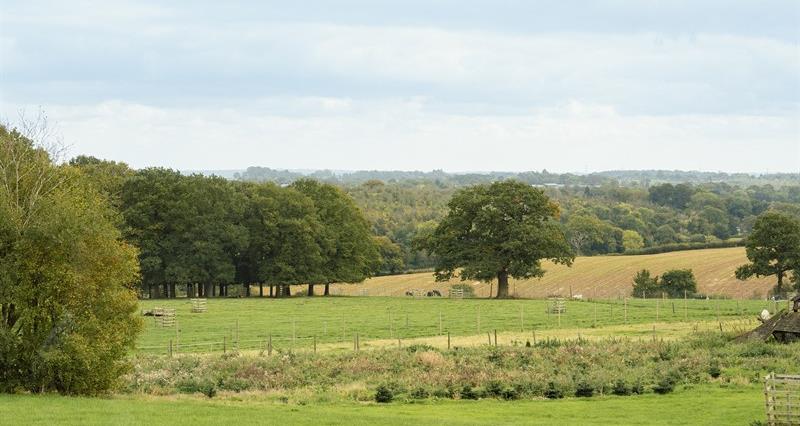
The weather

From a simple bloke that hates being bombarded with issues.

The climate has been changing for millennia.
Yes we probably have had an influence on the change more than any other living organism.
It may be that Mother Nature has had enough and will call time on our shenanigans and decide to have a cull as she has done with other species.

Unfortunately humans have been programmed to live for the now or possibly the next generation since at least the turn of the 20th century if not earlier.
We want things to stay the same or better for us than before.
As one example; whereas my cohorts and I either walked or cycled to school, with those in outlying areas being bused in. Those of a younger generation have been primarily chauffeured, irrespective of the distance.

The simple fact is that there are too many people alive and using up resources at an alarming rate whether it be oil, gas, water or minerals.

With this in mind, how is it possible to recapture the gene and to what point in time do we go back to?
Bearing in mind the population of the world at that time - to me that is incompatible.

Moss probably had, and has, the biggest influence on the climate as our current atmosphere was, pretty much, generated by moss. Anyone wanting to stop climate change needs to start by getting rid of moss. This sits pretty well with your idea that the earth has always changed and that humans are fundamentally nothing special. One important thing to highlight in respect of this is that the plant life requires CO2 and, unknown to man at the time, during the late 1800s atmospheric CO2 concentrations had almost fallen to the point where plant life would cease on earth. Currently atmospheric CO2 concentrations are at a frighteningly low, but manageable, level and rising. Had they not have risen it is likely we'd be gone by now, as would the moss. This would have been disappointing for us but doubly so for the moss as it had been working on the atmosphere for much, much longer than us. Historically there is no correlation, never mind causal relationship, between atmospheric CO2 concentrations and temperatures.

However, where humans have an edge over other "stuff" currently on the planet is the ability to adapt and to plan for adaption. The "there's too many people on the planet" idea is a pretty old one and all the predictions of doom related to it have (so far at least) turned out to be wrong simply because we use the advances of modern science to feed everyone etc. At the minute people on earth live much longer, and have better lives, than in the past when the average age at death was around 40, so there is no evidence that the recent dramatic increase in population has resulted in a decline in quality of life. The big question is whether this progress and improvement is sustainable and history indicates that it probably is - science and man being smart allows him to achieve things that might be impossible for, say, moss to achieve. As Lomborg said "the stone age didn't end because we ran out of stones" and this helps highlight that man has always found something "better" to sustain his life and his progress.

It is said that the "global warming" concept was presented to Thatcher by an advisor (see this for example: Comment on Sir Crispin Tickell ) who was part of an organisation called something like "The Optimum Population Trust" (something like that, they keep changing their name) and they believe that there are too many people on earth and that something must be done about it. The something never seems to involve their kids dying, but stopping developing countries from using fossil fuels to improve their own standard of living and quality of life kills a lot of people. We hear about how many people air pollution kills each year, for example, and it is always subtly implied that this is due to cars, or power stations, or similar. The truth is that most air pollution deaths are down to people in sub-Saharan Africa having to use dung (often) or other solid fuel to cook over an open fire in their house. Interestingly the annual 7 million global deaths from air pollution are the worlds greatest "environmental" problem but you don't hear that simply allowing poor people in Africa fossil fuel stoves for cooking would reduce it dramatically, at low cost and almost overnight, because that doesn't sit with the "optimum population/climate change" narrative. So when they want to not die from air pollution we tell them that they have to keep on dying because of climate change.

You have to wonder how history will view the deeply racist and anti-science policy mechanisms that the "global warming" narrative enabled. The people of Africa aren't keen on them already, this is just once recent example that you probably won't hear from European state media outlets: Africa sees new wall in EU's carbon border scheme [Business Africa] | Africanews
 
How do you know that the current changes are extreme?
You need to define your base line parameters.
You cannot use simple temperature statistics gathered over less than a hundred years to draw meaningful conclusions over climate change influences over millennia.
There are just too many other variables
If you are going to apply very limited data to global events on a scale that’s measured in tens of thousands of years, then you really need to define your parameters.
This the climate change lobby resolutely refuses to do.
We’ve only been measuring and plotting climate for a couple of decades and most of the planet is not measured at all.
Yet current levels of accuracy in spot measurements and values are being extrapolated to produce global trend maps which just cannot be verified.
As for Interglacial period being a theory, it has a sound basis in observed facts, we know that the ice ages occurred and we know when they started and when they ended, so not so much a theory as an accepted scientific fact.
As is the fact that the global climate has been warmer too.
And life on earth didn't end, it adapted, to even to the most extreme events.
Where life couldn’t adapt and survive it lurked where it could, bided its time and re-colonised.
I would suggest that you watch the news and then you may answer your own question!
 
I would suggest that you watch the news and then you may answer your own question!
Global news is a very recent phenomena, until the 70’s we remained almost totally ignorant of natural disasters in far away undeveloped places unless millions were involved. We are simply not in a position to draw long term conclusions about global climate trends because we lack sufficient data.
We do now have true global news coverage, but it is less than 25 years old, internet based, largely unverified, unedited and very very unreliable.
What I see on a daily basis is a series of unlinked weather events or coincidences being portrayed as proof of a global emergency and unprecedented where those events are well within normal weather parameters for the area over the last 100 years or so.
Theres also a very regrettable tendency to publish articles supporting the current consensus without question and to suppress inconvenient facts, anomalies or counter arguments.
 
Global news is a very recent phenomena, until the 70’s we remained almost totally ignorant of natural disasters in far away undeveloped places unless millions were involved. We are simply not in a position to draw long term conclusions about global climate trends because we lack sufficient data.
We do now have true global news coverage, but it is less than 25 years old, internet based, largely unverified, unedited and very very unreliable.
What I see on a daily basis is a series of unlinked weather events or coincidences being portrayed as proof of a global emergency and unprecedented where those events are well within normal weather parameters for the area over the last 100 years or so.
Theres also a very regrettable tendency to publish articles supporting the current consensus without question and to suppress inconvenient facts, anomalies or counter arguments.
So how long do we wait? 100 years? 500? 1000? At what point will the evidence be sufficiently valid to enable you to get off the fence?

Moreover, what will be left of our planet by that point?
 
So how long do we wait? 100 years? 500? 1000? At what point will the evidence be sufficiently valid to enable you to get off the fence?

Moreover, what will be left of our planet by that point?

So, exactly which "extreme" or "abnormal" weather events do you see happening? Are you extending the remit of "climate" to the likes of wildfires?
 
So how long do we wait? 100 years? 500? 1000? At what point will the evidence be sufficiently valid to enable you to get off the fence?

Moreover, what will be left of our planet by that point?
I don’t know, but at the moment we’re working from a very small statistical base, far too small to be considered a valid sample.
Really accurate measurements have only been possible since the digital age and global satellite coverage.
Thats just about 20years ago, prior to that we just didn’t have the means to measure atmospheric temperature to tenths of a degree. We’re applying 20 years of data to 200 years of guesswork and amateur science and extrapolating trends that span 10,000 years.
Take your example of the 3 months at 35degrees, statistically that would raise the temperature dramatically for the year concerned, but statistically it’s also an anomaly which should be disregarded when calculating the mean. On its own it means nothing when it comes to determining a trend
Its the equivalent of of your regular 1MOA rifle producing a .1MOA group, its nice and I’d cut it out and save it, but its not truly representative of that rifles performance.
I’m very much afraid that we are trying to fix something that’s just not repairable, and doing it at great cost. We’d be better off deducing what changes are likely and planning accordingly.
I don’t spend a lot of time worrying about the planet, it’ll still be here long after we’ve all gone.
 
I don’t know, but at the moment we’re working from a very small statistical base, far too small to be considered a valid sample.
Really accurate measurements have only been possible since the digital age and global satellite coverage.
Thats just about 20years ago, prior to that we just didn’t have the means to measure atmospheric temperature to tenths of a degree. We’re applying 20 years of data to 200 years of guesswork and amateur science and extrapolating trends that span 10,000 years.
Take your example of the 3 months at 35degrees, statistically that would raise the temperature dramatically for the year concerned, but statistically it’s also an anomaly which should be disregarded when calculating the mean. On its own it means nothing when it comes to determining a trend
Its the equivalent of of your regular 1MOA rifle producing a .1MOA group, its nice and I’d cut it out and save it, but its not truly representative of that rifles performance.
I’m very much afraid that we are trying to fix something that’s just not repairable, and doing it at great cost. We’d be better off deducing what changes are likely and planning accordingly.
I don’t spend a lot of time worrying about the planet, it’ll still be here long after we’ve all gone.
It’s repairable but will take a long time.
 
Have you not been reading / watching the news for the last 2 weeks?
Just for starters.
Nope.
So, exactly what sort of abnormal or extreme weather has been disturbing you? I assume that the news is full of the reports of record low temperatures across Siberia where I believe their average temps are down by 10 degrees this summer? This very cold weather has extended across many of the land masses of the world, including Antarctica, and I guess maybe it is related to the El Nino event.
However, bursts of cold like this are far from unusual and the temperature record for many of these places is a short one - just as UK records are often set at Heathrow or one of the Southern England RAF bases as, of course, these places are recently built and have a unique quality in terms of large areas of tarmac and concrete so they pretty much can't fail to break records. If you are concerned about these colder bursts then there's no need as with the prevailing El Nino we should be relatively safe in the UK and, in fact, should expect it to be milder than usual though depending on the weather patterns coming into winter we might see significant snow in some places.
 
However, where humans have an edge over other "stuff" currently on the planet is the ability to adapt and to plan for adaption. The "there's too many people on the planet" idea is a pretty old one and all the predictions of doom related to it have (so far at least) turned out to be wrong simply because we use the advances of modern science to feed everyone etc. At the minute people on earth live much longer, and have better lives, than in the past when the average age at death was around 40, so there is no evidence that the recent dramatic increase in population has resulted in a decline in quality of life. The big question is whether this progress and improvement is sustainable and history indicates that it probably is - science and man being smart allows him to achieve things that might be impossible for, say, moss to achieve. As Lomborg said "the stone age didn't end because we ran out of stones" and this helps highlight that man has always found something "better" to sustain his life and his progress.
People are living longer because of the improved health care whether it be hospitals or vaccinations mean more people, especially children, are living longer.
From what I can see there is no decline in the quality of life as everyone wants to be better off than their parents and strives to do so.
A side issue is that the more opulent society gets so the birth rate falls as people want to enjoy their wealth without the burden of children.
Western birth rates are falling whereas Easter / Asian ones are still rising and it is why the Roman Empire ultimately fell.

As for progress or finding something better, no one has come up with an infinite resource. Even the sun will at some point explode and incinerate the earth.
So unless ether time travel or travelling a lot faster than the speed of light is invented humanity is doomed at some point.
Whether by our own hands or Creation’s

One last thing from my soap box, as long as there is money to be made, someone will always work out some sort of con to get it.
 
Out of interest what do you do for a living? myself a welder/fabricator these days previously running a salvage yard with a panel work shop combined
Tim
I sell digital core banking software to banks and EMI’s across the globe - the bit that runs the accounts in the background , not the bit that you log into when you do your banking.
Steve
 
Here in Sweden we have had so far a pretty normal summer. May and June the weather was sunny and clear with little or no rain. The temps were not overly high. July has seen quite a bit of rain and now things are green and lush again. The temp yesterday when I set out for the range was 13c and about the same as I type this.
One phenomena is that as the climate gets warmer it seems to affect the mooses reproduction. There are a lot more small moose calves being born. Some Very Small. The moose numbers are down as is the annual cull in the southern parts of Sweden. I can see in the not too distant future there will be no moose hunting in the southern parts of Sweden and moose only found in the colder northerly climes of Sweden
 
I don’t know, but at the moment we’re working from a very small statistical base, far too small to be considered a valid sample.
Really accurate measurements have only been possible since the digital age and global satellite coverage.
Thats just about 20years ago, prior to that we just didn’t have the means to measure atmospheric temperature to tenths of a degree. We’re applying 20 years of data to 200 years of guesswork and amateur science and extrapolating trends that span 10,000 years.
Take your example of the 3 months at 35degrees, statistically that would raise the temperature dramatically for the year concerned, but statistically it’s also an anomaly which should be disregarded when calculating the mean. On its own it means nothing when it comes to determining a trend
Its the equivalent of of your regular 1MOA rifle producing a .1MOA group, its nice and I’d cut it out and save it, but its not truly representative of that rifles performance.
I’m very much afraid that we are trying to fix something that’s just not repairable, and doing it at great cost. We’d be better off deducing what changes are likely and planning accordingly.
I don’t spend a lot of time worrying about the planet, it’ll still be here long after we’ve all gone.
They have used deep drilled ice cores to perform gas analysis from a very long time ago. This has given them data on co2 but also ice build up and that points to warming and cooling cycles (more ice in a layer = cooler) and that has been mapped out I think for something like 200k years.

So although we don’t have satellite imagery from all that period, we do have data and that’s data shows a fairly regular pattern apart from now, and the now shows massive changes.

At the end of the day, people will only see and hear what they want to. Me trying to convince you of climate change is like arguing with a blind person about the colour of the sky - they simply can’t see it.

That’s fine - we aren’t sheep and have our own minds so can believe what we want. But, as I have said before, if you ignore the data and do nothing then don’t whinge if things go awry and your life becomes affected by the thing that you didn’t believe in.
 
They have used deep drilled ice cores to perform gas analysis from a very long time ago. This has given them data on co2 but also ice build up and that points to warming and cooling cycles (more ice in a layer = cooler) and that has been mapped out I think for something like 200k years.

So although we don’t have satellite imagery from all that period, we do have data and that’s data shows a fairly regular pattern apart from now, and the now shows massive changes.

At the end of the day, people will only see and hear what they want to. Me trying to convince you of climate change is like arguing with a blind person about the colour of the sky - they simply can’t see it.

That’s fine - we aren’t sheep and have our own minds so can believe what we want. But, as I have said before, if you ignore the data and do nothing then don’t whinge if things go awry and your life becomes affected by the thing that you didn’t believe in.
I‘m not denying climate change and I believe that we should have as little impact as possible on the planet while were here, what I don’t believe is that a series of knee jerk reactions to be implemented on a piecemeal basis by a minority of the population of the planet will have any effect except to make that section of the population poorer.
We can’t change the weather back to what it was, because we haven’t defined what we want and neither the weather or the climate is stable.
Even if we do initiate a downward temperature trend, we have no way of regulating it and holding the temperature at the desired level.
The climate has always see sawed from hot to cold and it most likely always will.
 
Back
Top