Would anyone be interested in an affordable, UK made induction annealing machine?

One other safety tip: when annealing brass with an RF annealer, decap first!

I had a 0.284 case in a batch I bought from a third party where the primer had a firing pin indent in it, but when I annealed it, intending to do FLS and decap in the same operation afterwards, the primer went off as soon as the case got warm. Obviously, it was a misfire that the shooter had taken the bullet from, emptied the powder out and put back with the rest of his cases.

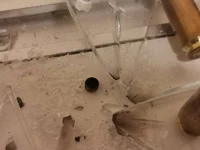
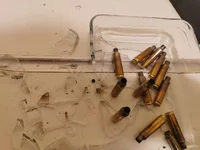
The cases were in a Pyrex dish, and then I move the coil from case to case. A primer breaks the Pyrex into 1000 pieces and gives one ringing ears! Fortunately I was wearing safety glasses.

The Pyrex dish was one from the kitchen, so it was a matter of sneaking out to IKEA for another one before my wife discovers it missing. Probably a more serious hazard than having the primer go off!
1704224849565.JPEG1704224848879.JPEG
 
Last edited:

Would anyone be interested in an affordable, UK made induction annealing machine?​


No.
Me neither. Why would I want to spend £300 to anneal eg 270 brass as above ! 1) it is everywhere 2) the consistency improvements are not going to be apparent in use.

It is in the same field as spending £1000 to pour powder into a case when you can do it just as well for £50.

Good luck to you though mate (OP), there seems to be a bit of demand and it's good to see some people getting off their arse and making things in this country that are normally imported. And at a price too 👍
 
One other safety tip: when annealing brass with an RF annealer, decap first!

I had a 0.284 case in a batch I bought from a third party where the primer had a firing pin indent in it, but when I annealed it, intending to do FLS and decap in the same operation afterwards, the primer went off as soon as the case got warm. Obviously, it was a misfire that the shooter had taken the bullet from, emptied the powder out and put back with the rest of his cases.

The cases were in a Pyrex dish, and then I move the coil from case to case. A primer breaks the Pyrex into 1000 pieces and gives one ringing ears! Fortunately I was wearing safety glasses.

The Pyrex dish was one from the kitchen, so it was a matter of sneaking out to IKEA for another one before my wife discovers it missing. Probably a more serious hazard than having the primer go off!


View attachment 344431View attachment 344432
A good safety practice if you are going to anneal (or even de-cap them) first is a squirt of oil in the base of the case to deactivate it. :thumb:
 
A good safety practice if you are going to anneal (or even de-cap them) first is a squirt of oil in the base of the case to deactivate it. :thumb:
I keep misfires separate from spent brass, as does every other shooter I know, so one can use the oil trick or IPA before decapping them. However, I do not use IPA for normal fired brass, only for known misfires.
When annealing brass from third parties, one assumes it is all fired and they have kept misfires separate too, but this incident shows that not to be the case.

I use a press for decapping rather than a hand tool. That way the risk of detonating a live primer is low and if it does go off then it is safe as the round is in a press preventing the casing going anywhere, and the primer is contained in the bushing with a big channel for it to vent out safely. When annealing, nothing is contained, not the primer, nor the casing, nor the items around it.

Hence lesson here is decap before annealing when handling 3rd party brass, rather than try and save 15 minutes per 100 rounds by doing FLS and decap together after annealing and clean. Evidently some people mix up their misfires with their used brass. And always wear safety glasses when reloading (mine are a visor, so I can wear reading glasses at the same time and nothing mists up).
 
Last edited:
Even spent primers have a little bit of bang left in them. Try and take a blow torch to a spent primer and see (wear safety glasses).

Absolute first step for me is always de-prime.
 
Update - I met up with my engineering pal today and I am pleased to report that he has created a workable induction coil geometry. We test annealed some .270 Winchester cartridge cases and they were annealed in 7 seconds per case which gives a good balance of speed and precision. The coil did get quite hot so the next engineering challenge for my pal is to create a suitable cooling system, which he will be working on this month.

On a logistical note, my pal has done some cost calculations and it turns out the induction annealer machine with an integral auto feed carousel apparatus will cost approximately the same price as the manual feeding version of the AMP annealer. This is a higher budget than I can afford at the moment so in order to maintain an affordable price for me my pal will make me the first induction annealer in the manual feeding format, without the auto feed carousel apparatus. Working in this manual feeding format with the annealer today we found that we could anneal 100 .270 Winchester cases in about 16 minutes which is acceptable for me as it is a similar work rate to when I trim brass on my Wilson case trimmer. If a shooter has a larger budget than me and wants this machine built with an integral autofeed carousel for approximately the same price as a manual feeding version of the AMP annealer then my pal said he can make one as the design is quite flexible.

But first things first, I will purchase the base model manual feeding induction annealer from my pal when he has perfected the cooling requirements and post a video on here of it in action so that people can watch, comment and generally decide for themselves if it is still of interest.

The AMP is £1400 in the UK - so if your mates one will cost the same, it is probably too much (at least for me). Perhaps he may look at the way QuickAnneal do it where the annealing is a drop-in - drop-out system, then you can use whatever case feeder you wish (or use without a case feeder).

 
The AMP is £1400 in the UK - so if your mates one will cost the same, it is probably too much (at least for me). Perhaps he may look at the way QuickAnneal do it where the annealing is a drop-in - drop-out system, then you can use whatever case feeder you wish (or use without a case feeder).
Some people have done a fantastic job in making a niche product for target shooting with low mark up, treating it as a hobby. The Targetmaster tricker is a great example of that.
However, for a commercially viable activity, a rule of thumb for technology that delivers a sustainable 15% net profit, the material cost must not be more than 25% of the selling price. Less than that, one will go bust as overheads, compliance, staff, heating, premises, MOQs, marketing, shipping and taxes etc all cost money.
It cost me just under £300 in parts to make my RF induction heater and it is to a commercial standard: in a decent looking housing, able to meet EN61000 and the Machinery Directive, and I could slap a CE mark on it under the European Blue Guide if I shelled out £6K for the EMC and MD tests. This means that the minimum cost anyone can sell an RF annealer to shooters commercially is £1200, plus VAT is then £1440. Which, surprise, surprise, is what the AMP is.
The Quick Anneal machine at £500 is real bargain, so rather than reinvent a more expensive wheel, if you do not plan to make an annealer yourself (costing £300 for parts plus a day of time), then buying the Quick Anneal machine is the way to go. The Quick Anneal machine is like the Targetmaster tricker: it is sold at an undervalue.
If you want a commercial off the shelf machine, then AMP has it and pay several times more.
Given those three options are available, why reinvent the wheel? There is no commercial benefit to a fourth option.
 
Last edited:
Who is selling a Quick Anneal for £500?

It costs ZAR 20,000 in South Africa which is £850 in a direct currency conversion.
Thanks for the correction.
I saw some adverts for the Quick Annealer at just over £500 a while back, those must have been early on, and it is now £850 as reality sets in. Still a bargain at that price, as their materials are probably half that.
I note there is a UK importer/distributor for it as well now.
 
Last edited:
Thanks for the correction.
I saw some adverts for the Quick Annealer at just over £500 a while back, those must have been early on, and it is now £850 as reality sets in. Still a bargain at that price, as their materials are probably half that.
I note there is a UK importer/distributor for it as well now.
Yes I saw it at £500 too. i wonder what the U.K. price is - I'll bet a tad over £1k
 
The AMP is £1400 in the UK - so if your mates one will cost the same, it is probably too much (at least for me). Perhaps he may look at the way QuickAnneal do it where the annealing is a drop-in - drop-out system, then you can use whatever case feeder you wish (or use without a case feeder).


If my pal builds his induction annealing machine with an integral auto feed carousel it will probably cost a bit less than the £1400 that AMP are charging for their annealer but not much less. Maybe £1200. But I can't afford £1200 so he is making me a manual feed version which will be significantly cheaper (hopefully half the price). If I get a better financial situation then my pal said the design is modular so he can make an auto feed carousel to fit the annealing machine at a later date and I will pay him the extra. Interestingly he has done some further testing today and it turns out that centring the cartridge case consistently in the coil is important for consistent annealing so he will build a case centring mechanism into his annealer design.
 
If my pal builds his induction annealing machine with an integral auto feed carousel it will probably cost a bit less than the £1400 that AMP are charging for their annealer but not much less. Maybe £1200. But I can't afford £1200 so he is making me a manual feed version which will be significantly cheaper (hopefully half the price). If I get a better financial situation then my pal said the design is modular so he can make an auto feed carousel to fit the annealing machine at a later date and I will pay him the extra. Interestingly he has done some further testing today and it turns out that centring the cartridge case consistently in the coil is important for consistent annealing so he will build a case centring mechanism into his annealer design.
I understand where you are coming from, but the only way your pal can do this commercially is by skipping corners, such as no certification (a legal requirement to sell the goods), no overheads, no staff salaries, no business rates, no insurance, no accountants etc.

The situation is the raw materials for an RF annnealer cost about £300. That is what it cost me in parts to build a machine 6 weeks ago, and I do not believe there are any significant savings to be made on that.

Now move to basic engineering economics:
1. Applying the 25% material cost rule of survival for tech companies means that if materials cost £300 then the selling price has to be £1200 + VAT, to cover the normal expenses a company has in making low volume technical items.

2. Cost to Market. By they way, I have few other rules of thumb, such as the cost of getting any new product from concept to the market is £100K x C^1.3 where C is a complexity factor.
A RF annealer is a trivial project (it took me a day of time from start to finish, plus hours wasted falling through Youtube wormholes looking for other people doing the same thing), so complexity factor is 1. I am an engineer (FIET, C.Eng, with 4 decades of experience making products, with access to every machine imaginable), so what takes me a day to do, may take your pal a bit longer. That means what might cost me £100K to bring to market, could cost someone who has not done it before, a fair bit more.
How you may ask do you spend a minimum of £100K: Are people working for free? What about certification? Tooling? Stock? Marketing (web site, other sales collateral)? Business lease and rates? They all add up. How many do you need to sell to break even on £100K of start up spend, with 15% net margin when selling at £1200 each? The answer is 556. Is there a market in the UK for over 556 annealers at £1200+VAT each? I doubt it very much.

Understanding these rules of economics is why I personally have no intention of making extra annealers for friends, to sell, etc, though I am happy to do photos of what I have done so others can copy themselves if they are inclined.

Even making it oneself, with access to a workshop with lathes, milling machines etc, it takes a day of time, so that has a value. If a day of engineering is worth £500, then DIY for time + materials on this works out the same cost as spending 5 minutes and buying a Quick Annealer.
 
Last edited:
I understand where you are coming from, but the only way your pal can do this commercially is by skipping corners, such as no certification (a legal requirement to sell the goods), no overheads, no staff salaries, no business rates, no insurance, no accountants etc.
The situation is the raw materials for an RF annnealer cost at least £300. That is what it cost me in parts to build a machine 6 weeks ago, and I do not believe there are any significant savings to be made on that.
Now move to basic economics:
1. Applying the 25% material cost rule of survival for tech companies means that if materials cost £300 then the selling price has to be £1200 before VAT, to cover the normal expenses a company has in making low volume technical items.
2. Cost to Market. By they way, I have few other rules of thumb, such as the cost of getting any new product from concept to the market is £100K x C^1.3 where C is a complexity factor.
An RF annealer is a trivial project (it took me a day of time from start to finish, plus hours wasted watching Youtube channels of other people doing the same thing), so complexity factor is 1. That means it still costs £100K to bring it to market.
How you may ask do you spend a minimum of £100K: Are people working for free? What about certification? Tooling? Stock? Marketing (web site, other sales collateral)? Business rates? They all add up.

Understanding these basic rules of economics is why I peronally have no intention of making extra annealers for friends, to sell, etc, though I am happy to do photos of what I have done so others can copy themselves if they are inclined.

Even making it oneself, with access to a workshop with lathes, milling machines etc, it takes a day of time, so that has a value. If a day of engineering is worth £500, then DIY for time + materials on this is the same as spending 5 minutes and buying a Quick Annealer.
Thanks yes I think your approximate figure of £300 for raw materials for an induction annealing machine is sensible. It might be a bit more for extra features that your machine lacks, such as an automatic case centring device etc. but not a huge amount. With regard to the business aspects of making electronic equipment, my pal is already familiar with those as his day job is making electronic equipment.
 
Yes I saw it at £500 too. i wonder what the U.K. price is - I'll bet a tad over £1k
The Quick Anneal machine looks good. If my pal ends up being too busy to make me an annealer I would be tempted to get one if they really are £850. Do you know who is selling in the UK and what is the total price?
 
The Quick Anneal machine looks good. If my pal ends up being too busy to make me an annealer I would be tempted to get one if they really are £850. Do you know who is selling in the UK and what is the total price?
I don’t know. The quick annealer website says there is uk distribution - might be best to mail them, though i doubt it’ll be less than 1k here.
 
is it legal to sell 240v mains electrical equipment without a CE mark?
If the product is imported, manufactured or sold in the UK, it requires a Technical File showing compliance to UK and European standards, directives and regulations. That file enables one to apply the CE and UKCA marks in accord with the Blue Guide for CE marking. CE and UKCA standards are the same currently so one kills two birds with one stone. For some categories of product, a Notified Body is required by law to audit everything and ensure all is done properly: the Notified Body is usually a test house, but not always. However Amazon and Ebay sell a lot of Chinese products that ignore those requirements. If a UK company tried ignoring them, Trading Standards (who have the authority to enforce these things), would shut everything down.

The cost of the EMC tests and Machinery Directive tests are £6K to £8K, assuming it has been designed properly in the first place.
We recently had a piece of equipment designed in the USA cost £50K to get the same certification, because they used subsystems such as power supplies from China, where the designers had no concept of designing to a standard so everything one tested failed, and had to be modified several times and retested to pass.

Australia and New Zealand have their own marking, RCM, which is much stricter (read, more expensive) based on large extensions to the IEC standards that are behind BS EN 61000.

All this is a self inflicted penalty for UK and European companies, as it seems to be widely ignored in China and companies that import from China. The standards are written by CENELEC committees, full of representatives from European test labs and large companies, who go there to create barriers to new companies entering their markets, or for the test labs to extract as much money from manufacturers as possible. Nothing to do with safety, it is all about sanitising corruption into law.

The Quick Annealer claims to have the IEC test reports, so would be UKCA and CE compliant, assuming the IEC tests have included the correct annexes and versions. This may be one of the things driving up price since it was first advertised.
 
Last edited:
Back
Top