I assume only really basic home (hand) gunsmithing we are talking about. After that you are in the territory of real gunsmithing tools like pillar drills, mills, lathes and grinders etc. and the skills that go with them.
To answer the question on screwdrivers -
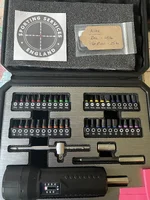
Just make sure any screwdriver bits (as some else said) are the hollow ground type which should properly fit gun screws. Dont use the wrong size either. a flat should be the width/size of the screw head, a Phillips is a phillips not a posi and a torx should not be pressed into service of a hex (even if you can!) Remember american guns most often still use "imperial" sized threads and tools not metric and you need to get the correct sized tools for your gun.
Other ideas on tools depend on where you are I think.
Generally I take with me in the field or at the range in your gun bag - a good set of torx/allen wrenches
that cover all your sizes on your guns and scopes,
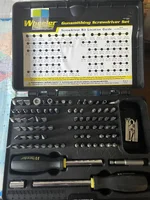
a screwdriver set (I recommend the Wheeler Space Saver kit for cost Vs quality) a small hammer and some pliers preferably a multitool to cover most other problems.
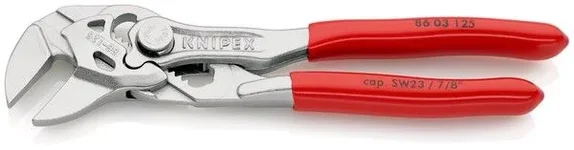
Also I have been slipping a Knipex wrench plier 125mm in my bag of late which is superb for just about anything you need to grip, takes up little space in your kit.
I highly recommend one.
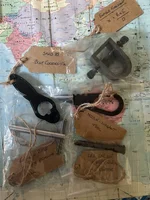
A simple brass knocking rod at least as long as your barrel, is also useful for a stuck case extraction or squib load bullet removal (an example i had was .17 HMR dud rounds!!!). Maybe a specialized broken extractor tool??
I was also put on to carrying a cheap paint can opener which is surprising good at getting unextracted cases out with ease.
I also take with me gun scrubber and rem oil wipes in sachets in case I need to clean or oil my guns as they don't leak in your bag like a bottle might and take up almost no room.
Zip ties (Orange ones double as range flags too) are useful in the range bag if something comes loose and I cannot tell you how much duct tape (in bright green or orange as well) has been used from improvised targets, tree and trail marking and fixing up things.
On your bench the skies the limit ( or at least your wallet!) and depending on what guns you are going to tinker with common ones are:
Normal, parallel and roll pin punches (and bench block!). Nylon ones are also quite handy to drift sights etc.
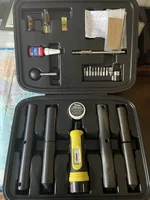
A torque screwdriver is almost required if you are removing actions or setting up decent scope rings.
Trigger pull gauge - if you adjust a trigger this is a must. Don't forget the safety drop test!
A good vice - also soft faces for your vice are important so you don't damage you guns - lead/copper/rubber and leather ones can be made very cheaply DIY.
A range vice/gun cradle (I have several - a good relatively inexpensive one is the TIPTON Compact range vice as it packs up and you can take it to the range too). Holds your gun whilst you workon it or clean it.
A good work light and maybe magnifier on a stand can really be helpful - especially useful with tired old eyes like mine.
Snap caps if you are going to be checking triggers and actions etc especially on shotguns.
What I have found useful additions to my toolkit are:
Extra long screwdrivers (Forster make really good ones specifically for guns) and socket extensions for recessed and deep set stock bolts.
A really good set of swiss and warding files. Chalk and a carding file for larger files too.
Magnetic parts tray - saves you losing screws you might not be able to replace. Better yet a magnetic cleaning mat.
A laser or optical boresighter saves you ammo setting a scope up and a few magnetic bubble levels help too.
I have found my laser level from my DIY tool kit self levels and projects a lovely cross on the wall to help level up scopes better than anything.
Bronze wire wool is very useful for many things especially gunstock refinishing and many other gun related cleaning. its softer than steel and you can wash it and resuse it making up for its added cost many times over and it does not rust.
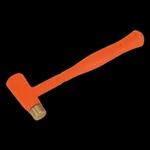
Also Sealey make a small 12Oz dead blow hammer with a brass face on one side and a rubber one on the back which is just perfect for gunsmithing ( see below).
Bolt tools to take them apart like the Sinclair bolt tolls for the Remington 700 and Lee Enfield bolt tool are a must if you have one of these guns.
This should go without saying but -A really good cleaning rod with decent tools and jags etc. I have used cheapo ones and they lasted five minutes. Good ones really last and clean you kit properly
without damage.
Invest in a good rod - yes it hurts to spend £50+ on a cleaning rod but it really is worth it.
Also decent oils and cleaners are a must - WD40 has its place but will not really do for guns on the whole. I use break free CLP which I thoroughly recommend even though it difficult to get hold of in the UK and Napier gun cleaner (because it works and I can get it anywhere). A good tip for auto shotgun actions is to use a high spec motor oil. You probably even have some in your home garage already. It really is good for that use.
A dremel tool is very worthwhile to have but I have found that you can easily make mistakes fast with them, whereas with hand tools especially files and hand use abrasives you remove less per stroke and therefore often make mistakes which are at least more correctable!
A Borescope - you can get quite cheap CMOS camera ones now and they will let you inspect you barrel and diagnose problems more than you think.
A one thing I would suggest is that if your budget allows do not use any of these tools for anything else but your guns. Keep them in you gun bag or in a toolkit/chest/ box just for your guns. That way you a: wont lend them out to anyone( like my general tools seem to go walkies when i do!) but also B: you won't have to go looking for them in many places around the shed/house/garage etc. they also won't get abused and damaged through general use either.
Well there's my 2 pennies worth!