Are deer stalkers key to nature recovery?

Conor O'Gorman

Well-Known Member
We might say YES. But will your local authority recognise and support your nature recovery efforts in managing deer and woodland habitats?

48 local nature recovery projects, led by local authorities, are being rolled out in every part of England. If you want to get involved search online for "LNRS" together with the name of your local authority. Once the projects go live next year we will be contacting BASC members about habitat and species management opportunities and possible funding streams.

Context here:

 
Worst click bait headline yet.

From the article:

People who shoot carry out habitat management and conservation on a massive 7.6m hectares. So clearly shooting should be key to the success of every local nature recovery strategy.

Does BASC really believe the general public and mainstream media agree with the principle that “shooting stuff = nature recovery”?? Arrogance like this will not educate it will ostracise.

Plenty of tenuous links I’d have chosen before this one.
 
This is complete tosh and if it were April 1st I’d think it were a hoax.
There is so much evidence that putting down large quantities of birds damages the ecosystem. Yes it might look a bit prettier because it’s tidy but the birds put down eat thousands of insects and reptiles. Many of which control pest species.
This argument will be shot down in flames (as it should) and make shooting come off worse.
If BASC was to come out and condemn all large driven shoots and only support small walked up shooting then they might achieve something
 
This is complete tosh and if it were April 1st I’d think it were a hoax.
There is so much evidence that putting down large quantities of birds damages the ecosystem. Yes it might look a bit prettier because it’s tidy but the birds put down eat thousands of insects and reptiles. Many of which control pest species.
This argument will be shot down in flames (as it should) and make shooting come off worse.
If BASC was to come out and condemn all large driven shoots and only support small walked up shooting then they might achieve something
I think it’s you that’s talking tosh. Have you ever stepped foot on a large shoot or are you letting your jealousy talk? On average the decent shoots I have been on have had higher quality habitats and levels of wildlife than non shooting ground.
 
Odd.

I’ve read plenty of threads on here harping on about the good work that we do in controlling species that are at their highest levels ever, and how NGO’s and other organisations need to be honest about how controlling deer and vermin is part of maintaining the balance of nature, and therefore they should be more open to having deer stalkers on their land.

Yet here we are again, complaining about how giving those ideas some publicity is the worst thing possible.

I didn’t realise “Recreational Shooting” meant huge Corporate days where thousands of birds are shot, or that spending £14 million to “identify locations to create or improve habitat most likely to provide the greatest benefit for nature and the wider environment” should not consider deer and vermin control?

Here is a link to the Local Nature Recovery Strategies:


Surely involving shooting proactively in these strategies is a good thing, or would we be happier complaining afterwards about how all that money has been spent without any thought of the need to manage deer and vermin?

The attitude that we should hide away from the public and pretend shooting doesn’t exist has hardly served us well in the past, and personally I’m in favour of a little more education and exposure.
 
Last edited:
I have read habitat assessments for a few landscape recovery & local nature recovery projects and unless deer are the focus of the project, they rarely even get mentioned.

In a report for one huge landscape project, where red and muntjac are in problematic numbers, there was not even one mention of deer.

It seems crazy to ignore the role that deer play in the landscape. The management of them needs to be planned, whether it is to maintain (or even build) roe numbers or to reduce herd spp & muntjac. If deer are not the focus of the project, the chances are that the majority of management is carried out recreationally.

So I welcome BASC’s approach here, in relation to deer. It is crucial that deer are considered in the planning of these projects and that their management and the role of recreational stalkers are recognized.
 
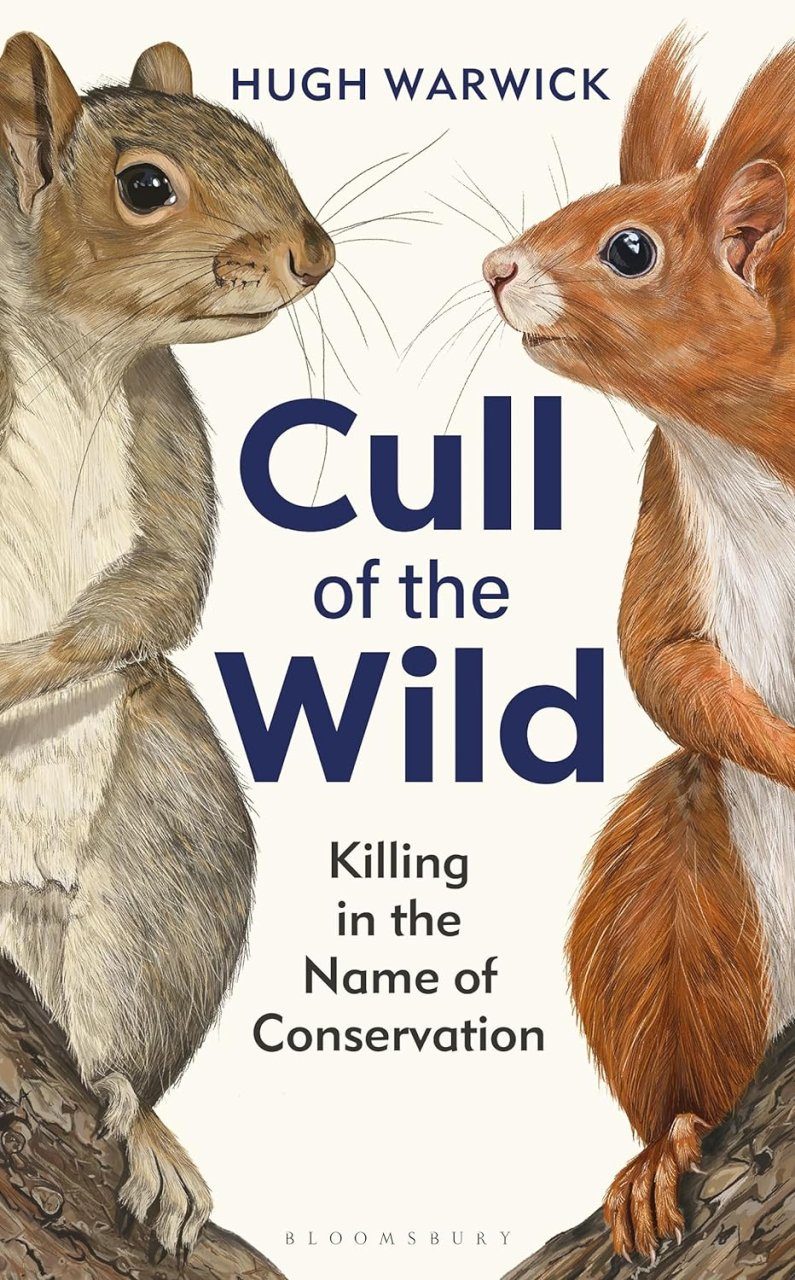
By the way, for those adamant that conservationists and the public are invariably opposed to shooting and other forms of species control, you might be interested to have a read of this recent book:


Despite its faults, including some related to deer, it is interesting to see the subject being tackled, and how the endorsements on the cover come from those that the shooting community may not typically see as natural allies.
 
Yet here we are again, complaining about how giving those ideas some publicity is the worst thing possible.

It’s the attention grabbing, clickbait type headline I object to, and the general “dumbed down” nature of the piece. I fundamentally agree that shooting has a place in the countryside as part of a healthy ecosystem.

It’s the tone BASC has taken with this approach which will get them nowhere and undermine the good stuff that we should be educating folk about.

But will your local authority recognise and support your nature recovery efforts in managing deer and woodland habitats?

Simple answer in 90% of cases - no!

In a report for one huge landscape project, where red and muntjac are in problematic numbers, there was not even one mention of deer.

A local wildlife trust manages a large chunk of woodland / moorland on behalf of Sheffield City Council. They are spending lots of time and money on regeneration. But completely ignore the huge numbers of red deer that are smashing the place up. Their management plan makes only a passing reference to them. I shot 20 on adjacent farmland last season and expect similar this but they wont support because they don’t believe public and donors find it palatable.

48 local nature recovery projects, led by local authorities, are being rolled out in every part of England. If you want to get involved search online for "LNRS" together with the name of your local authority.

Noting the point above, LAs will hardly be queuing up to engage the shooting community.

Once the projects go live next year we will be contacting BASC members about habitat and species management opportunities and possible funding streams.

Hmm, I’ll not be holding my breath.

personally I’m in favour of a little more education and exposure.
Completely agree, but I don’t feel this almost petulant approach from BASC does that at all.
 
It’s the attention grabbing, clickbait type headline I object to, and the general “dumbed down” nature of the piece. I fundamentally agree that shooting has a place in the countryside as part of a healthy ecosystem.

It’s the tone BASC has taken with this approach which will get them nowhere and undermine the good stuff that we should be educating folk about.


Simple answer in 90% of cases - no!


A local wildlife trust manages a large chunk of woodland / moorland on behalf of Sheffield City Council. They are spending lots of time and money on regeneration. But completely ignore the huge numbers of red deer that are smashing the place up. Their management plan makes only a passing reference to them. I shot 20 on adjacent farmland last season and expect similar this but they wont support because they don’t believe public and donors find it palatable.


Noting the point above, LAs will hardly be queuing up to engage the shooting community.


Hmm, I’ll not be holding my breath.


Completely agree, but I don’t feel this almost petulant approach from BASC does that at all.
Sadly in this day and age it is grabbing attention that matters. Attention spans are limited, particularly when it comes to social media, which is why nuanced articles in the friendly press achieve precious little.

As it happens, the article linked to is in ShootingUK, so hardly mainstream - I’d have personally preferred to see it in The Guardian!

Regarding local authorities engaging with the shooting community, as you say, 90% don’t now. Proactively engaging with them is surely better than sitting back and hoping that the dawn of realisation will finally arrive?
 
I think it’s you that’s talking tosh. Have you ever stepped foot on a large shoot or are you letting your jealousy talk? On average the decent shoots I have been on have had higher quality habitats and levels of wildlife than non shooting ground.
Not true, do some research not sponsored by large shoots. Habitat may look nice but ask for biodiversity figures.
You will be surprised
 
Not true, do some research not sponsored by large shoots. Habitat may look nice but ask for biodiversity figures.
You will be surprised
I won’t be surprised and I don’t need to look at figures. I use my eyes and have worked on shoots with conservation projects on them. I devoted 6 years to a shoot where every second we weren’t working with pheasants we were doing conservation work, as did every shoot around us.
 
Thanks for the feedback so far - most appreciated. You will hear much more from me and BASC on all of this in due course and I will take on board all comments as regards messaging and target audiences.

As explained in the article linked from the OP shooters are already doing the species management and habitat work in many of the areas that the local nature recovery strategies are mapping out. One of the targets is creating 140,000 hectares of restored or new nature-rich habitat by 2028. People who shoot carry out habitat management and conservation on 7.6 million hectares. So clearly shooting should be key to the success of every local nature recovery strategy.

When the local nature recovery habitat maps go live next year I think there is a golden opportunity for us all to engage with our local authorities on the projects, so that everyone involved knows and understands that shooting is a solution and not a problem. Early engagement from some of us during the public consultations would also help. BASC is responding to every consultation.

A few more stats...

Shooting in England invests £450 million of voluntary conservation work into nature recovery every year. That is the time people give to increasing the size and quality of habitats, as well as the time spent managing species that cause problems.

The carbon saved through woodland managed for shooting is worth £135 million a year, deer and grey squirrel management being a highly important component of that. The average game shoot is 15% wooded compared with just 10.5 per cent wooded elsewhere. The government has a legal target of reaching 16.5 per cent woodland and tree cover (so any tree anywhere) by 2050. Shooting is leading the charge for trees.

Shooting also contributes to England’s food security by harvesting wild game, notably venison and gamebirds, worth £25 million annually. Furthermore, shooting helps limit crop damage and forestry impacts, saving English farmers and the forestry sector an estimated £37 million and £4 million annually, respectively.

One of the more overlooked benefits of shooting is its positive impact on health and wellbeing. Individuals who participate in shooting are more likely to be physically active and experience reduced levels of loneliness compared to the general public. The resulting positive effects on mental and physical health save the NHS and local authorities £21 million annually. Highlighting this contribution supports the case for shooting as a public good that helps reduce healthcare costs while fostering community cohesion.

As regards funding for the nature recovery projects, £14 million has been allocated to produce the plans by March 2025; and billions are involved ahead interlinked with agri-environmental schemes.

An inter-related article here:


See also this article:

 
I won’t be surprised and I don’t need to look at figures. I use my eyes and have worked on shoots with conservation projects on them. I devoted 6 years to a shoot where every second we weren’t working with pheasants we were doing conservation work, as did every shoot around us.
So the impact on the ecosystem of putting thousands of pheasants down is what? Nothing? Minimal because it looks nice?
Your view of conservation is probably very different to mine.
Conservation starts with the soil, its biome, then the insects and onwards up the food chain.
It’s is often the unseen that is more important than the seen.
 
So the impact on the ecosystem of putting thousands of pheasants down is what? Nothing? Minimal because it looks nice?
Your view of conservation is probably very different to mine.
Conservation starts with the soil, its biome, then the insects and onwards up the food chain.
It’s is often the unseen that is more important than the seen.
No, the impact of releasing thousands of pheasants isn’t nothing. They obviously have some detrimental effects. However the overall impact of having large numbers of people looking after and improving nesting sites and habitats in the name of game shooting is an overall benefit. Compare land in this area that has a pheasant shoot on it compared with the alternative in this area which is an arable farm and the difference insect and bird life is so obvious that even someone as narrow minded as yourself can’t fail to notice it.
 
No, the impact of releasing thousands of pheasants isn’t nothing. They obviously have some detrimental effects. However the overall impact of having large numbers of people looking after and improving nesting sites and habitats in the name of game shooting is an overall benefit. Compare land in this area that has a pheasant shoot on it compared with the alternative in this area which is an arable farm and the difference insect and bird life is so obvious that even someone as narrow minded as yourself can’t fail to notice it.
Ooh insults well done.

There is enough evidence that pests and diseases proliferate where there is large scale pheasant release. It has a much narrower biodiversity than fallow ground. Starting with the soil.

I cannot persuade you of this clearly so little point in continuing to try.
 
Ooh insults well done.

There is enough evidence that pests and diseases proliferate where there is large scale pheasant release. It has a much narrower biodiversity than fallow ground. Starting with the soil.

I cannot persuade you of this clearly so little point in continuing to try.
Keep turning ground into habitats the food growing foot print is shrinking year in year out.
The fine line of feeding people or feeding birds is heading to feeding birds, around here they are putting in a twin drill row of a mix that will come and then be turned in for spring drill, then the whole lot is turned in and goes in the spring drill.

This lip service of creating habitat's is all well and good but wind the clock back in living memory people were digging up scraps of ground to grow food not feed birds, back then the cold winters sorted out the weak, these days it is mild all but a few days of cold.
Sing a song of sixpence,
A pocket full of rye,
Four and twenty blackbirds @Conor O'Gorman
Baked in a pie.
Won't go as far as a 45kg Fallow
 
Last edited:
Keep turning ground into habitats the food growing foot print is shrinking year in year out.
The fine line of feeding people or feeding birds is heading to feeding birds, around here they are putting in a twin drill row of a mix that will come and then be turned in for spring drill, then the whole lot is turned in and goes in the spring drill.

This lip service of creating habitat's is all well and good but wind the clock back in living memory people were digging up scraps of ground to grow food not feed birds, back then the cold winters sorted out the weak, these days it is mild all but a few days of cold.
Sing a song of sixpence,
A pocket full of rye,
Four and twenty blackbirds
Baked in a pie.
Won't go as far as a 45kg Fallow
I agree 100%. Planting non native seed mixes for game cover is not good.

We need farmland to be exactly that. How it’s farmed is another thread in its own right.

Like the big carbon producers buying land to offset their carbon debt the same argument is being used by large driven game estates in the name of conservation.

As Obama said, “you can put lipstick on a pig but it’s still a pig”
 
As Obama said, “you can put lipstick on a pig but it’s still a pig”
Interestingly, contemporary use of that saying pre-dates Obama by over 25 years. Just the year prior to Obama’s use, in 2007, John McCain said exactly the same about Hillary Rodham Clinton.

Like much else about them these days, modern politicians are neither original nor great orators.

The sentiment behind it goes back even further, and pre-dates America, with the British physician Thomas Fuller, who said that “A hog in armour is still but a hog".
 
@big ears what would you define as ‘large scale release’?

You’re using fallow ground as the comparator, which may be the ‘gold standard’ but is it realistic? In most cases, removing the shoots won’t result in ground being left to fallow, it’ll be put to some other use. So, it may be the realistic comparator is some kind of farming or, now, a solar farm.

That’s not to say shoots and farms don’t co-exist, plenty do, with the shoot providing coppices, cover and predator control that may otherwise not be undertaken.

There may be things that can be improved but don’t throw out the baby with the bathwater.
 
Back
Top