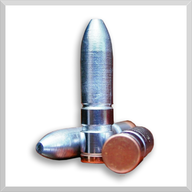
For Sale: Rotometals Lead Free Bullet Alloy for Bullet Casting

Bernie

Well-Known Member
Link: Lead Free Bullet Casting Alloy Bismuth based

If anyone is interested in this product to have a look at it for some testing etc, I am looking at a bulk order to get advantage of the discounts for buying more. They're a reliable company and I've had bismuth shot from them before. The price is pretty sensible given current bismuth prices and the discount when you get above the top level of order size pretty much cancels out the import tax. Not super cheap though.

If anyone wants to indicate an interest, just to get some idea of potential costings in a shared bulk order, please send me a pm.

B
 
Link: Lead Free Bullet Casting Alloy Bismuth based

If anyone is interested in this product to have a look at it for some testing etc, I am looking at a bulk order to get advantage of the discounts for buying more. They're a reliable company and I've had bismuth shot from them before. The price is pretty sensible given current bismuth prices and the discount when you get above the top level of order size pretty much cancels out the import tax. Not super cheap though.

If anyone wants to indicate an interest, just to get some idea of potential costings in a shared bulk order, please send me a pm.

B
Yes I’d be up for trying it
 
Just make sure you know the full cost as likely by the time that reaches you in the u.k. it will be double or treble the price after shipping and u.k. duty.
 
And still all is silent about the marvellous Hortonium that was puffed up now some two years so ago. Many many thanks for posting the link to the Rotometals website which may help out many who might use muzzloading rifles for taking deer.
 
And still all is silent about the marvellous Hortonium that was puffed up now some two years so ago. Many many thanks for posting the link to the Rotometals website which may help out many who might use muzzloading rifles for taking deer.

Could always try a u.k. supplier, they make an alloy for bismuth shot, which includes tin to stop it being brittle.

 
Just make sure you know the full cost as likely by the time that reaches you in the u.k. it will be double or treble the price after shipping and u.k. duty.
As I mentioned. I’ve imported from them before. I’m aware of the costs. Ive made at least 3 orders. Always works out cheaper than uk suppliers.
 
Could always try a u.k. supplier, they make an alloy for bismuth shot, which includes tin to stop it being brittle.

Have you got any experience with them. There are no prices and every Uk supplier I’ve looked at is significantly more expensive. I haven’t found a UK supplier that doesn’t source from China. The China tariffs are writing most of them off at the moment. Rotometals have a very large supply and hey made this batch of alloy a long time ago so can almost get some historic prices. Still steep though.
 

A good write up on the alloy. It’s nothing special, just bismuth, 12% tin and .75% antimony. The regular shotgun bismuth alloy in the UK sometimes is generally 6% tin and far too brittle for bullets.
 

A good write up on the alloy. It’s nothing special, just bismuth, 12% tin and .75% antimony. The regular shotgun bismuth alloy in the UK sometimes is generally 6% tin and far too brittle for bullets.

Think you may find they increased the tin content for shot as it was too brittle even for shot.

Bismuth has increased in value significantly over the last year or so, as you say it’s a case of shopping around to get the best price.
 
Just some info - I was one of the lab boys that developed the alloy for the Bismuth cartridge company way, way back, whilst working for a company called Mining and Chemical (MCP). They were one of the largest low melting point alloys and bismuth alloy makers in Europe if not the world and secretly provided alloys to the others suppliers like Johnson Matthey et al: I "acquired" some and tried to cast pistol bullet heads to try it out in my .357 mag revolver- this was back when I had pistols and cast my own heads with lead alloys. Far too brittle. The addition of tin stops being advantageous after a certain point. you start forming whats known as eutectic alloys, sort of naturally occuring balanced alloys within the mix, so not properly ratioed in the mix and bismuth can also form and separate leading to weakness in anything cast. Its actually quite an art form to make consistent low melting point alloys.
There were other alloy mixes that I did have success in 9mm cast on a spin caster we had on test, really hard alloy but not briitle and far too expensive in materials even back then - of course I was trying this all for "free". Anyway the Rotometals alloys might be a possibility but the obvious answer would not to just hardcast but to replace the lead core in a jacketed bullet with it. I dont know why Hornady and Sierra etc. have not done this instead of chasing all copper with all the problems of being too light. Bismuth is slightly heavier than lead, once alloyed about the same, and with the cost of copper bullets at silly levels it I cant see why this isn't done. no new invention of the bullet making process, just a tweak of the core metal and you have non lead bullets that will behave the same. Please post news of your Rotometals experiment as I am interested in the outcome .
Daniel
 
Just some info - I was one of the lab boys that developed the alloy for the Bismuth cartridge company way, way back, whilst working for a company called Mining and Chemical (MCP). They were one of the largest low melting point alloys and bismuth alloy makers in Europe if not the world and secretly provided alloys to the others suppliers like Johnson Matthey et al: I "acquired" some and tried to cast pistol bullet heads to try it out in my .357 mag revolver- this was back when I had pistols and cast my own heads with lead alloys. Far too brittle. The addition of tin stops being advantageous after a certain point. you start forming whats known as eutectic alloys, sort of naturally occuring balanced alloys within the mix, so not properly ratioed in the mix and bismuth can also form and separate leading to weakness in anything cast. Its actually quite an art form to make consistent low melting point alloys.
There were other alloy mixes that I did have success in 9mm cast on a spin caster we had on test, really hard alloy but not briitle and far too expensive in materials even back then - of course I was trying this all for "free". Anyway the Rotometals alloys might be a possibility but the obvious answer would not to just hardcast but to replace the lead core in a jacketed bullet with it. I dont know why Hornady and Sierra etc. have not done this instead of chasing all copper with all the problems of being too light. Bismuth is slightly heavier than lead, once alloyed about the same, and with the cost of copper bullets at silly levels it I cant see why this isn't done. no new invention of the bullet making process, just a tweak of the core metal and you have non lead bullets that will behave the same. Please post news of your Rotometals experiment as I am interested in the outcome .
Daniel

Has barnes bullets and possibly others not as such done that replaced the lead core but with copper-tin.
eg barnes varmint grenade .

However the bottom line is all such options are significantly more expensive than lead.

 
On the topic itself. I followed up with Lowdens UK. Someone posted a link above. Their price, without VAT and shipping, is more than buying from the US and shipping transatlantic and paying VAT and import tax. I understand the limitations of operating in the UK business environment but they’re sadly big even close to competitive.

Ritometals had a 10% sale for July 4th. They do every year on Memorial Day, Independence Day and Veterans Day so I ordered 18lbs. If anyone wants to give it a try send me a pm.
 
I stopped reading
in a different universe, far far away 😂 assuming multiple universe theory is correct 😊

Lead is denser than bismuth, with a density of (11.34 g/cm}^3 compared to bismuth's density of (9.78 g/cm}^3
Enfield spares and Liveonce - You are correct in your observations of what I posted but not in your conclusion of my knowledge, it was a typo, not ignorance.
What I meant to say is that "Lead is slightly heavier than Bismuth and can be about the same or similar when alloyed" and by alloys I mean compared to say lead antimony alloys that are commonly used in bullet casting, think the old wheel weights we used when you could get them from garages. I have tried all sorts of alloys when I had access to them - some of the 3, 4 and 5 part alloys with Cadmium and Indium for example were interesting in their terminal behaviour. Cadmium being worse than lead in toxicity of course, so not solving the real problem and being ridiculously expensive.


A little lesson in chemistry - Bismuth actually has a higher atomic mass at 208.98 where lead is 207.2 which means that on an atomic level a single atom of Bismuth is technically heavier than a lead one!
Yes, I know Lead is heavier due to to its greater density -Density is to do with the atomic structure, which in the case of pure Lead is a face centred cubic arrangement, which allows the atoms to get closer together hence increased density and real world greater weight, where as Bismuth has a rhombohedral lattice structure which is more spaced out hence a lower density and lower compared real world weight with Lead.
Oddly enough Bismuth actually increases its density when its a liquid as the lattice is broken and the atoms can pack in closer together in liquid form (density goes up to over 10 g/cm3 depending on temperature, pressure etc.) and of course when you alloy lead with lighter metals this will change its overall density too, depending on what you add. A Bismuth alloy suitable for bullet making might well be heavier than a Lead one - it will depend on what you add and mix into them of course.
The jacket on a bullet can also be a copper alloy itself. Some "copper" jackets are made from what is referred to as "guilding metal" - common ones such as 90/10 copper/zinc for example could be used as it has better ductile properties when cold forming than just copper - its technically a brass really.

But what do I know - I apparently live in another universe, far far away where such things are different and I know nothing and I am wrong about everything.

I would say people should be a bit less arsey with their implied comments - you know who you are.
Comment - "I stopped reading when I got here." , I understand why you said that - but it was a typo. I would chance to say I know more about the chemistry and properties of low melting point alloys than almost anyone, both from being an ACTUAL working professional chemist back in the day and in this specific field I might add - for years - and helping develop real alloys actually used in ammo production, plus doing personal testing decades ago with these very alloys making bullets before any of you even thought of doing this. What expertise do my detracters/commentators have one might wonder?

Clearly scoring cheap jibe points on a typo from a fellow shooter is more useful and productive than behaving like reasonable people, on what I mistakenly thought was a friendly forum. That the internet for you.

I was only trying to help and take an interest in what you were talking about as I used to do this very thing it for a living. Perhaps this why the country is going to the dogs - no manners anymore, no simple " are you sure that's right old boy?" queries.
Reward for proffering info and taking an interest = rude schoolboy type implication of ignorance and stupidity.
You could have just dropped me line querying the info and I would have realised my mistake, felt silly and corrected the post. Ah well ,never mind, I won't bother again - pearls before swine as they say.

As for the Barnes Bullets I was unaware someone actually has tried this, it makes sense as I said previously rather than just all copper which is expensive, doesn't expand all that well at lower velocities with traditional designs and thus limits use to shorter range for ethical kills for hunting as I understand it. A heavy zero lead alloy core on a copper jacket would make more sense both in terminal effect manufacture and possibly even cost. I will look at the Barnes Varmint Grenade bullets as we are all going to have to go lead free at some point for a lot of our shooting quite soon.
 
Last edited:
Enfield spares and Liveonce - You are correct in your observations of what I posted but not in your conclusion of my knowledge, it was a typo, not ignorance.
What I meant to say is that "Lead is slightly heavier than Bismuth and can be about the same or similar when alloyed" and by alloys I mean compared to say lead antimony alloys that are commonly used in bullet casting, think the old wheel weights we used when you could get them from garages. I have tried all sorts of alloys when I had access to them - some of the 3, 4 and 5 part alloys with Cadmium and Indium for example were interesting in their terminal behaviour. Cadmium being worse than lead in toxicity of course, so not solving the real problem and being ridiculously expensive.


A little lesson in chemistry - Bismuth actually has a higher atomic mass at 208.98 where lead is 207.2 which means that on an atomic level a single atom of Bismuth is technically heavier than a lead one!
Yes, I know Lead is heavier due to to its greater density -Density is to do with the atomic structure, which in the case of pure Lead is a face centred cubic arrangement, which allows the atoms to get closer together hence increased density and real world greater weight, where as Bismuth has a rhombohedral lattice structure which is more spaced out hence a lower density and lower compared real world weight with Lead.
Oddly enough Bismuth actually increases its density when its a liquid as the lattice is broken and the atoms can pack in closer together in liquid form (density goes up to over 10 g/cm3 depending on temperature, pressure etc.) and of course when you alloy lead with lighter metals this will change its overall density too, depending on what you add. A Bismuth alloy suitable for bullet making might well be heavier than a Lead one - it will depend on what you add and mix into them of course.
The jacket on a bullet can also be a copper alloy itself. Some "copper" jackets are made from what is referred to as "guilding metal" - common ones such as 90/10 copper/zinc for example could be used as it has better ductile properties when cold forming than just copper - its technically a brass really.

But what do I know - I apparently live in another universe, far far away where such things are different and I know nothing and I am wrong about everything.

I would say people should be a bit less arsey with their implied comments - you know who you are.
Comment - "I stopped reading when I got here." , I understand why you said that - but it was a typo. I would chance to say I know more about the chemistry and properties of low melting point alloys than almost anyone, both from being an ACTUAL working professional chemist back in the day and in this specific field I might add - for years - and helping develop real alloys actually used in ammo production, plus doing personal testing decades ago with these very alloys making bullets before any of you even thought of doing this. What expertise do my detracters/commentators have one might wonder?

Clearly scoring cheap jibe points on a typo from a fellow shooter is more useful and productive than behaving like reasonable people, on what I mistakenly thought was a friendly forum. That the internet for you.

I was only trying to help and take an interest in what you were talking about as I used to do this very thing it for a living. Perhaps this why the country is going to the dogs - no manners anymore, no simple " are you sure that's right old boy?" queries.
Reward for proffering info and taking an interest = rude schoolboy type implication of ignorance and stupidity.
You could have just dropped me line querying the info and I would have realised my mistake, felt silly and corrected the post. Ah well ,never mind, I won't bother again - pearls before swine as they say.

As for the Barnes Bullets I was unaware someone actually has tried this, it makes sense as I said previously rather than just all copper which is expensive, doesn't expand all that well at lower velocities with traditional designs and thus limits use to shorter range for ethical kills for hunting as I understand it. A heavy zero lead alloy core on a copper jacket would make more sense both in terminal effect manufacture and possibly even cost. I will look at the Barnes Varmint Grenade bullets as we are all going to have to go lead free at some point for a lot of our shooting quite soon.

interesting read, but lighten up, you were not being criticised, the fact is that as pure elements in solid state lead is denser than Bismuth. Yes neither make for good projectiles unless alloyed, normally with Tin, Arsenic and Antimony depending on the end application.

Wheel weights in the days of owning pistols did indeed make nice cast bullets and could be had for virtually free.

The issue with all alternatives to lead is not just density but cost and terminal ballistics.

Cost likely being the biggest impact for most, otherwise steel shot would not be being used as the preferred replacement to lead shot.

“as we are all going to have to go lead free at some point for a lot of our shooting quite soon.” unless you live in the EU or NI 😊
 
Can I ask why you say that "copper is expensive" - it’s still 6 times cheaper than bismuth?
CNC lathe turned copper bullets are more expensive than lead cup and core bullets. Generally £1+ in the bigger calibres. Pure tin and compressed powdered metal core bullets like the varmint grenade and the gecko are still up there in cost compared to lead of same size.

I expect to be able to cast a 140gn bullet with the roto lead free Bi based alloy for 40-50pence. It’s just to keep casting going for calibres larger than 22 in the future really. Will still cast lead for 22.
 
Back
Top