Another food business query from a frustrated hunter

charlieboy-shooter

Well-Known Member
Hi,

I hear or should I say, read. it's so easy to register as a food business and have over the past months read several posts.
Whilst I agree the actual on-line registration is Quick and simple getting correct factual guidance from the local EHO is proving to be everything but.
Contacted local council for guidance on registeration back in March. Heard nothing so in early September attempted again and submitted an online registration. However I am not really any further forward today and have been told not to proceed with certain aspects and scenarios I have enquired about. Have been advised any carcass in fur to a individual or butcher does not require registration so I can carry on. But can't take a AGHE.

So

Can anyone please help on the actual legal requirements regarding whether the cold chain needs to be maintained or not during the transportation of a prechilled carcass under the following 2 scenarios.

1) Pre-chilled in fur carcass to a AGHE , Butcher or individual.

2) Pre-chilled skinned carcass to a Butcher or individual.


The sticking point I have with the EHO doesn't know and has offered his opion on other aspects which seem to go against my understanding of replies on the many posts regarding food business.

He has advised regulation 852/2004 Annex II transportation parts are applicable however one states
Chapter IV part 7 '
States ' or containers used for transporting are capable of maintaining foodstuffs at an appriopiate temperature '( As one of my scenarios requires that the carcass has been skinned. It has now been processed so does it now become ' foodstuffs' ? )

Chapter IX part 5.
States limited periods outside temperature control are permitted to accommodate practicalities of handling during transportation.

Which is the correct condition which needs to be applied to each scenario ?

I fear the season may be over before I get a resolution or worst still die of old age.

Thanks
 
Last edited:
Hi,

Forget all the drivel above.
Be grateful for an answer to question below.

Legally, should the cold chain be maintained during transportation for a pre- chilled carcass either in-fur or skinned to either a AGHE or Butcher ??

Thanks.
 
Hi,

Forget all the drivel above.
Be grateful for an answer to question below.

Legally, should the cold chain be maintained during transportation for a pre- chilled carcass either in-fur or skinned to either a AGHE or Butcher ??

Thanks.
Your EHO should have provided you with the links to the Wild Game Guide - this is the "bible" when it comes to wild game:


Regarding your specific question, see the section "Transport and temperature controls for wild game carcases delivered to an AGHE" starting on page 26, in particular the following:
  • take account of the requirement for chilling to start within a reasonable period of time after killing, particularly during warm weather, so that a temperature throughout the meat of 7⁰ C for large wild game and 4⁰ C for small wild game can be achieved as soon as possible
  • ensure that the cold chain is maintained;
  • arrange for game to be transported to an AGHE as soon as possible
There is no definition - at least that I've ever found - of what constitutes "a reasonable period of time" or "as soon as possible".

In general it is accepted that you can transport carcasses without refrigeration - but hygienically - back from where they have been shot to the AGHE or your larder. However this does mean that, during Summer for example, as a FBO you should not leave carcasses in the field during the day whilst you carry on stalking.

If you take a carcass home first, rather than direct to the AGHE, then you should store it in the chiller and then use refrigerated transport to take it to the AGHE, viz section 72:

Regulation 853/2004 states “ where climatic conditions so permit, active chilling is not necessary". In the UK, except at the very coldest times of the year and where storage and delivery times are short, active chilling will be necessary in the game larder. Additionally, the use of refrigerated vehicles to transport game from the larder to the AGHE will be necessary to manage food risks. Active chilling should begin in the game larder if some time is likely to elapse before shot game reaches the AGHE

Hence why modern commercial game shoots will take the bag away periodically during the day and store the birds in the chiller.
 
Hi,

Thank you for the reply.
Yes, he has pointed me to the FSA Wild game guide amongst other documents and legislation.
It’s the chilling part which is potentially the problem. Waiting feedback from the FSA.

I have missed this part

If you take a carcass home first, rather than direct to the AGHE, then you should store it in the chiller and then use refrigerated transport to take it to the AGHE, viz section 72:
It’s the practicalities of having active cooling which causes me and I guess others an issue.

Shooting a deer in the evening and after extraction or at the weekend Leaves no option but to take the carcass home and rightly so to chill as the guidelines. But to then take the carcass to an outlet / AGHE having to use refrigerated transport makes it an unrealistic and un-cost effective option.
Keeping it cool in an insulated container is although a pain is at least achievable but refrigerated is not for me.
I was hoping the part which states
limited periods outside temperature control are permitted to accommodate practicalities of handling during transportation. Is a valid exclusion for short journeys.

Thanks
 
Hi,

Thank you for the reply.
Yes, he has pointed me to the FSA Wild game guide amongst other documents and legislation.
It’s the chilling part which is potentially the problem. Waiting feedback from the FSA.

I have missed this part


It’s the practicalities of having active cooling which causes me and I guess others an issue.

Shooting a deer in the evening and after extraction or at the weekend Leaves no option but to take the carcass home and rightly so to chill as the guidelines. But to then take the carcass to an outlet / AGHE having to use refrigerated transport makes it an unrealistic and un-cost effective option.
Keeping it cool in an insulated container is although a pain is at least achievable but refrigerated is not for me.
I was hoping the part which states
limited periods outside temperature control are permitted to accommodate practicalities of handling during transportation. Is a valid exclusion for short journeys.

Thanks

Transport from field to the larder is covered in the HACCP report, where it states that transport will be focused on minimising the time/distance between field dressing of the carcass and the larder. It also states that, where necessary, clean ice packs or other means will be used to chill the carcass.

I don't use AGHE's, but bring any carcasses back to home for subsequent processing.

In the larder I have a chiller (basically a large display fridge) where, once the carcass is stored, the temperature is then monitored using an automated data logger. This avoids the need to go out multiple times each day to read/record the temperature.

My EHO was happy enough to sign me off as a FBO based on the above, but - just like FEO's - each EHO can be different in how they interpret the guidance.
 
Transport from field to the larder is covered in the HACCP report, where it states that transport will be focused on minimising the time/distance between field dressing of the carcass and the larder. It also states that, where necessary, clean ice packs or other means will be used to chill the carcass.

I don't use AGHE's, but bring any carcasses back to home for subsequent processing.

In the larder I have a chiller (basically a large display fridge) where, once the carcass is stored, the temperature is then monitored using an automated data logger. This avoids the need to go out multiple times each day to read/record the temperature.

My EHO was happy enough to sign me off as a FBO based on the above, but - just like FEO's - each EHO can be different in how they interpret the guidance.
What’s the automated data logger, and how does it work?
 
What’s the automated data logger, and how does it work?

They are small devices, a little bigger than a box of matches, that automatically record the temperature and save the data. They can be free standing, or some have a loop on them that lets you attach them to a hook or clip (useful for attaching to a gridded fridge shelf, etc). They are used a lot in areas like the pharma and fresh produce supply chains, to monitor that vaccines, food, etc are stored and transported within allowable temperature thresholds.

There are a whole variety on the market. I have bought a few secondhand on eBay, and a couple new.

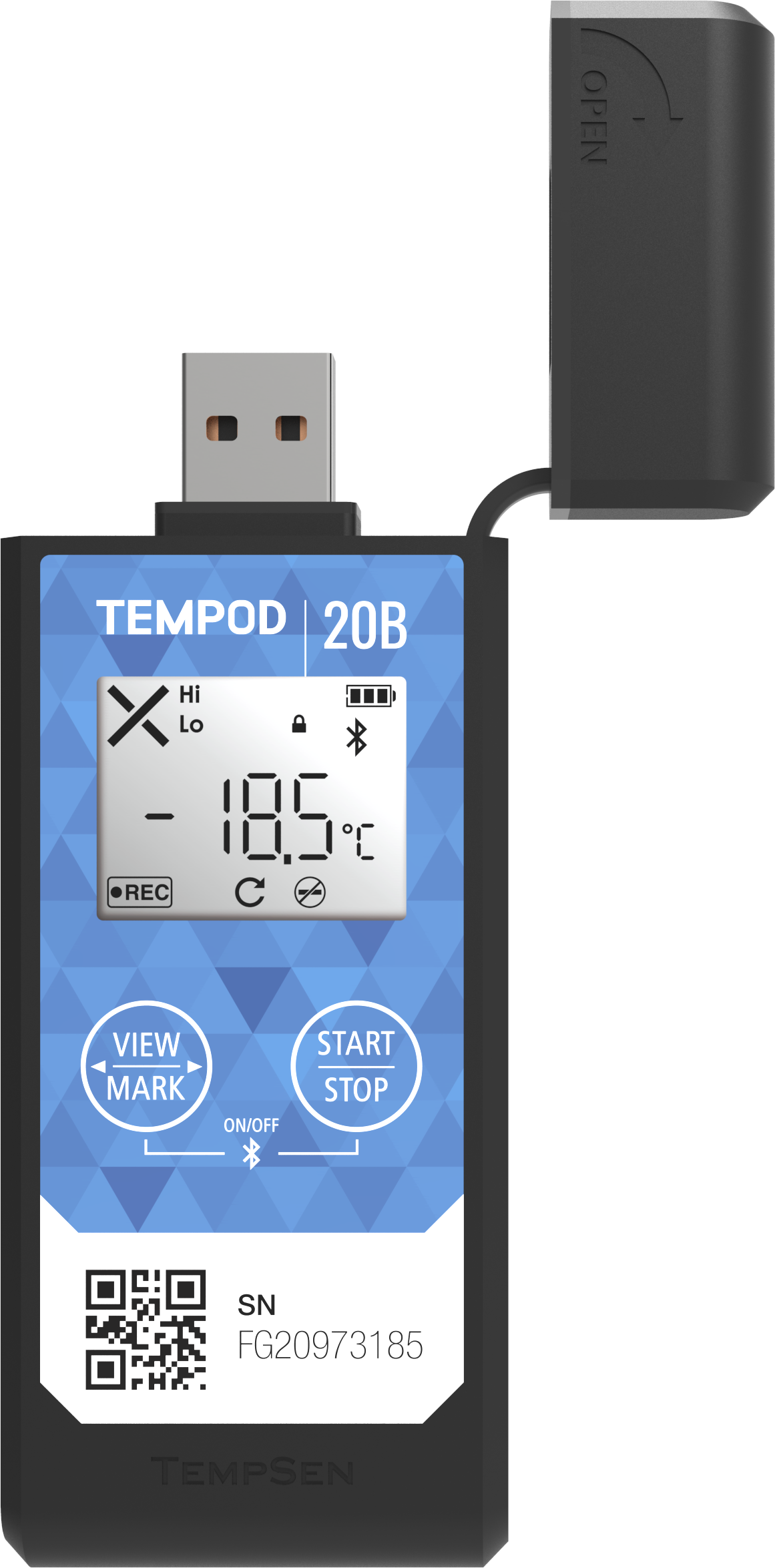
This is the one I'm using at the moment - I think I paid £15 for mine.


You can also get them on Amazon:


Just be sure to get a logger that is mutliple use/reusable and configurable, rather than just single use. The latter are disposable, and you can't replace the battery (typically a CR2032 or similar).

Basically you download software or an App from the manufacturers to configure them - how many readings per day, high/low temperature alert setting, etc. You then stick them in the chiller and away they go, recording the temperature according to the interval you define.

The Tempod version above has Bluetooth, and an accompanying iPhone App. This means when I go into the larder I just connect my iPhone to the previously paired data logger and it downloads all the data and creates an automatic PDF report that I can then email to myself if needed. The report tells you if any of the temperature thresholds have been breached. I prefer the Bluetooth version to the USB alternative, as with that you have to remove the data logger from the fridge, plug it into your laptop, download the data, then reset the logger and put it back in the chiller. This means you have to program the logger with a delayed start of an hour or so, so that it doesn't start recording and issueing temperature alerts whilst you are carrying it back to the chiller - been there, done that!

Mine all have a little LCD display that will show me if the temperature threshold has been breached., Generally I read the logger, and reset it, every time I take a carcass out of the chiller, but depending on how you configure them they can record data over a period of several weeks or even months.

Edit: Haven't tried this model, but it sounds like it's totally App based, configurable via Bluetooth:


Here's the manufacturer's spec sheet:

 
Last edited:
  • Like
Reactions: VSS
Hi,

Thank you for the reply.
Yes, he has pointed me to the FSA Wild game guide amongst other documents and legislation.
It’s the chilling part which is potentially the problem. Waiting feedback from the FSA.

I have missed this part


It’s the practicalities of having active cooling which causes me and I guess others an issue.

Shooting a deer in the evening and after extraction or at the weekend Leaves no option but to take the carcass home and rightly so to chill as the guidelines. But to then take the carcass to an outlet / AGHE having to use refrigerated transport makes it an unrealistic and un-cost effective option.
Keeping it cool in an insulated container is although a pain is at least achievable but refrigerated is not for me.
I was hoping the part which states
limited periods outside temperature control are permitted to accommodate practicalities of handling during transportation. Is a valid exclusion for short journeys.

Thanks
What’s the distance/journey time from your chiller to the AGHE/butcher?
 
My EHO
Accepted if local then no active chilling required but if a longer journey then “active chilling “ would be required ( ice packs / juice bottles with frozen x water )
Long or short journey was not described with actual figure of what each is .

And active chilling was required to be noted in HACCP

Paul
 
My EHO was happy enough to sign me off as a FBO based on the above, but - just like FEO's - each EHO can be different in how they interpret the guidance.
Yes, that’s becoming apparent especially after talking to @T.eddie. I guess I’ll eventually get my EHO’s interpretation on it all.
I also have a temperature meter which can log data from 2 sources.

What’s the distance/journey time from your chiller to the AGHE/butcher?
The furthest butcher would be 17miles away and AGHE is a bit less.
I have been through this with the EHO. So the maximum journey time is approximately 35 mins
and most would be less.

My EHO
Accepted if local then no active chilling required but if a longer journey then “active chilling “ would be required ( ice packs / juice bottles with frozen x water )

I guess it is partly what he deems local.
I mentioned what is acceptable as active chilling and mentioned an insulated container with bottles of frozen water. He kept using the word Refrigeration. I possibly, wrongly, stated nothing mentioned refrigeration. Although Willie_gunn has pointed out it does. Think I’ll keep that to myself and hope he doesn’t read this thread.

Thank you to all have replied. It all helps even if it’s just improving my understanding of the requirements.
 
Yes, that’s becoming apparent especially after talking to @T.eddie. I guess I’ll eventually get my EHO’s interpretation on it all.
I also have a temperature meter which can log data from 2 sources.


The furthest butcher would be 17miles away and AGHE is a bit less.
I have been through this with the EHO. So the maximum journey time is approximately 35 mins
and most would be less.


I guess it is partly what he deems local.
I mentioned what is acceptable as active chilling and mentioned an insulated container with bottles of frozen water. He kept using the word Refrigeration. I possibly, wrongly, stated nothing mentioned refrigeration. Although Willie_gunn has pointed out it does. Think I’ll keep that to myself and hope he doesn’t read this thread.

Thank you to all have replied. It all helps even if it’s just improving my understanding of the requirements.
Best of luck mate, hope he sees sense!
 
Best of luck mate, hope he sees sense!
Thanks. Well that makes at least 2 of us then and possibly a few others so I stop going on about it.

Even if he doesn’t just to get an answer would be good so I can either arrange what’s required and crack on or whatever. It’s the going no where with it that’s so frustrating.
 
Thanks. Well that makes at least 2 of us then and possibly a few others so I stop going on about it.

Even if he doesn’t just to get an answer would be good so I can either arrange what’s required and crack on or whatever. It’s the going no where with it that’s so frustrating.
Out of interest has your EHO shared with you their personal experience in terms of registering individuals as FBO's with regards to game in particular?

I ask as it seems this kind of detailed experience seems to be spread pretty thinly. The EHO who visited me was not the normal one for our area, but she had a lot of experience with FBO's processing game which is why she did the visit.

If your EHO has not done a lot of these type of inspections they might be overly-cautious.
 
Out of interest has your EHO shared with you their personal experience in terms of registering individuals as FBO's with regards to game in particular?
Yes, he has been very open about it. Despite nearly 40 yrs in the business he has never dealt with the scenario and he has openly admitted he is learning about it and has spent a considerable amount of time looking into it. He is now liaising with the FSA seeking guidance. Equally I believe he is the only EHO in the area so I’m probably pretty low on his to do list.

It has now made me wonder just how many of us which do what we do, have actually registered as a FBO.
 
Yes, he has been very open about it. Despite nearly 40 yrs in the business he has never dealt with the scenario and he has openly admitted he is learning about it and has spent a considerable amount of time looking into it. He is now liaising with the FSA seeking guidance. Equally I believe he is the only EHO in the area so I’m probably pretty low on his to do list.

It has now made me wonder just how many of us which do what we do, have actually registered as a FBO.
Id suspect not as many that should given what the EHO I spoke with said as well
 
Yes, he has been very open about it. Despite nearly 40 yrs in the business he has never dealt with the scenario and he has openly admitted he is learning about it and has spent a considerable amount of time looking into it. He is now liaising with the FSA seeking guidance. Equally I believe he is the only EHO in the area so I’m probably pretty low on his to do list.

It has now made me wonder just how many of us which do what we do, have actually registered as a FBO.
As @T.eddie says, I think the number who have registered remains pretty low. Most stalkers, and AGHE's, seem happy to turn a blind eye and just carry on doing things as in the past. How many AGHE's, I wonder, request that stalkers delivering carcasses show documentary evidence they are registered as FBO's?

Processing venison was something I had done for personal use for some time. However as a result of now culling more deer and, during lockdown, finding the AGHE's either shut or not taking carcasses, I had to develop other outlets for the amount of venison I was producing. Hence I registered as a FBO. I was lucky that the EHO was both well-versed in what was necessary and very helpful in terms of what I needed to do. I also received a lot of help and advice from members here who had been through the process before.

What I would say is that it is worth persevering, and is actually quite rewarding. Don't forget that if you want to sell venison as a producer you will also need to do a basic food hygiene course - there are plenty available online.
 
Last edited:
My EHO was just a young lassie and never dealt with anything like this before …. Her words …
She was adamant I had to be registered with FSA as an AGHE … I had to show her section of wild game guidance which demonstrated where I was coming in and what level etc …

Most folks apparently advised to have food hygiene level 2 ….. she wanted level 3 … ok …

I jumped thru hoops then she started going back on herself …. They only working 2 days a week etc so I’d been chasing this since April and a previous site visit ….
Eventually I politely said enough … this need sorting and another visit … she came out , apologized about time. & cautious approach but she was covering her ar5e so to speak … we spent a morning going over whole process , my paperwork , labeling , etc etc from start to finish & she was confidently happy and got my pass certificate next day

I found it paid to be polite and constructive and also took lot on from their side also

Paul
 
Don't forget that if you want to sell venison as a producer you will also need to do a basic food hygiene course - there are plenty available online.
Funny enough that’s exactly one of my questions.
Which one is the appropriate course. I haven’t looked for a few months now but several are offered. I also thought level 2 but was hoping for facts not his or my opinion.

Thanks
 
Back
Top