John Gryphon
Well-Known Member
I`m confident that this may cause some 'discussion'
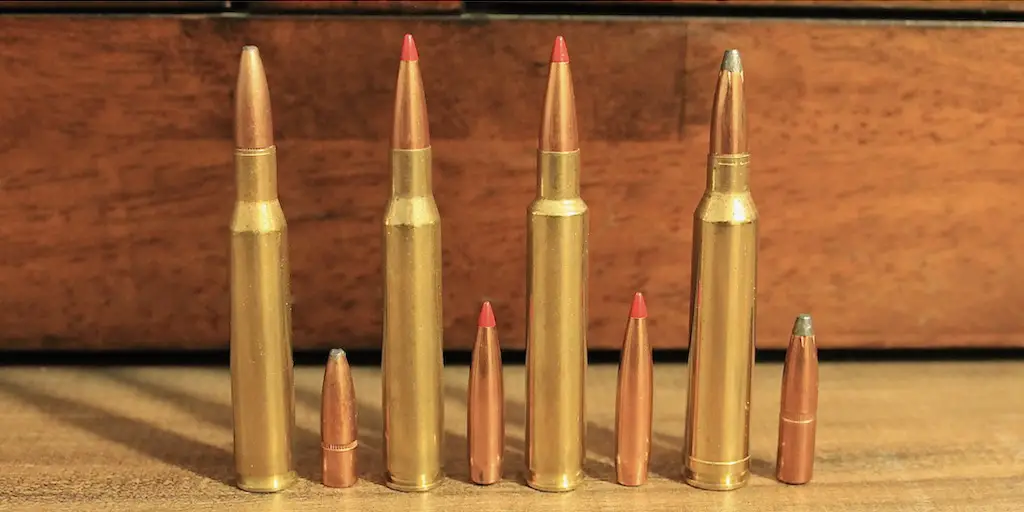
The comparison between the .270 Winchester, .280 Remington, .280 Ackley Improved, and 7mm Remington Magnum is often treated like a search for the single “best” cartridge, but the deeper truth is far more complicated, because these four cartridges are not simply different levels of the same idea, they are four completely different personalities pretending to solve the same problem.
The .270 Winchester represents simplicity and trust, delivering flat trajectory, manageable recoil, and decades of proven field success through a system that never tried to dominate every category, but instead focused on remaining consistently effective across realistic hunting distances.
The .280 Remington takes a quieter approach, built around balance rather than reputation, combining efficient 7mm ballistics with moderate recoil and versatile bullet selection, creating a cartridge many shooters consider one of the most underrated compromises ever designed.
The .280 Ackley Improved pushes that balance further, sharpening the edges of the original .280 concept by increasing velocity and efficiency without fully crossing into magnum territory, creating a cartridge that feels almost engineered to satisfy shooters who constantly want “just a little more” without accepting the full cost of a magnum system.
Then the 7mm Remington Magnum enters the conversation completely differently, abandoning moderation almost entirely in favor of reach, speed, and authority, delivering a level of long-range capability that immediately changes how distance feels to the shooter.
The .270 builds confidence through familiarity.
The .280 builds confidence through balance.
The Ackley builds confidence through refinement.
The 7mm Rem Mag builds confidence through force.
And that is why the argument never ends.
Because none of these cartridges fail badly enough to disappear, yet none of them dominate so completely that the others become irrelevant, meaning every shooter eventually starts defending not just ballistic performance, but the philosophy behind the cartridge itself.
Trajectory becomes one of the clearest dividing lines, because the .270 Winchester emphasizes practical flat shooting without excessive recoil, the .280 Remington balances efficiency and versatility, the Ackley pushes velocity further while maintaining manageable behavior, and the 7mm Rem Mag simply stretches the entire system outward through sheer speed and retained energy.
Recoil exposes another layer of personality, because the .270 remains smooth and approachable, the .280 feels controlled and refined, the Ackley starts introducing sharper authority, and the 7mm Rem Mag demands real discipline from the shooter if consistency is going to survive repeated shots over time.
But this is where the debate becomes deeply personal for many shooters.
Because eventually the cartridge stops being just a tool.
It becomes a reflection of what the shooter values most.
Some shooters prioritize familiarity and field trust.
Some chase perfect balance.
Some obsess over optimization.
Some want maximum reach no matter the cost.
And each cartridge quietly reinforces one of those mindsets.
In practical use, all four are highly capable systems, but they shape the shooter’s experience differently, because the .270 rewards simplicity, the .280 rewards versatility, the Ackley rewards refinement, and the 7mm Rem Mag rewards commitment to power and range.
The key distinction is not that one cartridge objectively defeats the others, but that each one solves the same problem through a completely different relationship with recoil, velocity, efficiency, and shooter psychology, and those differences create loyalty that goes far beyond ballistics.
The truth is, shooters rarely argue this hard about cartridges that fail.
They argue this hard about cartridges that all work well enough to justify belief.
Because once performance becomes “good enough” across the board, the debate stops being about numbers and starts becoming about identity, preference, and what kind of shooting experience feels most convincing behind the rifle.
In the end, the comparison between the .270 Winchester, .280 Remington, .280 Ackley Improved, and 7mm Remington Magnum is not about discovering a perfect winner, but about discovering what the shooter is actually chasing, because one cartridge prioritizes trust, another balance, another refinement, and another dominance, and that leads to the only question that really matters: are you choosing the cartridge that fits the situation best, or the one that fits the kind of shooter you believe yourself to be?
The comparison between the .270 Winchester, .280 Remington, .280 Ackley Improved, and 7mm Remington Magnum is often treated like a search for the single “best” cartridge, but the deeper truth is far more complicated, because these four cartridges are not simply different levels of the same idea, they are four completely different personalities pretending to solve the same problem.
The .270 Winchester represents simplicity and trust, delivering flat trajectory, manageable recoil, and decades of proven field success through a system that never tried to dominate every category, but instead focused on remaining consistently effective across realistic hunting distances.
The .280 Remington takes a quieter approach, built around balance rather than reputation, combining efficient 7mm ballistics with moderate recoil and versatile bullet selection, creating a cartridge many shooters consider one of the most underrated compromises ever designed.
The .280 Ackley Improved pushes that balance further, sharpening the edges of the original .280 concept by increasing velocity and efficiency without fully crossing into magnum territory, creating a cartridge that feels almost engineered to satisfy shooters who constantly want “just a little more” without accepting the full cost of a magnum system.
Then the 7mm Remington Magnum enters the conversation completely differently, abandoning moderation almost entirely in favor of reach, speed, and authority, delivering a level of long-range capability that immediately changes how distance feels to the shooter.
The .270 builds confidence through familiarity.
The .280 builds confidence through balance.
The Ackley builds confidence through refinement.
The 7mm Rem Mag builds confidence through force.
And that is why the argument never ends.
Because none of these cartridges fail badly enough to disappear, yet none of them dominate so completely that the others become irrelevant, meaning every shooter eventually starts defending not just ballistic performance, but the philosophy behind the cartridge itself.
Trajectory becomes one of the clearest dividing lines, because the .270 Winchester emphasizes practical flat shooting without excessive recoil, the .280 Remington balances efficiency and versatility, the Ackley pushes velocity further while maintaining manageable behavior, and the 7mm Rem Mag simply stretches the entire system outward through sheer speed and retained energy.
Recoil exposes another layer of personality, because the .270 remains smooth and approachable, the .280 feels controlled and refined, the Ackley starts introducing sharper authority, and the 7mm Rem Mag demands real discipline from the shooter if consistency is going to survive repeated shots over time.
But this is where the debate becomes deeply personal for many shooters.
Because eventually the cartridge stops being just a tool.
It becomes a reflection of what the shooter values most.
Some shooters prioritize familiarity and field trust.
Some chase perfect balance.
Some obsess over optimization.
Some want maximum reach no matter the cost.
And each cartridge quietly reinforces one of those mindsets.
In practical use, all four are highly capable systems, but they shape the shooter’s experience differently, because the .270 rewards simplicity, the .280 rewards versatility, the Ackley rewards refinement, and the 7mm Rem Mag rewards commitment to power and range.
The key distinction is not that one cartridge objectively defeats the others, but that each one solves the same problem through a completely different relationship with recoil, velocity, efficiency, and shooter psychology, and those differences create loyalty that goes far beyond ballistics.
The truth is, shooters rarely argue this hard about cartridges that fail.
They argue this hard about cartridges that all work well enough to justify belief.
Because once performance becomes “good enough” across the board, the debate stops being about numbers and starts becoming about identity, preference, and what kind of shooting experience feels most convincing behind the rifle.
In the end, the comparison between the .270 Winchester, .280 Remington, .280 Ackley Improved, and 7mm Remington Magnum is not about discovering a perfect winner, but about discovering what the shooter is actually chasing, because one cartridge prioritizes trust, another balance, another refinement, and another dominance, and that leads to the only question that really matters: are you choosing the cartridge that fits the situation best, or the one that fits the kind of shooter you believe yourself to be?