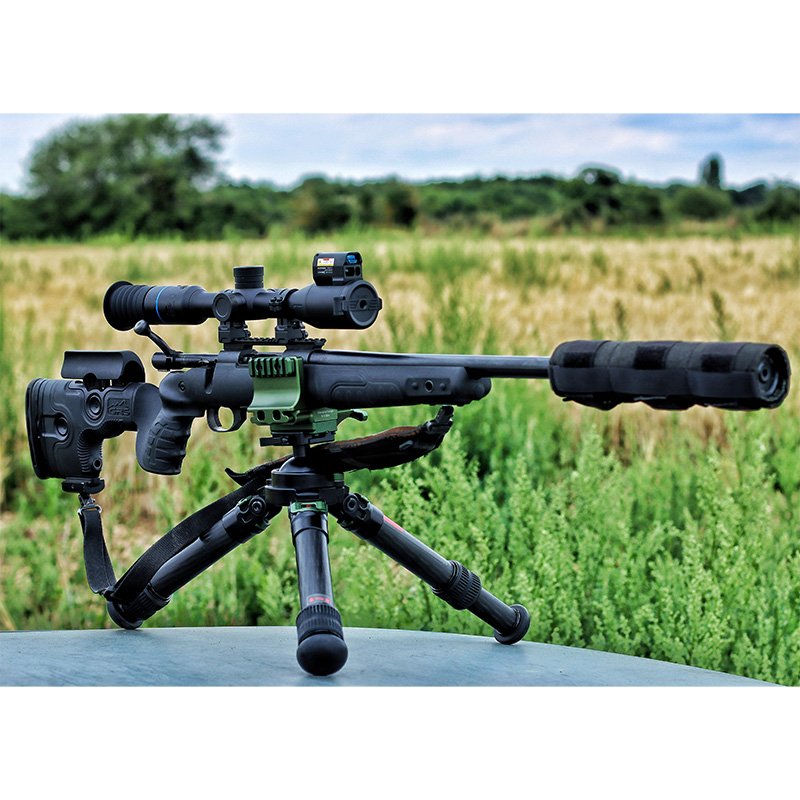
Digital Scopes and Thermal for Deer Stalking

I am with @Norfolk Deer Search. If you can’t find shootable deer with the naked eye, or a decent pair of binoculars you are either

1) blind
2) lacking the skills and knowledge to find deer
3) too impatient to find deer

If its too dark to see a deer with good glass its too dark to take a safe shot.

It takes time to learn how to spot wildlife. It’s a skill that you need to learn. With a digital optic you will never learn this essential skill.

It takes time a practice. Best is just to be patient and from one spot pick apart the landscape in front of you. Don’t look for deer, look for the flick of an ear or a tail. If you can’t see anything wait a five minutes and then scan again. Chances are deer will have moved.

And then move and repeat.

Always be on the lookout for sign of deer - hoof prints, trails, lying up spots,rubbings etc. Put these in the memory bank. They tell you where deer like to be. Next time look in these spots before you blunder into them.

If you don’t have your own ground, there are plenty of publicly accessible nature reserves etc etc. just take a pair of binoculars and go catch and release stalking.

Digital Optics Manufacturers are spending a huge amount of money on promoting their products. You can easily send £2 or £3,000 on digital kit that will be out of date and obsolete with a few weeks.

£3,000 at £100 an outing buys an awful lot of guided stalking where you will learn far more than any digital optic will teach you.
I do agree with a lot of this gear down, skill up approach, however there are certain limitations to it, for example with regards to night hunting, which i might venture into soon, as boar are hunted frequently at night in some areas.

But a good principle, i think, before buying to much of one thing or the other, (especially if one is inclined to often buy mainly based on theory and the internet), is to talk to sensible hunters that seems to know what they're doing and have good mind sets and listen to them about what gear might be good to have. Then, if possible, lend some at first and find out about your own preferences when in the field. After a bit you quite quickly pick up an idea of what might be necessary to have, what might be nice and what might be smart to avoid.

But yes, in general i am for the notion of being pretty conservative about getting more gear than truly necessary, and instead skill up in terms of the hunting craft, like knowing your beasts, knowing terrain and manouvering, being able to spot and approach, knowing your rifle and what you need for ethical kills, knowing how to treat the dead beast with respect and skill and preserve its value as food.
 
Like it or lump it ,Thermal or digital is the way things are going now adays.Recently did my level 1 shooting test and out of around 20 odd guys there was only maybe half a dozen of us who used glass scopes.Also noticed at work we sell two or three digital / thermal scopes for every glass scope probably a lot more.Why we worry about what other folks use is beyond me.
 
I seen there has been a collective response to this and I realise I have not given my opinion on it.

I am not a fan of stand alone thermal scopes. Yes they have their place but even the most Hughend expensive scopes have flaws that make shooting in general unsafe and notably there has been some serious accidents down to thermal.

Here is some of my concerns.

1. Lack of identification, whether that is sex, species or even whether it is an intended target or not, in some cases you cannot actually see what your shooting at.

2. Cover is difficult to detect, I have proven this many times, thermal picks up what looks like a full deer but if you switch to clear glass to identify or even digital NV or day, you then see what your seeing in the thermal is actually unshootable.

3. Like anything knowing your ground is a must, much of what you see through thermal though is an animated image so back stops etc can be hard to identify.

4. Zeroing accuracy, even if its high end you will not get the same zero accuracy as you would through clear glass or digital, most of us zero at 100yrds or 100m whatever you prefer and seing a half inch dot at that through thermal is nigh on impossible in some cases, zeroing is easier to do in the winter than in the summer.

5. Thermal of all types are susceptible to environmentals, especially those environmentals that you cannot see. Humidity, air temp fluctuations, rain, mist etc all effect even highend thermal performance and image. Yes you will see an animal in fog but you will definitely not see other obstacles, like cover, back stop etc.

Being safe in what we do is the most important thing for the sake of everyone in this industry.

Thermal scopes do have their place and are working effectively in places where people are using licenses for deer for culling or for foxing etc. Knowing the limitations of any equipment is key, that is where application choice is key.

The biggest hurdle though for people is price. Good thermal is still expensive so spend your money wisely. Many of you will know I have been working with a few companies in regards to these products. The price though for some is close to what some people would be half a years salary. Thats too much.

I like the likes of the DNT Thermnight multispectral scopes. Been using them a while and bought a couple. I have the base model 225 and their top model 635. Both have worked very well when used properly. The 225 has a small thermal sensor so I do not use the thermal side for shooting at all only for tracking and spotting, great in cover at closer ranges when you have a deer browsing in cover then switch to digital for shooting at under £1000 it really is good for the money, likewise the 635 I am more confident in using the thermal on that for shooting and using the digital for clarification of what and where I am shooting but at £2500 the comparison between the two scopes are worlds apart in image quality but it is also a more realistic price for the technology involved,

Without having the back up digital though both these scopes would fall foul to the problems stand alone thermal has like what I mentioned above. I have tested and used even 1280 sensor scopes, my knowledge is not just limited to a few products and even ones with a price tag of 7 to 10 thousand pounds have their issues as listed above albeit a little more refined, but is it worth the cost? I guess that is for you to determine.

My worry is people are putting themselves into debt over wanting to be part of this phenomena, people taking finance out on rifle scopes upwards of £5000 is absolutely crazy the truth that noone is saying that in many cases the real world difference between a £2500 thermal and a £7000 thermal is not worth the price tag. It really does scare me on that sense.

So when purchasing these products think logically, how much difference will this really make to your shooting, most will use thermal for foxes and doing unpaid work with no return on their investment so putting out that kind of money is pointless and taking finance out on digital or thermal is just silly. Let me give you an example as I fell into this trap.

When the Pulsar N455 Ultra came out I tested and reviewed the scope for Thomas Jack's, in its time for NV you couldnt get much better i sent the scope back and said I wanted one, I took a years finance deal because I couldnt afford the £1200 price tag, 3 months after the Digex came out and tested it and liked it and decided I wanted one, I tried to sell the Digisight but had no joy so paid off what I owed on the finance and took finance out on a Digex and £1200. I told the Mrs not to worry I would get a buyer for the Ultra, I never did its sitting on a shelf in the cupboard and I use the battery as a spare for my thermal. A year goes by and I am seeing the Digexs being sold on here for £400 so bought another one. 6 months past and the NV market is bombarded with far better NV stuff like DNT Zulus etc and their new cost is just over £500 so I ended up selling the Digex both for under £450 each on here and the Ultra still sits on a shelf.

Bare in mind during this point these scopes were illegal to use in Scotland for deer so could only use them for unpaid rabbits or foxes so felt very stupid on my decisions.

Do not kid yourself these scopes are not like day glass, the tech changes so quick that they have poor resale value often worth only a third of what you paid for it even less than a year after purchase. These are not investments they are tools for a job.

So theres my thoughts on this really . If thermal is what you want to get into, try multispectral over stand alone or get yourself a thermal spotter and a good NV scope you won't regret it.
 
Last edited:
You really are a hateful person aren’t you. If you nothing nice to say, keep your vile mouth shut.
That’s funny I seem to recall you not being shy about chucking the insults out when people say things that don’t suit you , still as the “ great” Angela rayner used to say “ it’s one rule for them and another for us “ ☺️🧐
 
I seen there has been a collective response to this and I realise I have not given my opinion on it.

I am not a fan of stand alone thermal scopes. Yes they have their place but even the most Hughend expensive scopes have flaws that make shooting in general unsafe and notably there has been some serious accidents down to thermal.

Here is some of my concerns.

1. Lack of identification, whether that is sex, species or even whether it is an intended target or not, in some cases you cannot actually see what your shooting at.

2. Cover is difficult to detect, I have proven this many times, thermal picks up what looks like a full deer but if you switch to clear glass to identify or even digital NV or day, you then see what your seeing in the thermal is actually unshootable.

3. Like anything knowing your ground is a must, much of what you see through thermal though is an animated image so back stops etc can be hard to identify.

4. Zeroing accuracy, even if its high end you will not get the same zero accuracy as you would through clear glass or digital, most of us zero at 100yrds or 100m whatever you prefer and seing a half inch dot at that through thermal is nigh on impossible in some cases, zeroing is easier to do in the winter than in the summer.

5. Thermal of all types are susceptible to environmentals, especially those environmentals that you cannot see. Humidity, air temp fluctuations, rain, mist etc all effect even highend thermal performance and image. Yes you will see an animal in fog but you will definitely not see other obstacles, like cover, back stop etc.

Being safe in what we do is the most important thing for the sake of everyone in this industry.

Thermal scopes do have their place and are working effectively in places where people are using licenses for deer for culling or for foxing etc. Knowing the limitations of any equipment is key, that is where application choice is key.

The biggest hurdle though for people is price. Good thermal is still expensive so spend your money wisely. Many of you will know I have been working with a few companies in regards to these products. The price though for some is close to what some people would be half a years salary. Thats too much.

I like the likes of the DNT Thermnight multispectral scopes. Been using them a while and bought a couple. I have the base model 225 and their top model 635. Both have worked very well when used properly. The 225 has a small thermal sensor so I do not use the thermal side for shooting at all only for tracking and spotting, great in cover at closer ranges when you have a deer browsing in cover then switch to digital for shooting at under £1000 it really is good for the money, likewise the 635 I am more confident in using the thermal on that for shooting and using the digital for clarification of what and where I am shooting but at £2500 the comparison between the two scopes are worlds apart in image quality but it is also a more realistic price for the technology involved,

Without having the back up digital though both these scopes would fall foul to the problems stand alone thermal has like what I mentioned above. I have tested and used even 1280 sensor scopes, my knowledge is not just limited to a few products and even ones with a price tag of 7 to 10 thousand pounds have their issues as listed above albeit a little more refined, but is it worth the cost? I guess that is for you to determine.

My worry is people are putting themselves into debt over wanting to be part of this phenomena, people taking finance out on rifle scopes upwards of £5000 is absolutely crazy the truth that noone is saying that in many cases the real world difference between a £2500 thermal and a £7000 thermal is not worth the price tag. It really does scare me on that sense.

So when purchasing these products think logically, how much difference will this really make to your shooting, most will use thermal for foxes and doing unpaid work with no return on their investment so putting out that kind of money is pointless and taking finance out on digital or thermal is just silly. Let me give you an example as I fell into this trap.

When the Pulsar N455 Ultra came out I tested and reviewed the scope for Thomas Jack's, in its time for NV you couldnt get much better i sent the scope back and said I wanted one, I took a years finance deal because I couldnt afford the £1200 price tag, 3 months after the Digex came out and tested it and liked it and decided I wanted one, I tried to sell the Digisight but had no joy so paid off what I owed on the finance and took finance out on a Digex and £1200. I told the Mrs not to worry I would get a buyer for the Ultra, I never did its sitting on a shelf in the cupboard and I use the battery as a spare for my thermal. A year goes by and I am seeing the Digexs being sold on here for £400 so bought another one. 6 months past and the NV market is bombarded with far better NV stuff like DNT Zulus etc and their new cost is just over £500 so I ended up selling the Digex both for under £450 each on here and the Ultra still sits on a shelf.

Bare in mind during this point these scopes were illegal to use in Scotland for deer so could only use them for unpaid rabbits or foxes so felt very stupid on my decisions.

Do not kid yourself these scopes are not like day glass, the tech changes so quick that they have poor resale value often worth only a third of what you paid for it even less than a year after purchase. These are not investments they are tools for a job.

So theres my thoughts on this really . If thermal is what you want to get into, try multispectral over stand alone or get yourself a thermal spotter and a good NV scope you won't regret it.
Good reply, for myself I use my Drone 10 IR and a xq38 which is exactly the same for foxes with a 95gn head used for both.
I see the kit people are buying and the kit seems to make no difference in their numbers.
If you want to shoot a lot of deer you need a lot of deer combined with going out quite a lot, I saw 1 fallow buck the other evening mixing in with a lot of fawns and does, yes some of the fawns would have been male but too small for the game dealer and in tall cover.
I stalked into 2 fallow with one feeding away and tall cover, when it turned it was a second doe.
At some point I will put a Hik on the .270 with a good Ir but having a thermal scope "nope"
 
I seen there has been a collective response to this and I realise I have not given my opinion on it.

I am not a fan of stand alone thermal scopes. Yes they have their place but even the most Hughend expensive scopes have flaws that make shooting in general unsafe and notably there has been some serious accidents down to thermal.

Here is some of my concerns.

1. Lack of identification, whether that is sex, species or even whether it is an intended target or not, in some cases you cannot actually see what your shooting at.

2. Cover is difficult to detect, I have proven this many times, thermal picks up what looks like a full deer but if you switch to clear glass to identify or even digital NV or day, you then see what your seeing in the thermal is actually unshootable.

3. Like anything knowing your ground is a must, much of what you see through thermal though is an animated image so back stops etc can be hard to identify.

4. Zeroing accuracy, even if its high end you will not get the same zero accuracy as you would through clear glass or digital, most of us zero at 100yrds or 100m whatever you prefer and seing a half inch dot at that through thermal is nigh on impossible in some cases, zeroing is easier to do in the winter than in the summer.

5. Thermal of all types are susceptible to environmentals, especially those environmentals that you cannot see. Humidity, air temp fluctuations, rain, mist etc all effect even highend thermal performance and image. Yes you will see an animal in fog but you will definitely not see other obstacles, like cover, back stop etc.

Being safe in what we do is the most important thing for the sake of everyone in this industry.

Thermal scopes do have their place and are working effectively in places where people are using licenses for deer for culling or for foxing etc. Knowing the limitations of any equipment is key, that is where application choice is key.

The biggest hurdle though for people is price. Good thermal is still expensive so spend your money wisely. Many of you will know I have been working with a few companies in regards to these products. The price though for some is close to what some people would be half a years salary. Thats too much.

I like the likes of the DNT Thermnight multispectral scopes. Been using them a while and bought a couple. I have the base model 225 and their top model 635. Both have worked very well when used properly. The 225 has a small thermal sensor so I do not use the thermal side for shooting at all only for tracking and spotting, great in cover at closer ranges when you have a deer browsing in cover then switch to digital for shooting at under £1000 it really is good for the money, likewise the 635 I am more confident in using the thermal on that for shooting and using the digital for clarification of what and where I am shooting but at £2500 the comparison between the two scopes are worlds apart in image quality but it is also a more realistic price for the technology involved,

Without having the back up digital though both these scopes would fall foul to the problems stand alone thermal has like what I mentioned above. I have tested and used even 1280 sensor scopes, my knowledge is not just limited to a few products and even ones with a price tag of 7 to 10 thousand pounds have their issues as listed above albeit a little more refined, but is it worth the cost? I guess that is for you to determine.

My worry is people are putting themselves into debt over wanting to be part of this phenomena, people taking finance out on rifle scopes upwards of £5000 is absolutely crazy the truth that noone is saying that in many cases the real world difference between a £2500 thermal and a £7000 thermal is not worth the price tag. It really does scare me on that sense.

So when purchasing these products think logically, how much difference will this really make to your shooting, most will use thermal for foxes and doing unpaid work with no return on their investment so putting out that kind of money is pointless and taking finance out on digital or thermal is just silly. Let me give you an example as I fell into this trap.

When the Pulsar N455 Ultra came out I tested and reviewed the scope for Thomas Jack's, in its time for NV you couldnt get much better i sent the scope back and said I wanted one, I took a years finance deal because I couldnt afford the £1200 price tag, 3 months after the Digex came out and tested it and liked it and decided I wanted one, I tried to sell the Digisight but had no joy so paid off what I owed on the finance and took finance out on a Digex and £1200. I told the Mrs not to worry I would get a buyer for the Ultra, I never did its sitting on a shelf in the cupboard and I use the battery as a spare for my thermal. A year goes by and I am seeing the Digexs being sold on here for £400 so bought another one. 6 months past and the NV market is bombarded with far better NV stuff like DNT Zulus etc and their new cost is just over £500 so I ended up selling the Digex both for under £450 each on here and the Ultra still sits on a shelf.

Bare in mind during this point these scopes were illegal to use in Scotland for deer so could only use them for unpaid rabbits or foxes so felt very stupid on my decisions.

Do not kid yourself these scopes are not like day glass, the tech changes so quick that they have poor resale value often worth only a third of what you paid for it even less than a year after purchase. These are not investments they are tools for a job.

So theres my thoughts on this really . If thermal is what you want to get into, try multispectral over stand alone or get yourself a thermal spotter and a good NV scope you won't regret it.
I had an 8K thermal sight but couldn’t trust it 100%.
Ken.
 
I have no interest in acquiring a Thermal Scope for any type of wild life management.
I can achieve what I need to do with a digital or standard glass optic.
Just going by the image through my thermal hand held spotter.
I wouldn't fancy taking a target engagement shot..
 

Attachments

  • Screenshot_20250311_103732_Gallery.webp
    Screenshot_20250311_103732_Gallery.webp
    31.2 KB · Views: 26
I watched the boar episode on BFS today It seems like if anything the clip on attachments are very handy, Its the best of both worlds glass and thermal when needed I'm sort of surprised full fledged digital/thermal scopes are more common here, than clip ons.

I will admit though a digital scope/spotter would be incredibly handy on some places we shoot some spots with the colour of the terrain as Its going dark (even 40~ minutes before legal light ends) Its pretty tough to tell If a roe Is a buck or a doe, area gets burned each year so obviously there's zero contrast for antlers.
 
I have this notion that I can feel the shot much better with glass. Like right before pulling the trigger, I usually really sharpen up and want to exactly know where the shot is placed on the body of the deer. With my day/night scope it feels a flat, it's a bit unreal. It certainly works, and do like playing back the videos taken of the shots to see what really happened, all good, but there is something missing. Am I imaging this?
 
After a recent few days on fallow in an area with a lot of pressure on the deer due to the vast number of dog walkers, cyclists etc I am going to swap the day scope on my Creed for my Alpex. Over 4 days I reckon I could have shot at least 4-6 more animals during the first and last 20 mins of legal light. I have a Swarovski Z6I so a decent optic but with my eyes etc I am not happy with the sight picture until 20-25 mins after/before legal light.

Deer numbers need reducing and frankly thats the main thing that counts...I do prefer glass thought but ultimately NV = more deer on the deck.
 
I was out with the Pard Nightstalker 4k Ex yesterday evening and when it got to the point where i could barely see past 50M with my eyes the digital scope could see Muntjac at 150m no problem in colour mode.
when switching on the built in IR modual exclusive to www.opticsworld.co.uk i could see badgers at 400m
thats the beauty of a digital scope it allows for longer viewing time when switching stalking to foxing
The Pard Ex is currently the best
 
Back
Top