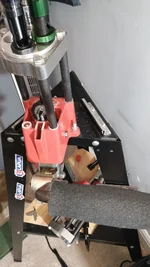
I recently started using Hornady custom dies with an expander mandrel - and previously was using Lee dies, both did the job very well, however I can feel a different resistance when cycling the press and I swear I can feel different neck tension when seating…
So are expander mandrel type dies beneficial over the Lee standard type dies??
Regards,
Gixer
Just my experience, so take it with a grain of salt, but expander mandrels seem to give a more consistent results with less stress on the case for me.
A standard or elliptical expander will work for most, especially if these are hunting rounds. But for LR precision ammunition, I find the expander mandrel a better solution for consistent neck tension. Plus, neck expander mandrels don't rely so much on case lube being inside the neck, where standard FL dies, you can feel differing amounts of stress when pulling the expander through the neck, depending on how much case lube gets in the neck. I often wonder if there is a slight distortion of the shoulder, as that expander mandrel tugs up on the case at the juncture between the shoulder and neck.
For automated case processing (I personally believe) neck expanding mandrels are pretty much necessary. This is because the shell plates on the machines (Dillon progressive presses) can be on the thin side, and you can see the stress/pressure as the FL sizer die mandrel gets drug up through the neck, and see the shell plate flex differently, depending on the amount of case lube that gets inside the neck. Does it make a difference in the final product? <shrug> Not sure. But if consistency is the name of the game, I prefer bumping back shoulders in one step, and then opening up necks in another. Just less wear and tear on the machine, as well as less stoppages if you tear off a rim (which then the next case gets run into, causing two lost cases, and a stoppage). And when running with an Autodrive, stoppages or torn case rims that may not cause a stoppage, means you're destroying a crap ton of cases before you can hit the emergency stop button. Nothing worse than looking over at a machine, and seeing squashed cases coming out of the brass chute....
Finally, I tend to take a cue from the manufacturers, who typically open up the neck to final dimensions is a separate step after drawing and forming the shoulder. Id imagine they do it for a reason, though it may just be due to the tooling machine itself. Regardless, I think it just reduces fatigue on the case, doing it separate steps.
JMTCW...