Issues with gas torch

PHILK

Well-Known Member
Can anyone assist
I have an annealer and thought I would go for a large gas bottle with regulator 20210417_194835.webp20210417_194846.webp
The problem is that the torch won't work with the large bottle with the regulator turned down can any one advise if I am doing something wrong or advise on a torch that would be suitable with the larger bottle / regulator
Regards Phil
 
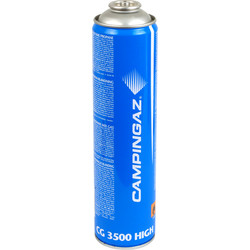
The large bottle is propane. What gas is in the small one? Butane, a mix of butane & propane, map gas or propane?
If the torch is for butane it probably won't work with the propane.
BOC has a range of burners that run on propane.
Where did you buy the hose and fittings from please.
Ian
 
Does the torch work with the regulator turned up? If so, why turn it down?

My Sievert torches work with either a regulator or direct connection through a hose failure device. They have a simple needle valve which can cope with the full bottle pressure. As far as I can see so does your torch.

Does the torch manufacturer specify the appropriate gas pressure?

Alan
 
Hi Alantoo
Sorry not sure what make the torch is or what the manufacturer says
Tried at all different levels but won't work on any
I Wondered if it was the pressure ( to much) that's why I mentioned at the lower pressure
The connector without the torch screw in has a needles that if you press releases the gas but when the torch is screwed in still doesn't work?? I will look at the make you have and see if there is any difference
Many thanks for your reply
Regards Phil
 
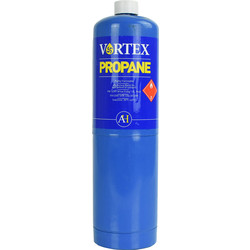
Your blue disposable bottle is propane. If you zoom in, you can read the label.

So is your large red exchange cylinder.

Your torch is designed to screw onto the disposable cylinder and run off the propane at full pressure. Which is about 10 BAR at room temperature. Or about 4 BAR at 0C. But can rise to 20 bar or more at say 45C. Or 30 bar at 80C

That regulator on your red cylinder will be reducing that pressure drastically. Typically some adjustable ones can be adjusted between 0.5 and 4 bar. But others are lower, say 0.5 to 2 bar. What is marked on yours ?

Whatever it is, you only have a chance of using it if you turn it up to the maximum pressure. If that doesn't work, then you will need to rig up a direct connection to the red bottle, not using a regulator. This is not advisable. You might be able to cobble something together out of parts, but you must also use a specialised high pressure hose. Even then it would be extremely unsafe, any damage to the hose and full pressure propane would be released, with no restriction on the flow. That is one of the reasons why blowtorches on hoses always use regulators on the cylinder, to reduce the pressure in the hose, and the regulator also limits the flow in case the hose is damaged.

What sort of hose are you using ? There are several sorts, all orange. E.g. see Gas Hose | Natural Gas & LPG Gas Fittings | gasproducts.co.uk. There you can find hose rated to max. pressure of either 50mbar (low pressure), or 17.5bar (high pressure). Even the high pressure variety is totally unsuitable for direct connection to a propane cylinder. It is the stuff needed when using a blowtorch using a "high pressure" regulator, such as you have.

I think I see the date code on your hose. Is it really 1985-03 ? These hoses are supposed to be scrapped, five years after the manufacturing date. That's why its marked on them. They perish. Internally.

By comparison, the high pressure pigtails used e.g. to connect propane cylinders to regulators in eg. caravans, motorhomes, domestic installations etc. are rated to a working pressure of 30 bar, and a burst pressure of 90 bar. And have excess flow devices at the cylinder end so if the hose does burst the flow will be cut off. And also must be replaced every five years, from date of manufacture.

In summary, I think it unlikely that you can run your direct-pressure blowtorch via a hose from a cylinder with a regulator on it. Even then, only if turned up to max. pressure. I also warn you that the maximum working pressure of your orange hose is only 17.5 bar, assuming it is the high pressure variety. It is quite unsuitable for use with propane at full pressure. So don't even think about trying to rig up some sort of direct connection without a regulator.

BTW, jubilee clips are not really suitable for use on hoses for direct cylinder pressure. Crimped fittings, of the correct size, used with the proper tool, are the professional way to do it.

Just give up on the idea and use the disposable cylinders. FWIW you can buy a simple adaptor to convert your blowtorch to screw onto the ordinary butane/propane mix cylinders that are much more economical. This sort of thing: www.amazon.co.uk/Faithfull-GZ170-Convertor-CGA600-Fitting/dp/B00FJ5FTFC/

That looks like a Gosystem torch to me. If so it might run on butane/propane. Might even run from say a 4bar regulator. But its only a little fine-flame thing so will sip gas.

E.g. the 400g US-style CGA600 propane cylinders your torch was designed for cost ££9.60 from Toolstation. Whereas a 350g EN417 butane/propane costs only £4.40. (this is where I get the gas for my plumbing blowtorch, mostly I use the cheap EN417 butane/propane with the adapter, otherwise pure propane or MAPP in the CGA600 cylinders, Toolstation have by far the best prices for all these gases. Proper plumbers prefer the CGA600 cylinders because they are far more rugged, it wouldn't be too difficult to tear the valve out an EN417 cylinder in an accident or drop.


Last edited:
Sorry not sure what make the torch is or what the manufacturer says
Your torch looks like this Gosystem one. I think I can even see it marked on the base when zoomed in. If it is, is should run on either the cheap butane/propane, or the more expensive propane cartridges, according to B+Q's description. At cylinder pressure. Not through a regulator.

1618706193916.webp

 
BLIMEY' I bought a GAZ hand held blow torch for paint stripping ect in the 70's reading your answer Sharpie, would you say my black hose pipe needs changing? And where would one purchase a length of orange hose and crimp connectors.I take it the internal diameter denotes what to buy?
I run on Propane with regulator.

BC.
 
BLIMEY' I bought a GAZ hand held blow torch for paint stripping ect in the 70's reading your answer Sharpie, would you say my black hose pipe needs changing? And where would one purchase a length of orange hose and crimp connectors.I take it the internal diameter denotes what to buy?
I run on Propane with regulator.

BC.
Cheap as chips on ebay. Or, you can get from BOC, Calor, etc.
 
The large bottle is propane. What gas is in the small one? Butane, a mix of butane & propane, map gas or propane?
If the torch is for butane it probably won't work with the propane.
BOC has a range of burners that run on propane.
Where did you buy the hose and fittings from please.
Ian
Hi Yorric
The fittings came with the torch on the old pipe I just cut them off got the pipe from calor centre Sheffield when I got the bottle but they had all sorts of fittings
Regards Phil
 
BLIMEY' I bought a GAZ hand held blow torch for paint stripping ect in the 70's reading your answer Sharpie, would you say my black hose pipe needs changing? And where would one purchase a length of orange hose and crimp connectors.I take it the internal diameter denotes what to buy?
I run on Propane with regulator.

BC.
Yes ! Change it :eek:

It rather depends on what the fittings are on the ends. If both ends are the standard used nowadays for propane torches, which is a 3/8" left hand thread, then you could just buy a ready made hose.

But if the torch is very old and has a non-standard fitting, or you see no reason to spend more money than you have too, cut off the old hose (may be difficult if crimp fittings have been used, but a file or junior hacksaw should get it off without damaging the fitting).

Yes the hose must fit the fitting diameter. Cut the old hose somewhere undamaged and measure inside with e.g. a drill bit. Nowadays high pressure hose comes in 4.8mm, 6.3mm and 8.3mm (these are a metricated conversion from imperial units).

TBH I wouldn't bother with the crimp fittings myself, you need a set of special pincers to fit them. And might discourage you from changing the hose again when you think might be time. I take a view of that on my private stuff, but if working professionally and an accident happened due to time-expired hose, or was at least attributed to it as a possible cause, you could be in trouble.

They look like ordinary pincers, but have blunt edges so they don't damage the crimp ring. Popular with professional users because the crimps are inexpensive c.f. Jubilee clips, always give the correct compression, instead of guesswork tightening a Jubilee clip until it "looks about right", and the customer can't fiddle with them.

Best to buy the hose locally so you can get to assess its flexibility and whether it carries legitimate markings and is fresh. There's a lot of e.g. Chinese stuff that is very stiff. Fine for e.g. a gas barbeque, but no good for a blowtorch. Even the better stuff doesn't cost much.


Advice on replacement:

 
Hi Alantoo
Sorry not sure what make the torch is or what the manufacturer says
Tried at all different levels but won't work on any
I Wondered if it was the pressure ( to much) that's why I mentioned at the lower pressure
The connector without the torch screw in has a needles that if you press releases the gas but when the torch is screwed in still doesn't work?? I will look at the make you have and see if there is any difference
Many thanks for your reply
Regards Phil
The needle valve I referred to is controlled by the knob on the torch handle...it is basically a bolt with a conical tip which seals by going into a corresponding bevelled orifice/seat. The more you wind it out the more gas is allowed past.
Hi Yorric
The fittings came with the torch on the old pipe I just cut them off got the pipe from calor centre Sheffield when I got the bottle but they had all sorts of fittings
Regards Phil
Did the calor centre recommend that regulator to work with your torch? If they did perhaps you could give them a ring and ask them to double check it is appropriate. I can't see why it wouldn't work with that torch. What pressure range does it provide?

Is there any gas coming out of the torch when connected to the regulator on red propane cylinder? Does the regulator have a resettable hose failure device incorporated? I have a couple of different sorts made by Sievert...one you push the whole fitting in to reset, the other has a button which needs to be pushed in to allow any gas to flow.

IMG_9126.jpegScreenshot 2021-04-18 at 12.53.21.png

Your size of torch nozzle hardly needs any gas volume and the needle valve should cope with any excess pressure. The 37mbar domestic cooker type regulator does not provide sufficient for the big roofing type torches but should be fine for your one. Most Sievert nozzles are designed to run on 2 bar but the resettable hose failure fittings from Sievert I use only restrict down to either 4 or 7 bar and the needle valve in the Sievert torches copes fine with that amount of overpressure..

As good an idea as it is to err on the side of caution when dealing with LPG, I found some of @Sharpie 's warnings slightly pessimistic.

The Calor propane regulators are rated at a max input pressure of 12 bar so I am not sure quite where @Sharpie is getting the idea that the 17.5 bar rated high pressure hose cannot cope with direct connection. The pig tail rating is higher maybe because the fittings are crimped on...that is the weakest point, but the hose for the pigtails I have to manifold multiple cylinders together is the same as I have on my torches.

Should the propane cylinder and contents get up to 45˚ C the pressure can rise to 14bar according to Sievert....so not a good idea to keep them in full sun in the tropics, but not so much of an issue in the UK unless you park them next to a furnace. My main temperature problem with propane cylinders is at the opposite end...they freeze up if too much gas is drawn off too fast...even when manifolding three 47kg cylinders together they can not keep up with my single burner forge when they are getting low...I frequently have to swap them out halfway through the day on the bigger twin burner forge, then swap them back when they have warmed up.

Screenshot 2021-04-18 at 13.45.36.png


The 5 year life of LPG hoses is a recommendation only, albeit a good one...but they can last well over 20 years without issue.

What is much more important is a visual check for damage or deterioration of the hoses every time you use them.

The critical / classic points to check is if there is a permanent tight bend coming off the regulator, especially if it is constantly in sunlight. Or the areas subject to the most flexing like the first few inches from the torch handle. Even so, cracks in the outer hose casing are useful indicators to trim or replace and not necessarily dangerous in themselves, the outer layer is gas permeable to allow the release of trapped air in the reinforcing fabric and to prevent any gas build up within the hose wall. The outer layer is there to support and protect the reinforcing braid and inner gas transfer tube and so any cracks reduce that support.

Alan
 
Last edited:
Where did you buy the hose and fittings from please.
Ian


Those are Rothenburger fittings, made for using e.g. their Superfire torches from a (regulated) propane cylinder.

I use a Superfire clone. These torches have a tiny regulator inside them, so are capable of operating with gas from an external HP regulator.

They sell the fitting for the torch to 4.8mm hose on its own. This thing:


With one of these, some 4.8mm high pressure hose, and a high pressure regulator with 4.8mm hose barb fitting, you can safely make up your own extension to run a Superfire or similar from a Calor propane cylinder.

They also sell a short CGA600 male to CGA600 female extension for working in tight spaces, using disposables. This has both those fittings. And uses suitable hose between the two.

 
Your size of torch nozzle hardly needs any gas volume and the needle valve should cope with any excess pressure. The 37mbar domestic cooker type regulator does not provide sufficient for the big roofing type torches but should be fine for your one.

As good an idea as it is to err on the side of caution when dealing with LPG, I found some of @Sharpie 's warnings slightly pessimistic.

The Calor propane regulators are rated at a max input pressure of 12 bar so I am not sure quite where @Sharpie is getting the idea that the 17.5 bar rated high pressure hose cannot cope with direct connection. The pig tail rating is higher maybe because the fittings are crimped on...that is the weakest point, but the hose for the pigtails I have to manifold multiple cylinders together is the same as I have on my torches.

Should the propane cylinder and contents get up to 45˚ C the pressure can rise to 14bar according to Sievert....so not a good idea to keep them in full sun in the tropics, but not so much of an issue in the UK unless you park them next to a furnace.

No way will a torch or other burner designed for use directly from cylinder pressure operate from e.g. a domestic 37mbar regulator. Absolutely no chance. Besides the photo seems to show an adjustable HP regulator, which doesn't look new to me, perhaps from some previous installation. If so it might simply have failed, as you suggest. They are cheap enough to replace.

My caution is because I know a bit about LPG installations in campervans, having researched carefully before choosing my Autogas refillable setup.

I have many times experienced sustained shade temperatures, day and night, of over 40C. Once 48C for a whole week. The gas locker has the side and floor exposed to that, and if the sun beats down on that side of the van it becomes an oven. Definitely egg frying temperatures.

So yes, I am cautious. And there should be a world of a difference between what my campervan must survive whilst driven about on bumpy roads in extreme climatic ranges, and the relatively benign environment of a workshop or man cave.

FWIW, in Germany it is the law that all campervan hoses and the regulator must be replaced with new, after ten years from manufacture. In France, not sure about the regulator, but the hoses must be changed after six years. And, at least in Germany, the gas system has to be officially inspected, I think nowadays it forms part of their two-year TUV test (something like our MoT, but different).

Just one more thing to think about. It is illegal to store or use exchangeable propane cylinders inside the living quarters of a domestic property. Only Butane is allowed inside.

So if your reloading room is inside your house you may not use e.g. a Calor propane cylinder there. And your insurers, or neighbours, might not think much of it if something went wrong. Which does happen, usually with spectacular results.

I am pretty certain the OP has a GoSystem torch. This one. A basic £20 thing.


If so this one will run off butane/propane mix, which might be as low as 4 bar when cold. If so it probably could run from a Calor propane > HP regulator set to 4 bar > 4.8mm HP hose > Rothenberger adapter > GoSystem torch setup.

But honestly, what's the point ? That little torch won't be using much gas at all. Easily tested, just weigh it on e.g. digital kitchen scales good to 1 gram. Light it on maximum flame. Burn for 1 hour, or fraction thereof. Weigh again. Calculate grams per hour worst case, and £ per hour of running time, worst case, with either gas. I guarantee it won't be much. Not compared with the price of e.g. a commercially made annealer, or most other reloading costs. You should be able to anneal an awful lot of brass, in one hour, using a machine.
 

this is what you’re looking for.
 
No way will a torch or other burner designed for use directly from cylinder pressure operate from e.g. a domestic 37mbar regulator. Absolutely no chance.
Yes way. Look at the photographs.

IMG_9132.jpegIMG_9133.jpegIMG_9138.jpeg

To be fair, having re-read what I said "working fine" comes over a tad misleading regarding being able to light it versus running at full tilt... but it was in the context of the OP saying he could not get his torch to light whatever the setting of the regulator...I reckoned he should be able to get a small torch like that to light even with a low pressure regulator, as the images above illustrate.

These Sievert torches were designed to run via a hose failure device which restrict the pressure rather than regulate it....ie the output varies relative to the input. The smaller ones are optimised at 2 bar, and the larger at 4bar. But they all do light and burn at 37mbar, and the needle valve can cope fine with 7bar.

Alan
 
Last edited:
Can any of you advise me on a decent torch that I can use with the large propane cylinder and regulator??
To clamp to an annealing machine what you have would appear to be okay...

A decent (versatile and well made) torch to run off a large propane cylinder Sievert are one of the best. Primus-Sievert as was have an excellent track record.

Buy a torch handle and then nozzles and necks to suit the job in hand.

I bought these torches in the mid 1970s and they are still going strong. They have survived not only my use (as jeweller, silversmith, coppersmith, blacksmith, DIY plumber, shed roof layer and barbecue lighter)...but also the heavy handed / ham fisted use of numerous assistants and journeymen in the forge. A good investment I can thoroughly recommend.

As I said earlier I run them as they were first supplied, without a regulator but through a hose failure device, and always off the large red (Calor) propane tanks.

Alan

IMG_9137.jpeg

IMG_9128.webp
 
Last edited:
The Calor propane regulators are rated at a max input pressure of 12 bar so I am not sure quite where @Sharpie is getting the idea that the 17.5 bar rated high pressure hose cannot cope with direct connection. The pig tail rating is higher maybe because the fittings are crimped on...that is the weakest point, but the hose for the pigtails I have to manifold multiple cylinders together is the same as I have on my torches.

The 5 year life of LPG hoses is a recommendation only, albeit a good one...but they can last well over 20 years without issue.

Here are Liquid Gas UK's consumer guidance sheets. The latest standards for hoses, is EN 16436 2014, which has replaced BS3212.


See CGS 05,
LPG HOSE AND TUBING FOR USE WITH
VAPOUR OFFTAKE CYLINDERS

Excerpts:

2.1. Hose for medium pressure applications (maximum pressure 10 bar)
It is used for applications downstream of a regulator and is capable to connect some appliances that require
medium pressure (up to 10 bar) such as plumber and roofing blow torches and some models of fan draft
space heater used in heating commercial and agricultural premises. Hose length should be kept as short as
practicable.
It shall comply with BS EN 16436-1 Class 2 and be marked with the following: Manufacturer Name – BS EN
16436-1:2014 – class 2 – Xmm – 10 bar – Propane/Butane. Where X indicates the internal diameter.
Class 2 hose shall only be used downstream of a pressure regulating device.
Class 2 hose may be coloured orange, black or white.

2.2. Hose for high pressure applications
It shall comply with BS EN 16436_1 Class 3 and be marked with the following: Manufacturer Name –
BS EN 16436-1:2014 – class 3 – Xmm – 30 bar – Propane/Butane. The above hoses are available in a
number of sizes, but where used to connect gas cylinders to regulators or cylinders to cylinders this
shall not be more than 8mm in diameter and no longer than 1m in length (or 0.5m for touring
caravans in accordance with BS EN 1949).


4.1. Service Life of Hose and Tubing
Whilst there is no specific service life or exchange interval for LPG hose, it is recommended that rubber
hoses are replaced after 10 years.
However, rubber hoses fitted to cabinet heaters should be replaced
after 5-year service.


Here is how hose is marked, under the current 2014 standard: Showing the max. working pressure, either 10 bar (class 2), or 30 bar (class 3)..

1618853016570.png

Also see CGS 17:
Use of clips to secure vapour phase LPG hose and
tubing to BS EN 16436-1 (Classes 1, 2 and 3) to
end fittings

Hose or tubing with an internal diameter of 8mm or greater and operated at a pressure of up to, but not exceeding, 50mbar may be secured using either crimp clips or swaged fittings or worm drive clips. • Only crimp clips of the correct size for the hose or tubing shall be used. • Worm drive clips shall secure the hose or tubing but not be over tightened. Hose or tubing with an internal diameter of less than 8mm and hose operated at a pressure exceeding 50mbar shall always be secured by crimp clips or swaged fittings. Worm drive clips shall not be used.


Yes way. Look at the photographs.


To be fair, having re-read what I said "working fine" comes over a tad misleading regarding being able to light it versus running at full tilt... but it was in the context of the OP saying he could not get his torch to light whatever the setting of the regulator...I reckoned he should be able to get a small torch like that to light even with a low pressure regulator, as the images above illustrate.

These Sievert torches were designed to run via a hose failure device which restrict the pressure rather than regulate it....ie the output varies relative to the input. The smaller ones are optimised at 2 bar, and the larger at 4bar. But they all do light and burn at 37mbar, and the needle valve can cope fine with 7bar.

Alan

We were discussing running a direct pressure propane or propane/butane torch from a regulated propane supply. You said it would work even from a domestic 37mbar regulator. I doubt that and still do.

I think that it probably could be done, from say a 4bar high pressure regulator. After all, at 0C propane has a vapour pressure of 4 bar, and one would hope that even a basic £20 torch would still work directly from the cartridge at this sort of temperature.

But a 37mbar regulator is one hundred times lower pressure than 4 bar.

Furthermore, even with a big installation like yours, if the gas offtake is such that the cylinders chill until frost forms at the liquid level, then the gas pressure coming out cannot be more than say 4 bar. Your Sievert torches will therefore be designed and jetted to say run at or beyond maximum power, from say a 4 bar regulated supply, or from your Sievert hose failure devices with internal restrictors. To turn them down you can use a combination of the needle valve and the regulator pressure.

What your photo shows me is your torch running with 0.4 bar. Again, that is ten times more pressure than a 37mbar regulator puts out. You seem to have missed a decimal point. 37mbar would be less than halfway up the smallest division (0.1 bar) from zero of your dial. Show me it working when connected to a 37 mbar regulator and I'll be impressed.

0.4 bar is within the typical adjustment range of say a a 0.5-4.0 high pressure regulator. So I am unsurprised that your torch works, using the type of regulator that it was designed for.
 
Back
Top