Knepp - just a scam?

weblyish

Well-Known Member
Ok the title was just for grabbing attention but is not completely off the mark

I was at knepp today to research doing a land management post-grad course with someone who did one recently.

We took a turn round the estate
I have never seen such a desolate s%&'tshow as that place.
5 hours walk round the estate from dawn
I saw 2 rabbits and one herd of fallow.
A couple of groups of ponies, longorn and some horses
Less buzzards that I saw on the A24 on the way in.
what I didn't see was a single fuxking butterfly or any hedgerow birds.(Not surprising because the hedgerows are gone and only blackthorn remains)

Basically a lot of fields of ragwort and bramble and the few mudpatches showed only cows and ponies passing


This is the poster boy for rewilding? A couple of thousand acres of scrubland ? They've had over 20 years at this

I mean it's a good way to show you can be profitable at doing this because of you charge 6.50 for a coffee and have a great PR team you can make it work but I can't imagine it actually makes money in any sense

P.s. if you work there and know I'm wrong pm me as I would love to understand
P.p.s if you manage the deer there also pm me as there a buck I took a fancy to and I'm not even joking that it's the first trophy I'd pay for
 
It’s not a scam as such, but it is wildly over-marketed.

They believe that they’ve done something valuable. In many areas, that seems to be true - the bird and bat life is certainly much richer than the surrounding land. I’m less sure about wildflowers, but I think it’s best to be there earlier in the summer for that. The insect life is rich - especially the less showy species (beetles, wasps, hoverflies etc).

But it’s certainly not the Eden like paradise they market it as, and I don’t think it’s actually a very good model for how to do ecological restoration. As you say - it’s under managed, and they really need to be more proactive about over dominance by ‘weeds’. That’s always going to be a problem on ex agricultural land, and to do it properly needs quite aggressive ongoing management. Just letting it go is not the best approach.

What really irritates me is the Messianic position they’ve adopted, setting themselves up as the righteous example to follow and lecturing everyone else.

The core problem is that the Burrells are not ecologists, and have only ever bothered to learn just enough to sound plausible. They ignore or dismiss 200 years worth of very good, detailed literature on ecological restoration and sell themselves as having been the first to invent rewilding.

There are many much better examples of ‘re-wilding’ out there.
 
If the income stream supports the estate financially why not. Land management is driven by Government policy, stewardship for arable land for instance.

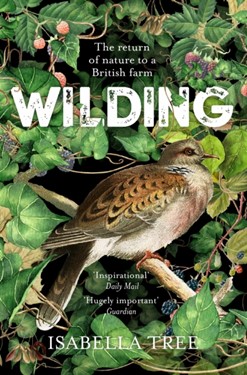
The book is worth a read.

 
I tried to read the book but found it hard going. From what I have read elsewhere and watched a documentary about, its all good stuff and a money making machine. But it is one parcel of ground in a local landscape dominated by fallow. Not sure how the deer are managed there but if you create a wonderful pop up restaurant they will come! Most of my ground in hampshire is game shoots, so used to seeing a massive diversity of wildlife because of good habitat, food and predator control. That to me is my benchmark so I am maybe not fair to judge elsewhere.
 
If the income stream supports the estate financially why not. Land management is driven by Government policy, stewardship for arable land for instance.

The book is worth a read.


The book is absolutely maddening!

It’s chattering classes aspirational biodiversity porn.
 
It’s not a scam as such, but it is wildly over-marketed.

They believe that they’ve done something valuable. In many areas, that seems to be true - the bird and bat life is certainly much richer than the surrounding land. I’m less sure about wildflowers, but I think it’s best to be there earlier in the summer for that. The insect life is rich - especially the less showy species (beetles, wasps, hoverflies etc).

But it’s certainly not the Eden like paradise they market it as, and I don’t think it’s actually a very good model for how to do ecological restoration. As you say - it’s under managed, and they really need to be more proactive about over dominance by ‘weeds’. That’s always going to be a problem on ex agricultural land, and to do it properly needs quite aggressive ongoing management. Just letting it go is not the best approach.

What really irritates me is the Messianic position they’ve adopted, setting themselves up as the righteous example to follow and lecturing everyone else.

The core problem is that the Burrells are not ecologists, and have only ever bothered to learn just enough to sound plausible. They ignore or dismiss 200 years worth of very good, detailed literature on ecological restoration and sell themselves as having been the first to invent rewilding.

There are many much better examples of ‘re-wilding’ out there.
I agree with you.

But it is worth noting that the steering group (or whatever they're called) does include some very experienced ecologists and managers of landscapes of high nature conservation value. It would also be (probably) the most monitored site following 'just letting it go', so just for the reason of gathering that information, I think it is a valuable site.

My take on a visit a while back and from the book was that the benefits they described tended to be associated with early transitional habitats, which would be quite difficult to sustain into the long term. Over time, without significant management, I reckon it will become a lot less interesting and even they will struggle to be so self-righteous.
 
I agree with you.

But it is worth noting that the steering group (or whatever they're called) does include some very experienced ecologists and managers of landscapes of high nature conservation value. It would also be (probably) the most monitored site following 'just letting it go', so just for the reason of gathering that information, I think it is a valuable site.

My take on a visit a while back and from the book was that the benefits they described tended to be associated with early transitional habitats, which would be quite difficult to sustain into the long term. Over time, without significant management, I reckon it will become a lot less interesting and even they will struggle to be so self-righteous.
One huge positive is their acknowledgement of the ecological value of wild deer and the restoration of Nightingale populations on their estate. Both Natural England and the Hampshire and Isle of Wight Wildlife Trust are of the opinion that wild deer and Nightingales are incompatible and that deer are responsible for declining populations of these birds.
 
The Knepp foundation got a huge government grant to kick off proceedings.

The walled dry garden is interesting with the planting and using builders rubble as a base with a gravel mix on top and planting into that..... but a small bunch of professional landscape gardeners have been trying the drought garden method for the last 20 year's, with a certain amount of success and a lot of failure.

It's a day out, and that's all.
 
Have a bit of a look at my thread that is running guys - on a much smaller scale but very biodiverse now
 
One huge positive is their acknowledgement of the ecological value of wild deer and the restoration of Nightingale populations on their estate. Both Natural England and the Hampshire and Isle of Wight Wildlife Trust are of the opinion that wild deer and Nightingales are incompatible and that deer are responsible for declining populations of these birds.
Quite funny that in our area the only chances of hearing Nigtingales (quite a few) is where there are largish numbers of both Fallow and Muntjac.
 
I also believe it has good numbers of Turtle Doves, one of te( very few places that does

The local Hunt also visits, which really gets their knickers in a twist for some of Knepps supporters
 
Knepp is a zoo, not all is rewilded, they graze Sussex cows on the regen side. You missed the reds and tamworth pigs. It does however have good populations of turtle doves and nightingales as both love scrub which is a rapidly diminishing habitat. It is also an important site for purple emperors. They should leave behind the storks and beavers the former now have quite large numbers. The tourist stuff is what keeps it all going. In contrast Peppering is a profitable farmland that is farmed sympathetically with nature along with vermin control and to my mind is the blue print for farming, nature and shooting to work hand in hand.
 
Thankyou, lots of interesting stuff in the replies and I have a load more Questions as a result

The scrubland at Knepp as deeply disappointing - considering this is one of the earliest, most well publicised and well funded projects of this type

I especially noticed the lack of anything approximating a hedgerow - the pig/deer/sheep combo have massively denuded the low level vegetation

I'd like to see peppering farm, looks like it isnt generally open to the public but I have family nearby and might take a gander via the public footpaths and see what I can see
 
Thankyou, lots of interesting stuff in the replies and I have a load more Questions as a result

The scrubland at Knepp as deeply disappointing - considering this is one of the earliest, most well publicised and well funded projects of this type

I especially noticed the lack of anything approximating a hedgerow - the pig/deer/sheep combo have massively denuded the low level vegetation

I'd like to see peppering farm, looks like it isnt generally open to the public but I have family nearby and might take a gander via the public footpaths and see what I can see


Have a look at what we are doing mate
 
Thankyou, lots of interesting stuff in the replies and I have a load more Questions as a result

The scrubland at Knepp as deeply disappointing - considering this is one of the earliest, most well publicised and well funded projects of this type

I especially noticed the lack of anything approximating a hedgerow - the pig/deer/sheep combo have massively denuded the low level vegetation

I'd like to see peppering farm, looks like it isnt generally open to the public but I have family nearby and might take a gander via the public footpaths and see what I can see
Scrubland isn’t deeply disappointed it is very valuable habitat, but it will disappear as the trees grow.

Peppering is fully accessible, easiest parking is probably Kithurst Carpark W3W ///calms.assist.gratitude or ///epic.happen.eliminate which is in Burpham and not a proper car park. You can also park at Blakehurst ///watch.frostbite.confetti and walkout through the woods of Angmering Park and see the farmland with beetle banks and decent hedges. Lots of hares, huge numbers of birds of prey, farmland birds and of course grey partridge. Good pub in Burpham or pop to Splash Farm which has a milk vending machine for milkshakes and often have cakes too.
 
Back
Top