Lead bullet casting.

Purely out of curiosity why are you considering a .38-40 or .44-40 rather than one of the more modern calibres such as .44 mag or .45LC?
Components and dies being far more available for the modern chamberings.
45Colt came out before 38-40. 1874&1872.
 
.38-40 anecdotally is I will advise a hugely frustrating cartridge to reload for and you WILL need to size every bullet IMHO. The reason is that it is a bottleneck cartridge of an inbuilt problem for the reloader (it is very thin) that if not reloaded with care will give you collapsed shoulders. Therefore you need to have a physical "feel" when the bullet is being seated to know if you are applying too much upward force as the bullet is seated. AND also when then applying the crimp. To help you get a sense for that you must have all the bullets of consistent diameter. My own advice is don't buy a .38-40. If you must go down the xx-40 route buy a .44-40 it is more forgiving to reload and also you can buy ready cast GM Bullets bullets.
Lyman do their M dies....they just open the cartridge mouth a shade however I don't know if they do one for the 38-40! Maybe a custom job would be required.
 
I forgot to say that I consider that NOE boolit moulds are the Rolls Royce of moulds

No. Hensley & Gibbs were.

I used to use two "custom matched" gwo mould sets of six cavity moulds. From each bullet....so twelve separate cavities as 2 x 6 =12...there was less than 2/10ths of a grain weight variation. The company's owner in fact when he retired was so jealous of H & G's reputation was such that he closed the company rather than sell it on to another or sell on the name.
 
I’m thinking of buying an original 1873 or 1892 Winchester. Fancy something that’s different .
Don’t think I’ll need to cast now found a uk company shellhouse bullet company that make and sell bullets for both calibers .
Any one used them ?
Their boolits tend to be very hard alloy. My preference is for a much softer boolit that will obdurate into the rifling at lower pressure.
I also prefer a softer boolit lube. I do make my own.
 
No. Hensley & Gibbs were.

I used to use two "custom matched" gwo mould sets of six cavity moulds. From each bullet....so twelve separate cavities as 2 x 6 =12...there was less than 2/10ths of a grain weight variation. The company's owner in fact when he retired was so jealous of H & G's reputation was such that he closed the company rather than sell it on to another or sell on the name.
Were being the correct statement! I have several of their moulds but they are like hen's teeth. NOE mould are top notch in my opinion. I have over 20 of them.
 
As above.
Never melt lead in a confined space. Out in the garden. Go slow. Do not try and do it in shorts and flip-flops - because that smarts: I had a "friend" who did that...

Any lead that has moisture in it when melted with not 'pop', it will go off like a fing Mills Grenade.

I now used full PPE (topical) with a leather apron, welders gloves, full-face guard. I also have a bucket of water nearby (dunking any bits of burning skin) and a foam fire extinguisher to hand. Yeah - melting lead, what could possibly go wrong.

If you have an egg and a Grandma this bit is for you - lead is also highly toxic. In the olden days, hatters used lead in the construction of their wares: hence the "Mad Hatter" in Alice in Wonderland: so the danger is not confined to the hot aspect but there is also a risk of insanity in simply handling the raw materials.

Any hoo, you enjoy yourself...
I thought it was the mercury that made them mad!

Used to melt and cast lead catapult shot over a fire as a kid, I hope my boy is (a little bit) more sensible than I was!
 
I thought it was the mercury that made them mad!
That and the lead. Also the old lead water pipes caused the same problems.
Just trying to make the serious point that lead is toxic to handle and gloves and hygiene required.👍

Which, strangely enough reminds me of a Doctor's X-Ray request form I was once read. The forms were completed by the Doctor in the hospital and handed to the patient to present in the X-Ray department.

It simply said "? plumbum oscillate".

I had never heard of this disease so I asked one of the more senior students what it meant, he said the Doctor thinks the patient is "Swinging the lead".
 
Last edited:
That and the lead. Also the old lead water pipes caused the same problems.
Just trying to make the serious point that lead is toxic to handle and gloves and hygiene required.👍

Which, strangely enough reminds me of a Doctor's X-Ray request form I was once read. The forms were completed by the Doctor in the hospital and handed to the patient to present in the X-Ray department.

It simply said "? plumbum oscillate".

I had never heard of this disease so I asked one of the more senior students what it meant, he said the Doctor thinks the patient is "Swinging the lead".
My house has lead water pipes.
It's a bit of a myth really.
Lead is not as bad as everyone makes out. If it were it would not be used but is and in many surprising applications. Ammunition producers would have huge health issues with their staff but don't!
Lead only enters the body in a few dangerous conditions. In a clean metal state it is quite safe. One of the most dangerous is the white oxidisation. This powder is fine enough to find it's way to sensitive organs.
 
I used to load for my .38-40. I bought from the bullets from memory from Midway at the time and starline brass and lee dies.

I have bought bullets from Shellhouse and they are good.

Didn't worry about re-sizing to suit my bore, it was a 100 year old Winchester and was more nostalgia than competition
 
I know people like nice kit. But it depends on how much casting you are going to do.
If just starting out and want to see if casting is for you, then get some cheap/used kit.

A melting pot. That could just be a cast iron pan on a gas burner and a lead dipper. Or a small electric casting pot. Yes the Lee ones are cheap and cheerful, but I've cast many thousands of bullets with them.
As suggested, cast outside, or somewhere with a fume hood/extractor. (Not on your kitchen stove!) You don't want to breath lead fumes..
Protective kit. I just put on a thick crappy old jacket, that covers the arms, a face shield (if you can get one at the mo!) and riggers gloves for a quid.
Moulds, I tend to use the Lee ones here too. Nothing special but they work.
And if you are only doing small qualtities, then the Lee resizing dies are fine. These fit into your reloading press and you push the bullets up with a punch. I use the RCBS lube-sizers, which are nice. But the Lee dies to be honest do the job on smaller batches.

The othet thing no-one else seems to have mentioned is your source of metal.
You can't use pure lead in anything other than muzzle loaders or SG slug. You need some % of antimony and tin.
The quickest way is to buy ingots of bullet metal.
Tin is easy to get and add to your mix. But antimony is a bit of a problem. Wheel weights and printing type used to be good sources of high antimony alloy. But they are not really availabe these days. Trying to make your own alloys is difficult and dangerous (the oxides of antimony are as bad as arsenic.)
So probably safest is to buy ingots of high % antimony alloy here too.
If you have a local range, you may be able to get hold of rage scrap. Which is what I do. Depending what they shoot there, gives you an idea of what sort of range scrap you will get. If they shoot mostly 38 etc, then the scrap may be pretty much perfect casting metal..

You may want to prepare batches of lead ingots and process scrap. So a good size cast iron pot and gas burner is good here.
Care is required though, lead explosions can be quite unpleasent. Though the results can be quite pretty, if you get away uninjured. Peeling a huge, 1/8th inch thick lead doiley, off your workbench (and fence, and neighbours wall,) can take some explaining.
But once it is in little 8oz ingots, it's a bit safer to work with.
 
I know people like nice kit. But it depends on how much casting you are going to do.
If just starting out and want to see if casting is for you, then get some cheap/used kit.

A melting pot. That could just be a cast iron pan on a gas burner and a lead dipper. Or a small electric casting pot. Yes the Lee ones are cheap and cheerful, but I've cast many thousands of bullets with them.
As suggested, cast outside, or somewhere with a fume hood/extractor. (Not on your kitchen stove!) You don't want to breath lead fumes..
Protective kit. I just put on a thick crappy old jacket, that covers the arms, a face shield (if you can get one at the mo!) and riggers gloves for a quid.
Moulds, I tend to use the Lee ones here too. Nothing special but they work.
And if you are only doing small qualtities, then the Lee resizing dies are fine. These fit into your reloading press and you push the bullets up with a punch. I use the RCBS lube-sizers, which are nice. But the Lee dies to be honest do the job on smaller batches.

The othet thing no-one else seems to have mentioned is your source of metal.
You can't use pure lead in anything other than muzzle loaders or SG slug. You need some % of antimony and tin.
The quickest way is to buy ingots of bullet metal.
Tin is easy to get and add to your mix. But antimony is a bit of a problem. Wheel weights and printing type used to be good sources of high antimony alloy. But they are not really availabe these days. Trying to make your own alloys is difficult and dangerous (the oxides of antimony are as bad as arsenic.)
So probably safest is to buy ingots of high % antimony alloy here too.
If you have a local range, you may be able to get hold of rage scrap. Which is what I do. Depending what they shoot there, gives you an idea of what sort of range scrap you will get. If they shoot mostly 38 etc, then the scrap may be pretty much perfect casting metal..

You may want to prepare batches of lead ingots and process scrap. So a good size cast iron pot and gas burner is good here.
Care is required though, lead explosions can be quite unpleasent. Though the results can be quite pretty, if you get away uninjured. Peeling a huge, 1/8th inch thick lead doiley, off your workbench (and fence, and neighbours wall,) can take some explaining.
But once it is in little 8oz ingots, it's a bit safer to work with.

Sorry but you can use pure lead in a 45/70 that the op proposed.
One can use pure lead with paper patched bullets also. Another option.
 
I cast but have also used Shellhouse. If you contact them they will cast softer if you require (at least they used too.)
 
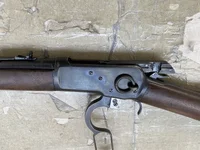
well I’ve put a deposit on this 1892 32-20 made in 1928 so ok for smokeless either cast or jacketed
Just wonder how long a variation will take .
 

Attachments

  • 813B281D-4E5E-4A84-8F3A-E161340E9E3F.webp
    813B281D-4E5E-4A84-8F3A-E161340E9E3F.webp
    385.7 KB · Views: 7
Back
Top