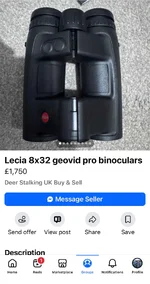
These have been discussed quite a bit elsewhere (not on SD), but some of the differences are:
the new Leica uses a porro-prism design - the pro's and con's are a huge can of worms, but essentially a porro has better light transmission than a roof-prism (all other things (i.e. glass/coatings) being equal). The key difference here is that the new perger porro design apparently allows the laser beam path to be kept away from the optical path. This has been a major weakness of previous rangefinder binocular designs as can be seen from the transmission tests comparing left and right barrels (especially the zeiss which has been weak in this area (see
http://www.allbinos.com/205-binoculars_review-Carl_Zeiss_Victory_8x56_T*_RF.html)), with the barrel that receives the laser reflection having much lower transmission levels. Having said that, the swarovski is a particularly good performer in this regard with a very small difference seen between the two barrels (see
http://www.houseofoutdoor.com/testr...skiELRange8xen10x42enZeiss8x45RFdec2011-1.pdf).
I think this perger porro design also allows the elecronics to be hidden inside the barrels whereas the swarovskis have the electonics slung underneath.
Other than that, I think that only the swarovski and new leica have built in shooting angle/horizontal distance compensation.
The new Leica has a ballistic computer inside which can be programmed for your specific bullet/cartridge/zero distance etc. via a micro-sd card slot. This can also read out in click adjustments for your scope's elevation turret adjustment.....
They are hellishly expensive though and it would be cheaper to have say a Leica CRF 1600B and a Zeiss HT binocular. Its a question of whether there is any light transmission trade off and if this outweighs the practical disadvantage of having two separate units.