

Has anyone got any BC information on the RWS Evo bullets? I don't seem to be able to find anything.RWS have already designed and offer a non toxic cored bullet, where the core fragments. Its sold under the RWS Evo Green brand and also claims to give good performance at extended ranges.
RWS Evolution Green | RWS Ammunition
Excellent stopping power, especially at longer ranges: RWS EVOLUTION GREEN is a lead-free part fragmentation bullet. Lean more here!rws-ammunition.com
You are using an out of date browser. It may not display this or other websites correctly.
You should upgrade or use an alternative browser.
You should upgrade or use an alternative browser.
Non-lead bullet design theory
- Thread starter NigelM
- Start date


Leec6.5
Well-Known Member
So ok this is all about copper at extended ranges, well from experience with my 270 and 130gn ttsx I have killed lowland reds deer to 340-350 and with the correct scope that I can dial In I would shoot happily out to 500m and expect to kill the animal and that’s without hesitation of thinking about
I have shot fox out to 450 and killed cleanly with 6.5x55 and 120gn ttsx.
you either have confidence in the bullet your using or you don’t, I have 100% confidence without question.
I have shot fox out to 450 and killed cleanly with 6.5x55 and 120gn ttsx.
you either have confidence in the bullet your using or you don’t, I have 100% confidence without question.

big ears
Well-Known Member
Go toHas anyone got any BC information on the RWS Evo bullets? I don't seem to be able to find anything.
Www.RWS-ammunition.com and search for bullets you want. It’s all in there.
this is the answer. Sell your creedmoor and buy a 6.5x55.So ok this is all about copper at extended ranges, well from experience with my 270 and 130gn ttsx I have killed lowland reds deer to 340-350 and with the correct scope that I can dial In I would shoot happily out to 500m and expect to kill the animal and that’s without hesitation of thinking about
I have shot fox out to 450 and killed cleanly with 6.5x55 and 120gn ttsx.
you either have confidence in the bullet your using or you don’t, I have 100% confidence without question.

Tried that. Can't find any BC information - perhaps I'm doing a "boys look" as SWIMBO would say.Go to
Www.RWS-ammunition.com and search for bullets you want. It’s all in there.
No Creedmoor here, just a 6.5x47 Lapua in 6.5mmthis is the answer. Sell your creedmoor and buy a 6.5x55.
So ok this is all about copper at extended ranges, well from experience with my 270 and 130gn ttsx I have killed lowland reds deer to 340-350 and with the correct scope that I can dial In I would shoot happily out to 500m and expect to kill the animal and that’s without hesitation of thinking about
I have shot fox out to 450 and killed cleanly with 6.5x55 and 120gn ttsx.
you either have confidence in the bullet your using or you don’t, I have 100% confidence without question.
It's about improving whats out there Lee. We know you're happy with your TTSX, you bang on about it enough, but at range they are not as good as AMax/ELDX/ABLR. We don't improve anything by accepting the available as the only option. Designs improve because people think about how to make them better - happens all the time in all walks of life and when the plan works it improves performance for everyone.
shakey jake
Well-Known Member
where that lead loving, basc hating member? jimbob or stalker something, i thought he would have been chomping at the bit to call this out?
Thank goodness I aspire to be a decent (part time) stalker thenBut there is a downside to copper if you're shooting beyond normal stalking ranges. BC's are poor because SD is lower for the same length of bullet, they loose velocity and energy faster than lead and get hit harder by the wind

Loler UK
Well-Known Member
Neilson sonic hunters expand reliably down to 985fps
The BC is lower than many lead bullets but at 350m in my 6.5x55 that's only 8cm more drop at 350m. If i'm culling at that range I am dialling or milling so it makes no odds.
All of this discussion of length and twist rates is oversimplifying the physics. There are ways and means of reducing the rpm required to stabilise a bullet of a given weight and length.
The barnes certainly seem to expand more reliably at higher velocities. In some rifles with slower twist rates some extra velocity in a hotter load may give you the extra rpm you require without a faster twist rate.
The BC is lower than many lead bullets but at 350m in my 6.5x55 that's only 8cm more drop at 350m. If i'm culling at that range I am dialling or milling so it makes no odds.
All of this discussion of length and twist rates is oversimplifying the physics. There are ways and means of reducing the rpm required to stabilise a bullet of a given weight and length.
The barnes certainly seem to expand more reliably at higher velocities. In some rifles with slower twist rates some extra velocity in a hotter load may give you the extra rpm you require without a faster twist rate.
The tech for frangible non-lead bullets has been around for a while @NigelM. I don’t know why designs like the powdered core bullets haven’t got more traction internationally, I’d guess it’s because demand Stateside isn’t that high. Maybe they work, maybe they don’t (Nathan Foster says they do as he tried them with success on boar and deer). There’s a great deal of scepticism about powdered core bullets in the US and it will take a monumental effort to shift perceptions in that part of the world, much more effort than small family businesses like DRT (for example) can muster. They simply don’t get the sales to re-invest in more product development and manufacturing capability. Unless the US market is universally driven towards copper bullets, I don’t think you’ll see the emergence of any major innovators catering to the long range market that can deliver en masse internationally. The potential exception to this what Sierra choose to do with Barnes, now that Barnes has been unshackled from the disaster that was Remington. (Sierra is a very traditional, conservative company, and doesn’t much like long range shooting, unlike Hornady.)
Segmented designs are my pick for the low velocity scenario, they work as I've used them effectively myself, but in short range applications only (subsonic and downloaded supersonic ~1300-1600fps MV). Again, there will have to be a bigger shift to specialty non-lead bullets in the US for manufacturers such as LeHigh and Maker to be able to mitigate the risk of trying to significantly grow production.
I think part of your problem trying to open up this discussion on this forum, is that very few of the participants are actually interested in having a non-lead bullet that performs beyond “normal stalking ranges”. You’ll end up being lectured about deer sniping by those that just can’t help themselves, or told that the standard Barnes is good enough (it isn’t). So to that end, the standard swaged copper bullet design is good enough for them and what they do, and the conversation past that point is with the wrong audience. On this forum, it just becomes the normal anti-long range rant fest.
But to be fair I think this is symptomatic of the majority of deer stalkers the world over, irrespective of whether its those that shoot deer for the table, the game dealer or culling. Ranges are typically sub-300m, which is the accepted upper threshold for short-range shooting. Only a certain fraction of the overall market is actively, routinely engaged in longer range deer shooting, and that’s the audience you need to engage with, because that is the segment that will drive the innovation you seek.
The longer range “wounded or orphaned” exceptions to the norm is where the limitations of the standard swaged copper design are going to get found out, the hard way, by those that are not experienced in longer range shooting and haven’t heeded the warnings. And those are the stories that generally won’t get published on internet forums like this, hardly surprising. The old adage “you only learn the hard way” will become the means by which shooters determine the limitations of specific copper bullet design for themselves; this is a necessity at the unfortunate expense of the animals, as we do not learn from the comfort of our armchairs, reading bullet manufacturer marketing cobblers (like “expansion down to 1,600 ft/sec” when they mean some tip deformation... maybe).
Segmented designs are my pick for the low velocity scenario, they work as I've used them effectively myself, but in short range applications only (subsonic and downloaded supersonic ~1300-1600fps MV). Again, there will have to be a bigger shift to specialty non-lead bullets in the US for manufacturers such as LeHigh and Maker to be able to mitigate the risk of trying to significantly grow production.
I think part of your problem trying to open up this discussion on this forum, is that very few of the participants are actually interested in having a non-lead bullet that performs beyond “normal stalking ranges”. You’ll end up being lectured about deer sniping by those that just can’t help themselves, or told that the standard Barnes is good enough (it isn’t). So to that end, the standard swaged copper bullet design is good enough for them and what they do, and the conversation past that point is with the wrong audience. On this forum, it just becomes the normal anti-long range rant fest.
But to be fair I think this is symptomatic of the majority of deer stalkers the world over, irrespective of whether its those that shoot deer for the table, the game dealer or culling. Ranges are typically sub-300m, which is the accepted upper threshold for short-range shooting. Only a certain fraction of the overall market is actively, routinely engaged in longer range deer shooting, and that’s the audience you need to engage with, because that is the segment that will drive the innovation you seek.
The longer range “wounded or orphaned” exceptions to the norm is where the limitations of the standard swaged copper design are going to get found out, the hard way, by those that are not experienced in longer range shooting and haven’t heeded the warnings. And those are the stories that generally won’t get published on internet forums like this, hardly surprising. The old adage “you only learn the hard way” will become the means by which shooters determine the limitations of specific copper bullet design for themselves; this is a necessity at the unfortunate expense of the animals, as we do not learn from the comfort of our armchairs, reading bullet manufacturer marketing cobblers (like “expansion down to 1,600 ft/sec” when they mean some tip deformation... maybe).
Last edited:

mereside
Well-Known Member
There are copper bullets that now are used for longer ranges Barnes do the LRX
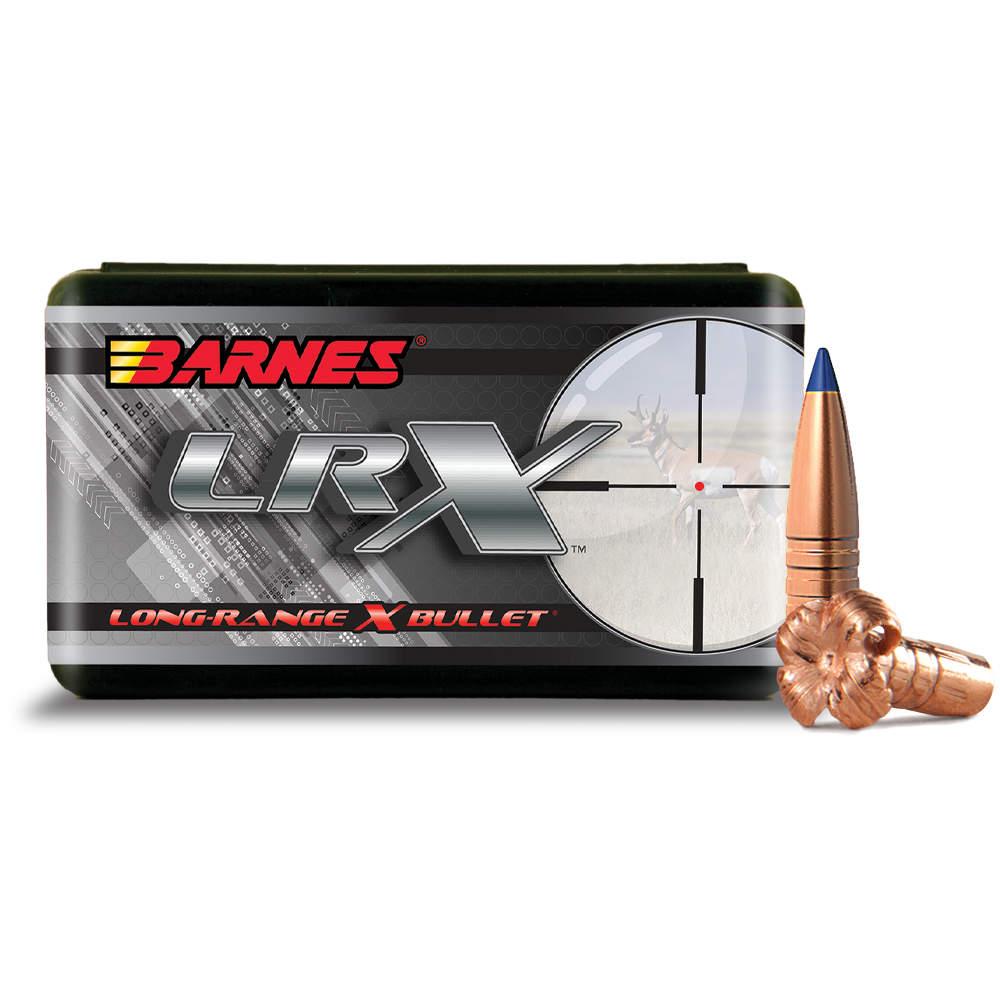
 www.barnesbullets.com
Although I have not tried these, then on the other scale there is copper designed for underlevers to expand at low velocities so you can tailer what you want from it, ttx-fn these to my mind would work really well woodland stalking in 30 cal, not sure if other cals are available and could be an option.
Other manufacturers do similar for underlevers and could well work better for normal rifles, I have used these whilst tracking and work on all species out of my 30-30.
Regards Wayne
LRX
www.barnesbullets.com
Although I have not tried these, then on the other scale there is copper designed for underlevers to expand at low velocities so you can tailer what you want from it, ttx-fn these to my mind would work really well woodland stalking in 30 cal, not sure if other cals are available and could be an option.
Other manufacturers do similar for underlevers and could well work better for normal rifles, I have used these whilst tracking and work on all species out of my 30-30.
Regards Wayne
big ears
Well-Known Member
You have to go on the bullet and click on it then scroll down. It’s about the third chart down gives you BCTried that. Can't find any BC information - perhaps I'm doing a "boys look" as SWIMBO would say.
pm me if you are still struggling.
Thanks @big ears - had found it eventually.You have to go on the bullet and click on it then scroll down. It’s about the third chart down gives you BC
pm me if you are still struggling.
I used the 145 LRX in 7mm at 3150 fps MV. In all honesty I didn't see much in the way of difference in terminal performance to the TTSX. Barnes say they are slightly softer but I didn't see that in practice. BC's are slightly better.There are copper bullets that now are used for longer ranges Barnes do the LRX
LRX
Although I have not tried these, then on the other scale there is copper designed for underlevers to expand at low velocities so you can tailer what you want from it, ttx-fn these to my mind would work really well woodland stalking in 30 cal, not sure if other cals are available and could be an option.
Other manufacturers do similar for underlevers and could well work better for normal rifles, I have used these whilst tracking and work on all species out of my 30-30.
Regards Wayne

A
Dual core bullets are Also marketed under the Geco brand called Geco zero. I have some in the cabinet but have not shot anything with them yet. I heard they caused significant meat damage which could mean that the technology may be useful for longer range applications if the BC were improved.RWS have already designed and offer a non toxic cored bullet, where the core fragments. Its sold under the RWS Evo Green brand and also claims to give good performance at extended ranges.
RWS Evolution Green | RWS Ammunition
Excellent stopping power, especially at longer ranges: RWS EVOLUTION GREEN is a lead-free part fragmentation bullet. Lean more here!

Freeforester
Well-Known Member
A brief digression, from the coal-face:
I’m thinking that anyone typically shooting upward of three to three figures of deer per year currently might be considering the ‘future’ right now, but this is off topic of the OP; I also think I recall that the FLS claim around 34% or so of all deer shot in Scotland each year, so individually, these public-purse-paid controllers can ‘afford’ to carry on with new copper slugs as paid for by the taxpayer; however this still leaves well over half the cull taken by private sector currently, a sizeable proportion by individual hobby-stalkers and private enterprise paying their own way. It’s this aspect I’m seeking to touch upon.
I don’t think anyone can seriously imagine that deer numbers being culled are going to keep up, what with today‘s Covid restricted, next-to-no-outlet, price-on-the-floor returns, much less with the increasing ‘targets’ being set by the ‘clipboard-surfers’ ‘in charge’ under the present ‘near future’ scenarios being put forward. The country is seeing market economic forces at work - (current) low demand, next-to-no-reward for the end product, and now a substantially increasing cost of the consumable making the connection between man and beast, leaving aside the flawed reasoning or ‘logic’ of the non-toxic/lead discussion; the drive by theory-rich, field-experience-poor officialdom is, as ever, to increase numbers culled, but the reality of the scenario is far fewer deer are being culled and will be entering the (new, improved non-toxic) supply chain going forward. If you imagine the private sector will happily and readily buy factory squibs for £60 a box of 20 to cull deer worth at best 60p per pound, I think you may be in for a surprise, but this is all clearly far off-topic relative to the parameters set out by Nigel in #1, and I’m not personally inclined to start another thread.
As both deer manager and a game dealer selling to the final consumer, it is my personal experience that it is simple enough to a) choose and use a suitable bullet (currently, jacketed lead in construction), and b) place it so meat damage is minimised or obviated entirely, and/or c) simply cut around any damaged portion and discard, so that any and all “contaminated” meat or toxic residues never makes it into a packet. I’d go as far as to state that in my opinion, any venison processor stipulating that only non-toxic projectile shot carcasses will be accepted is
a) in need of looking at their processing methods and QC parameters,
b) probably going to have a bit of a hard time in verifying which carcasses bought/brought in have been thus culled, and
c) manipulating the market price in his advantage, pretty much needlessly, as far as actual processing is concerned.
Readers with an interest will doubtless recall the great drive to increase quality and hence price paid for carcasses via improved lardering facilities being demanded throughout the land, but what became of that premium spoken of? Do stakeholders really imagine or believe that by switching to more expensive, compliant ammunition that they are going to end up justly rewarded for doing so??
I could imagine AGHE operators using a metal detecting wand or similar to ensure quality control where a processor utilises bought-in carcasses or relied on staff who butcher to lesser QC standards - I process my own - from what I can gather it’s possible to detect very small fragments of metal already, and for some there may need to be some time spent educating as to what bullet you use to provide a desirable result, as opposed to something where vaporised lead, copper, gold, or whatever is spread into the carcass so much as to contaminate the whole and render it unfit for consumption, but all around we will meantime continue to see more deer about, in part because of market forces and these aforementioned circumstances are dictating such an outcome. I contend that this switch is another barrier to getting the actual job done - and has anyone noticed in which direction the copper price has gone recenty?
Where is the bar needed to be set for encouraging entry into the sport/business/joint cull effort? It is clear that a largely financially comfortable, middle- to-’mature’- aged majority of hobby stalkers may indeed be if not readily willing, nonetheless able to absorb the hike in ammunition costs and ever-diminishing returns, but this by definition cannot a) assist in the drive to achieve the national cull/s desired or b) make the prospect of entry into the area any more desirable/affordable for those who might seek to participate.
Many will meantime continue to simply shoot an odd one or two for themselves -as has been the case for many faced with the current restrictions and squeezes aforementioned, and once their freezer is full, well - they’re ‘all right, Jack’, but where is the incentive to both slog and pay to do someone else’s bidding?
Apologies for the digression, and back to the interesting topic.
I’m thinking that anyone typically shooting upward of three to three figures of deer per year currently might be considering the ‘future’ right now, but this is off topic of the OP; I also think I recall that the FLS claim around 34% or so of all deer shot in Scotland each year, so individually, these public-purse-paid controllers can ‘afford’ to carry on with new copper slugs as paid for by the taxpayer; however this still leaves well over half the cull taken by private sector currently, a sizeable proportion by individual hobby-stalkers and private enterprise paying their own way. It’s this aspect I’m seeking to touch upon.
I don’t think anyone can seriously imagine that deer numbers being culled are going to keep up, what with today‘s Covid restricted, next-to-no-outlet, price-on-the-floor returns, much less with the increasing ‘targets’ being set by the ‘clipboard-surfers’ ‘in charge’ under the present ‘near future’ scenarios being put forward. The country is seeing market economic forces at work - (current) low demand, next-to-no-reward for the end product, and now a substantially increasing cost of the consumable making the connection between man and beast, leaving aside the flawed reasoning or ‘logic’ of the non-toxic/lead discussion; the drive by theory-rich, field-experience-poor officialdom is, as ever, to increase numbers culled, but the reality of the scenario is far fewer deer are being culled and will be entering the (new, improved non-toxic) supply chain going forward. If you imagine the private sector will happily and readily buy factory squibs for £60 a box of 20 to cull deer worth at best 60p per pound, I think you may be in for a surprise, but this is all clearly far off-topic relative to the parameters set out by Nigel in #1, and I’m not personally inclined to start another thread.
As both deer manager and a game dealer selling to the final consumer, it is my personal experience that it is simple enough to a) choose and use a suitable bullet (currently, jacketed lead in construction), and b) place it so meat damage is minimised or obviated entirely, and/or c) simply cut around any damaged portion and discard, so that any and all “contaminated” meat or toxic residues never makes it into a packet. I’d go as far as to state that in my opinion, any venison processor stipulating that only non-toxic projectile shot carcasses will be accepted is
a) in need of looking at their processing methods and QC parameters,
b) probably going to have a bit of a hard time in verifying which carcasses bought/brought in have been thus culled, and
c) manipulating the market price in his advantage, pretty much needlessly, as far as actual processing is concerned.
Readers with an interest will doubtless recall the great drive to increase quality and hence price paid for carcasses via improved lardering facilities being demanded throughout the land, but what became of that premium spoken of? Do stakeholders really imagine or believe that by switching to more expensive, compliant ammunition that they are going to end up justly rewarded for doing so??
I could imagine AGHE operators using a metal detecting wand or similar to ensure quality control where a processor utilises bought-in carcasses or relied on staff who butcher to lesser QC standards - I process my own - from what I can gather it’s possible to detect very small fragments of metal already, and for some there may need to be some time spent educating as to what bullet you use to provide a desirable result, as opposed to something where vaporised lead, copper, gold, or whatever is spread into the carcass so much as to contaminate the whole and render it unfit for consumption, but all around we will meantime continue to see more deer about, in part because of market forces and these aforementioned circumstances are dictating such an outcome. I contend that this switch is another barrier to getting the actual job done - and has anyone noticed in which direction the copper price has gone recenty?
Where is the bar needed to be set for encouraging entry into the sport/business/joint cull effort? It is clear that a largely financially comfortable, middle- to-’mature’- aged majority of hobby stalkers may indeed be if not readily willing, nonetheless able to absorb the hike in ammunition costs and ever-diminishing returns, but this by definition cannot a) assist in the drive to achieve the national cull/s desired or b) make the prospect of entry into the area any more desirable/affordable for those who might seek to participate.
Many will meantime continue to simply shoot an odd one or two for themselves -as has been the case for many faced with the current restrictions and squeezes aforementioned, and once their freezer is full, well - they’re ‘all right, Jack’, but where is the incentive to both slog and pay to do someone else’s bidding?
Apologies for the digression, and back to the interesting topic.
Similar threads
- Replies
- 22
- Views
- 773
- Replies
- 43
- Views
- 2K


- Replies
- 35
- Views
- 2K
- Replies
- 41
- Views
- 1K

