Rearing Grey partridge/pheasants under broodies

Sorry to revive a very old thread.

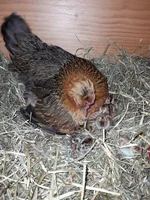
I have 28 grey eggs in the incubator and 12 under a bantam. Well, I now have 27 in the bator as one hatched earlier, so I put the chick with the bantam to see how she got on. All good, chick happily under hen.

How many chicks would she cope with do you think? Obviously, the more she rears the better I'd have thought?
 
Id avoid anything with feathery legs especially silkies if your hatching partridges under them as they are tiny i have seen too many strangled chicks over the years
I prefer game xs as they are highly protective of their brood
All my broody hens get a spray of frontline once they start to sit it will kill anything living on them and has a residual effect too
 
Never really worked with broodies other than as a youngster with my father who reared his birds with broodies, as someone said broody was only tethered to nest box when she was let off to clean and feed herself.

When he released birds to the wood Pheasants that is, released in small numbers four to six broods in one spot , and ten or a dozen release points, broody kept in coupe as call bird chicks were free range no release pens as today.

Did not have many partridges, these were mainly left to their own devises, though all roadsides were checked for nests and any found had the eggs replaced by dummy's, the eggs then placed under a broody until they started chipping they were then returned to the partridge nest, as it would be hard to find better parents than the partridge and once hatched will normally not do to badly, the critical time is when the hen is sitting especially by roadsides or tracks, disturbance from roadworkers cutting verges, dog walkers, hunting cats will also work roadsides.


While rearing with broodies in my opinion still produces the best birds, its not really practical today, as a hobby fine but you could not find enough broodies these days to hatch a substantial amount of birds.

I can remember the struggle even in my fathers day scouring the countryside trying to get enough broody hens, and you needed spares because sure as fate some would go off the brood.

Now if you really want to go back to how things used to be, you could start making your own chick food as there was no or very little proprietary food for pheasant chicks available, so the alternatives was to feed chicken feed or make your own as most keepers did, custard powder, fine oatmeal, boiled and minced rabbit, and some closely guarded secret ingredients, a very labour intensive business.

No things were not always better in the good old days:old:
This and digging anthills out into a barrow,the ruddy thing we’re all over you via the barrow handles in seconds.
 
Good thread lads .I’ve seen old pics of an estate in Gloucester of the rearing field in the 40s and 50s .Row after row of bantam huts with a lad full time on watch .Those were the days eh 😃Head keeper there had no good memories of the era as he was the watcher boy in the pic .Slept in a lean to shed when he dared .He saw some changes in his life for sure .They were setting silly numbers in a walk in incubator when I left .

 
That's a worrying thing most english/greys hatch the same week as Ascot. Let's hope some have survived the rain.
We havent had any rain up here, maybe they were tucked away in cover , fingers crossed as further along the track a weasel popped out in front of me.
 
I have a lot more under light in garage.

She's lost some sadly. Was thinking of slipping a few more under her that she didn't hatch.
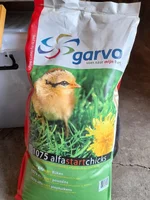
What food are you feeding them. I feed small mealworms trying to give them the most natural start the hen calls the chick's to them when she find them.
 
What food are you feeding them. I feed small mealworms trying to give them the most natural start the hen calls the chick's to them when she find them.
This stuff. I've had chicks on it last year and earlier this year, no issues. I don't know whether its her killing them by finding them other bits to eat or what.

lost another this morning, so down to eight with her now 😢

16241813400722191733222273127716.webp
 
My way when I was a partridge man on a beat, many years ago.
We had a hen yard full of English game hens but also used to buy/rent all broodies in our area. We had a small bank heaped up to stop water permeating and 60 sitting boxes on it just large enough to accommodate a good sized hen with a front hinged at the bottom. We worked on 18 eggs per hen and we used sand and hay to make the nest inside the box. Every morning the hen would be taken off the nest, tethered to a peg, and given food and water whilst she emptied out. After a quarter of an hour she was put back on the nest and the droppings collected and thrown onto veg patch. With 60 sitting boxes it took a quarter of an hour to get from one end to the other.
When the chicks hatched they and the hen were transferred to a co-op and run on the rearing field with the whole affair being moved every couple of days. At six weeks old a board was slid under the coop and run and it was transferred to it's destination on the beat. A small hopper and drinker alongside it for later use. Many people let their English go as a large bunch, my way keeps them together as a Covey. After a couple of weeks you can take away the broody. At 12 to 14 weeks old put a block under one end and release your Covey. Hopefully you will have removed and be removing all predators (legal ones) at that time. I used to run 130 tunnels and forty snares continually, feed from larger hoppers and walk your beat every day. A brief résumé of rearing and releasing English partridge by a full time keeper on a 1200 acre beat. Food etc is a different story.
 
My way when I was a partridge man on a beat, many years ago.
We had a hen yard full of English game hens but also used to buy/rent all broodies in our area. We had a small bank heaped up to stop water permeating and 60 sitting boxes on it just large enough to accommodate a good sized hen with a front hinged at the bottom. We worked on 18 eggs per hen and we used sand and hay to make the nest inside the box. Every morning the hen would be taken off the nest, tethered to a peg, and given food and water whilst she emptied out. After a quarter of an hour she was put back on the nest and the droppings collected and thrown onto veg patch. With 60 sitting boxes it took a quarter of an hour to get from one end to the other.
When the chicks hatched they and the hen were transferred to a co-op and run on the rearing field with the whole affair being moved every couple of days. At six weeks old a board was slid under the coop and run and it was transferred to it's destination on the beat. A small hopper and drinker alongside it for later use. Many people let their English go as a large bunch, my way keeps them together as a Covey. After a couple of weeks you can take away the broody. At 12 to 14 weeks old put a block under one end and release your Covey. Hopefully you will have removed and be removing all predators (legal ones) at that time. I used to run 130 tunnels and forty snares continually, feed from larger hoppers and walk your beat every day. A brief résumé of rearing and releasing English partridge by a full time keeper on a 1200 acre beat. Food etc is a different story.
Fab to read that. Thank you.

Sounds bloody hard work, but worth it.

I'm not at that level, just a few dozen. It's all good fun though and good for the kids to witness and help with.

I will release nearly all, but plan on keeping a breeding trio to get eggs from next year.
 
Well, I now have 27 in the bator as one hatched earlier, so I put the chick with the bantam to see how she got on.
I wouldn't have done that as there's a risk that she will give up on her clutch if they haven't hatched within a day of putting a chick with her.
 
Fab to read that. Thank you.

Sounds bloody hard work, but worth it.

I'm not at that level, just a few dozen. It's all good fun though and good for the kids to witness and help with.

I will release nearly all, but plan on keeping a breeding trio to get eggs from next year.
Still Covey them Jimbo. Oh and you don't do trios with partridge especially English. Pair them or get somebody who knows how, but keep a spare cock bird. Sometimes hens are like women, very fussy. They even reject and kill a cockbird on occasions.
 
Thinking about predators, most of my gear is in use, low on stock need more.😀
 

Attachments

  • IMG_20210621_084618_1.webp
    IMG_20210621_084618_1.webp
    356.8 KB · Views: 14
Back
Top