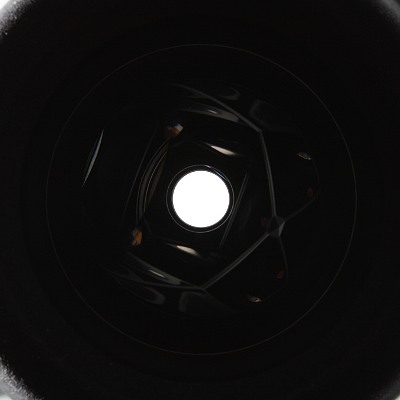
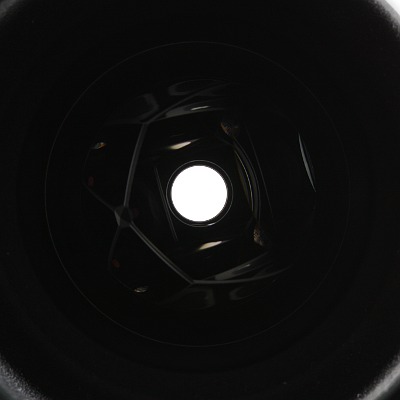
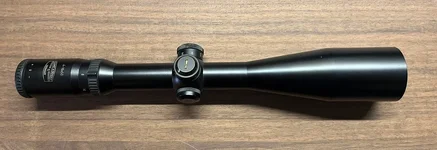
What happens to light going through a scope:-
Light hits lens coatings - some of it is reflected, some is scattered, some is absorbed in the coatings & some passes into the glass. - The same happens as it exits the coatings on the other side of the lenses -- Variable 1.
Light enters glass & the surface quality (polish & dimensional accuracy) can add to losses. --- Variable 2.
Glass lens curvature - highly curved lenses have higher losses than flatter ones. --- Variable 3.
The glass thicknes & quality of the glass affects losses - thicker glass imparts more losses. --- Variable 4.
The number of glass to air & glass to glass interfaces affect losses. More interfaces = more losses. --- Variable 5.
The cleanliness of the lenses has an effect too. --- Variable 6.
The scope tube inner surfaces need to absorb the max amount of scatter so that they don't affect the image quality --- Variable 7.
- I like a sun shade on a scope - particularly just as it is getting dark & the sky is lighter than the land - possibly the worst conditions for using a scope excluding rain/fog.
All the above & more that I can't immediately think of interact & affect image quality & losses.
Big lenses transmit more energy but not necessarily better image quality. & the Objective lens to magnification ratio applies as an over-riding truth.
The rest is down to individuals' eyesight & personal preferences - Always assuming that snobbery type prejudices are put asside.
Personally I dislike Leupold - I feel the image is boring. I like Zeiss, Leica Kahles & Nickel better than Swarovski & S&B although my German S&B 8x56 fixed is a really great scope for lamping. - But that's just my view.
Ian
Light hits lens coatings - some of it is reflected, some is scattered, some is absorbed in the coatings & some passes into the glass. - The same happens as it exits the coatings on the other side of the lenses -- Variable 1.
Light enters glass & the surface quality (polish & dimensional accuracy) can add to losses. --- Variable 2.
Glass lens curvature - highly curved lenses have higher losses than flatter ones. --- Variable 3.
The glass thicknes & quality of the glass affects losses - thicker glass imparts more losses. --- Variable 4.
The number of glass to air & glass to glass interfaces affect losses. More interfaces = more losses. --- Variable 5.
The cleanliness of the lenses has an effect too. --- Variable 6.
The scope tube inner surfaces need to absorb the max amount of scatter so that they don't affect the image quality --- Variable 7.
- I like a sun shade on a scope - particularly just as it is getting dark & the sky is lighter than the land - possibly the worst conditions for using a scope excluding rain/fog.
All the above & more that I can't immediately think of interact & affect image quality & losses.
Big lenses transmit more energy but not necessarily better image quality. & the Objective lens to magnification ratio applies as an over-riding truth.
The rest is down to individuals' eyesight & personal preferences - Always assuming that snobbery type prejudices are put asside.
Personally I dislike Leupold - I feel the image is boring. I like Zeiss, Leica Kahles & Nickel better than Swarovski & S&B although my German S&B 8x56 fixed is a really great scope for lamping. - But that's just my view.
Ian