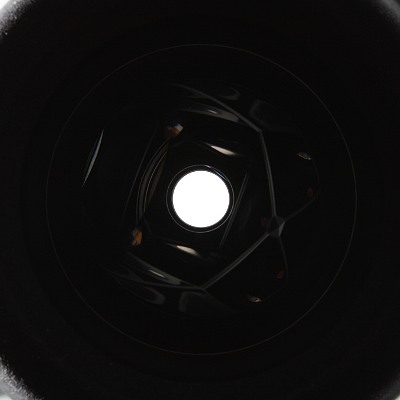
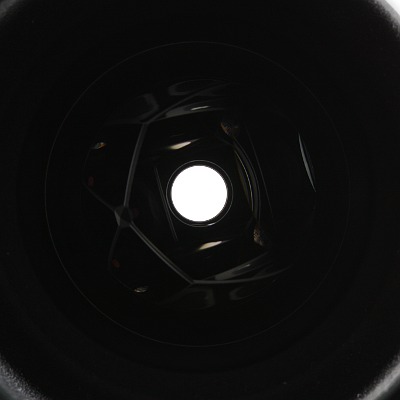
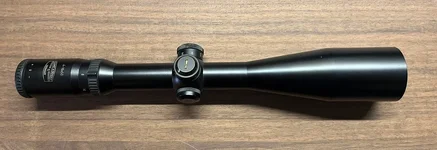
schmidt and bender disappointment

What happens to light going through a scope:-

Light hits lens coatings - some of it is reflected, some is scattered, some is absorbed in the coatings & some passes into the glass. - The same happens as it exits the coatings on the other side of the lenses -- Variable 1.
Light enters glass & the surface quality (polish & dimensional accuracy) can add to losses. --- Variable 2.
Glass lens curvature - highly curved lenses have higher losses than flatter ones. --- Variable 3.
The glass thicknes & quality of the glass affects losses - thicker glass imparts more losses. --- Variable 4.
The number of glass to air & glass to glass interfaces affect losses. More interfaces = more losses. --- Variable 5.
The cleanliness of the lenses has an effect too. --- Variable 6.
The scope tube inner surfaces need to absorb the max amount of scatter so that they don't affect the image quality --- Variable 7.

- I like a sun shade on a scope - particularly just as it is getting dark & the sky is lighter than the land - possibly the worst conditions for using a scope excluding rain/fog.

All the above & more that I can't immediately think of interact & affect image quality & losses.

Big lenses transmit more energy but not necessarily better image quality. & the Objective lens to magnification ratio applies as an over-riding truth.

The rest is down to individuals' eyesight & personal preferences - Always assuming that snobbery type prejudices are put asside.

Personally I dislike Leupold - I feel the image is boring. I like Zeiss, Leica Kahles & Nickel better than Swarovski & S&B although my German S&B 8x56 fixed is a really great scope for lamping. - But that's just my view.

Ian
 
If objective size made no difference then the most efficient and least expensive solution would be for scope manufacturers to make scopes with zero objective size. From what I've seen this is uncommon.

It would also be the case that science would not want larger objectives on things such as telescopes which are designed to look for very faint light, astronomers would be quite happy with a tiny objective, or even none, on their telescope.

Given this we don't need to refute this with papers, maths or even the normal internet method of settling an argument by correcting someone's spelling. The simple logic that the engineers who design optics and the scientists who work with and design telescopes all crave larger and larger objectives to collect more light while some bloke who posts on a site on the internet thinks they are wrong answers the question for us.
 
Alistar thanks, makes sense to me.
Only point is that scope manufacturers seem to quote that there is no difference when transmitting through a 1" or 30mm tube. maybe the difference is very small or other aspects are more important. 90-95% transmission is a large gap already. Would a higher concentration of light through a smaller lens have higher losses than a lower concentration of light through a larger piece of glass (more glass=more reflection)? I wouldn't know.

Apparently the Zeiss Duralit scopes have one lens less than the higher end Zeiss scopes and should therefore (according to a Zeiss optic guru) have better light transmission values.
edi

I really wouldn't know to be honest. As for the 1" vs 30mm question. it is theoretically more effective, but i doubt if the difference is detectable in a real world situation. You have to bear in mind that many 30mm scopes contain identical optics to their 25mm compatriots, its just that they are 'in style' at present, especially amongst the tactical guys and so sell better. I reckon its the old 'bigger is better' mentality, and people are just compensating...:stir:
 
Wrong one, depends on what you want it to do.
But no matter how good a scope is 12 x with a 42mm objective isn't going to be great in the dark.
I have always been happy with 6x42 S&B scopes in any light conditions, but if I wanted more mag
I would just go with an 8x56.

Neil. :)
+1 bigger objective lens = more light gathering
 
Do you actually think optics companies fit a 56mm objective to a scope without any reason?

One word
Marketing

same as 30mm tubes, tactical target turrets, illuminated reticules, built in ballistic calculators and every other invention that we "need"


To my mind all this technical specification is worthless without a full and detailed review of performance
Comparing two brands even of the same mag spec comes down to reading marketing material and listening to the rubbish they spout about proprietary coatings and the like

consider the opinions of these people when rating binoculars:
I have yet to come across a similarly detailed review on scopes

Swarovski EL 10x42 Swarovision - binoculars review - allbinos.com

[h=2]Results of the review[/h]
[TABLE="class: table_s"]
[TR="class: bg1"]
[TH="align: right"]Real front lens diameter[/TH]
[TD]Left: 42.1+/- 0.05mm
Right: 42.08+/- 0.05mm[/TD]
[TD]8/8.0[/TD]
[/TR]
[TR="class: bg2"]
[TH="align: right"]Real magnification[/TH]
[TD]10.16+/- 0.05x[/TD]
[TD]3/3.0[/TD]
[/TR]
[TR="class: bg1"]
[TH="align: right"]Transmission[/TH]
[TD]90.8+/- 1.5%[/TD]
[TD]13/15.0[/TD]
[/TR]
[TR="class: bg2"]
[TH="align: right"]Chromatic aberration[/TH]
[TD]Better than in the case of the previous EL series but still not perfect. Low in the centre, near medium on the edge.[/TD]
[TD]6.9/10.0[/TD]
[/TR]
[TR="class: bg1"]
[TH="align: right"]Astigmatism[/TH]
[TD]In fact an ideal.[/TD]
[TD]9.5/10.0[/TD]
[/TR]
[TR="class: bg2"]
[TH="align: right"]Distortion[/TH]
[TD]The distance of the first curved line from the field centre compared to the field of view radius: 88% ± 3%[/TD]
[TD]10/10.0[/TD]
[/TR]
[TR="class: bg1"]
[TH="align: right"]Coma[/TH]
[TD]Sensational results. The coma appears only in the distance of 85–90% from the centre of the field and is low on the very edge.[/TD]
[TD]9.6/10.0[/TD]
[/TR]
[TR="class: bg2"]
[TH="align: right"]Blurring at the edge of the FOV[/TH]
[TD]Field perfectly sharp to the very edge. A round of applause![/TD]
[TD]10/10.0[/TD]
[/TR]
[TR="class: bg1"]
[TH="align: right"]Darkening at the edge the FOV[/TH]
[TD]Practically imperceptible.[/TD]
[TD]4.9/5.0[/TD]
[/TR]
[TR="class: bg2"]
[TH="align: right"]Whiteness of the image[/TH]
[TD]Excellent. Suprisingly high transmission in the blue range of the spectrum.[/TD]
[TD]4.8/5.0[/TD]
[/TR]
[TR="class: bg1"]
[TH="align: right"]Collimation[/TH]
[TD]Perfect.[/TD]
[TD]5/5.0[/TD]
[/TR]
[TR="class: bg2"]
[TH="align: right"]Internal reflections[/TH]
[TD][TABLE="class: table_fot"]
[TR]
[TD]Left:[/TD]
[TD]Right:[/TD]
[/TR]
[TR]
[TD][/TD]
[TD][/TD]
[/TR]
[/TABLE]
Weak for this class of equipment. A lot of flares and small false pupils.[/TD]
[TD]2.8/5.0[/TD]
[/TR]
[TR="class: bg1"]
[TH="align: right"]Housing[/TH]
[TD]Solid and very stylish. Fantastic design. Very comfortable to hold and to look through (convenient thumb grooves). The rubber padding is a bit coarse making the grip more secure. It sticks out a bit near objectives. Regulated eyecups.[/TD]
[TD]7.7/8.0[/TD]
[/TR]
[TR="class: bg2"]
[TH="align: right"]Focusing[/TH]
[TD]Comfortable, big central wheel with the full turn amounting to as many as 900 degrees! It moves easily with small resistance. Individual focusing with click-stop system on the central wheel. Nothing moves outside.[/TD]
[TD]4.9/5.0[/TD]
[/TR]
[TR="class: bg1"]
[TH="align: right"]Tripod[/TH]
[TD]You can buy an optional brand-name adapter.[/TD]
[TD]2/3.0[/TD]
[/TR]
[TR="class: bg2"]
[TH="align: right"]Interpupilary distance[/TH]
[TD]from 54.6 to 74.1mm[/TD]
[TD]5/6.0[/TD]
[/TR]
[TR="class: bg1"]
[TH="align: right"]Closest focusing distance[/TH]
[TD]1.35 m[/TD]
[TD]2/2.0[/TD]
[/TR]
[TR="class: bg2"]
[TH="align: right"]Eyepieces FOV[/TH]
[TD]Apparent field of view of 65.4 degrees[/TD]
[TD]8/10.0[/TD]
[/TR]
[TR="class: bg1"]
[TH="align: right"]Field of view[/TH]
[TD]Measured by us amounted to 6.44 ± 0.04 degrees and it was in accordance with that in specifications. Huge field of view for this class of equipment.[/TD]
[TD]7/8.0[/TD]
[/TR]
[TR="class: bg2"]
[TH="align: right"]Quality of the interior of the barrels[/TH]
[TD]Black, matt, clean – an ideal![/TD]
[TD]5/5.0[/TD]
[/TR]
[TR="class: bg1"]
[TH="align: right"]Vignetting[/TH]
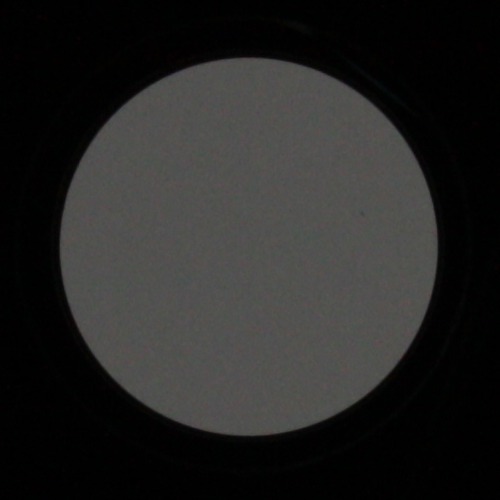
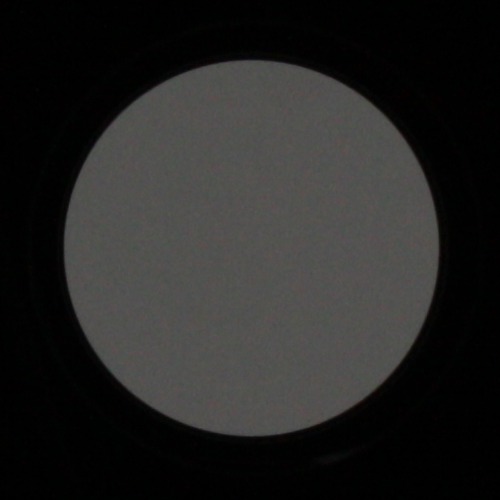
[TD][TABLE="class: table_fot"]
[TR]
[TD]Left:[/TD]
[TD]Right:[/TD]
[/TR]
[TR]
[TD][/TD]
[TD][/TD]
[/TR]
[/TABLE]
OL: 0.3%, OR: 0.0%[/TD]
[TD]7/8.0[/TD]
[/TR]
[TR="class: bg2"]
[TH="align: right"]Prisms quality[/TH]
[TD]High quality BaK-4.[/TD]
[TD]8/8.0[/TD]
[/TR]
[TR="class: bg1"]
[TH="align: right"]Antireflection coatings[/TH]
[TD]Pink-yellow on objectives. Yellowish on prisms. Green-yellow-pink on eyepieces. Low intensity.[/TD]
[TD]5/5.0[/TD]
[/TR]
[TR="class: bg2"]
[TH="align: right"]Warranty [years][/TH]
[TD]10[/TD]
[TD]4.5/6.0[/TD]
[/TR]
[TR="class: bg1"]
[TH="align: right"]Final result[/TH]
[TD][/TD]
[TD]153.6/170
90.4%
[/TD]
[/TR]
[TR="class: bg2"]
[TH="align: right"]Econo result[/TH]
[TD][/TD]
[TD]0pkt.[/TD]
[/TR]
[/TABLE]
 
Question: when does the tube size make a difference to light transmission ?
Answer: when the objective divided by the magnification = a higher number than the bore of the tube.

Neil. :)
 
+1 bigger objective lens = more light gathering

No, not quite. Bigger objectives are required to deliver the same exit pupil when the magnification of a scope is increased, bigger lenses do not gather more light. A 6x42 does not "gather" any more or less light than a 8X56. Both provide the socalled "ideal" exit pupil diamtere of 7mm.

There were two reasons 30mm tubes came out. One was to increase the space inside for the erector assemblies to give scopes greater ranges of adjustment, the other was to increase tube strength for military applications. Same reasons we now see 34mm tubes.

As to cheap scopes, I am using a Bushnell Elite 10X42 ($250 retail) on my little Remington in 308 as the moment for deer hunting. Took a nasty fall in the rocks on the mountain Saturday. The rifle took a very hard hit that made quite a "crack". I was concerned all day about the zero but was plesantly surpirzed when I had a chance to check it with a colimater at the end of the day and discovered no chance in the adjustment.

SS
 
Marcbo, I see it like this, if you are looking at a deer through your scope you will get a bigger picture of your target at the same brightness with the 8x56 than with the 6x42. You will be able to identify better. Your target the deer will have more light than with a 6x42.
Lets say your deer takes up a certain area of your view with a 6x42, a larger part of your picture will be of the deer with a 8x56.Your eye will receive more light/info (more "pixels") of the deer than with a 6x42. That is why the 8x56 is so popular for night hunting. Never heard of a 6x42 being rated for night hunting.
In many parts of Europe boar are just about only shot at night.
edi
 
My understanding of optics is shaky at best, but I think it's worth thinking of photons as rain drops.

More of them will fall into your bucket if the bucket mouth is wider.

Hence the wider the objective lens, the more photons it will encounter - the more light it will 'capture'.

What you are all arguing about is what happens next.
 
bigger lenses do not gather more light.

So. say 3 units of light fall upon every 1 square inch of my garden wall are you telling me that if I build a 1000 square inch garden wall that it will still only have 3 units of light fall upon it? As I see my garden wall by detecting the light reflecting from it does this mean that the bigger I make my garden wall the dimmer it will get as those 3 units of light will be spread over a larger area meaning the intensity of the reflected light will decrease with size?

Also at what scale does this effect begin? I mean, if one square inch has 3 units of light fall upon it but a larger area also has 3 units of light fall upon it what happens with 0.0000007 square inches of garden wall? Does it also get 3 units of light? If it gets less than 3 units then how does the light know when it has reached the scale at which it no longer increases the number of units that fall upon a given surface? Does this limit in the amount of light which falls upon a surface only apply to telescopic sights and not to garden walls?

What about the Great Wall of China? I've no idea how anyone can see if from space if it gets the same illumination as a 1 square inch wall.
 
again it has little merit willy waving lens size

what matters is what is lost in transfer through the lenses and assembly

You can have the biggest bloody objective in the world but if it is passing through more glass of a certain quality compared to not passing through it you will lose some of it!
 
I honestly can't be bothered to go back through the entire thread, but I am surprised no one has (recently) raised the subject of both weight and diameter. One reason why manufacturers don't only sell scopes with 56mm objectives is because (a) glass weighs proportionately more as you increase diameter, and (b) larger diameter objective lenses require higher rings to ensure they clear the barrel. You can get 72mm objective lens scopes that are great at gathering light but all but impractical for shooting.

This simply reinforces the universal notion that everything requires compromise....with the possible exception of threads on Stalking Directory.
 
If one compares like for like scope quality, same coatings same generation development.


You'll get: a twilight factor of : Kaps scopes
4x36 12 410 grams
6x42 15.8 450 grams
8x56 21.2 590 grams

(Robbed this from Astronomics.com)
A number used to compare the effectiveness of binoculars or spotting scopes used in low light. The twilight factor is found by multiplying the size of the objective lens (in mm) by the magnification and then finding the square root of that result. The larger the twilight factor, the more detail you can see in low light. A twilight factor of 17 or better if usually required for reasonable low light use.

edi

 
Last edited:
So. say 3 units of light fall upon every 1 square inch of my garden wall are you telling me that if I build a 1000 square inch garden wall that it will still only have 3 units of light fall upon it? As I see my garden wall by detecting the light reflecting from it does this mean that the bigger I make my garden wall the dimmer it will get as those 3 units of light will be spread over a larger area meaning the intensity of the reflected light will decrease with size?

Also at what scale does this effect begin? I mean, if one square inch has 3 units of light fall upon it but a larger area also has 3 units of light fall upon it what happens with 0.0000007 square inches of garden wall? Does it also get 3 units of light? If it gets less than 3 units then how does the light know when it has reached the scale at which it no longer increases the number of units that fall upon a given surface? Does this limit in the amount of light which falls upon a surface only apply to telescopic sights and not to garden walls?

What about the Great Wall of China? I've no idea how anyone can see if from space if it gets the same illumination as a 1 square inch wall.

It is getting the same amount of light, you are confusing this with magnifying the image.

SS
 
Last edited:
No, not quite. Bigger objectives are required to deliver the same exit pupil when the magnification of a scope is increased, bigger lenses do not gather more light. A 6x42 does not "gather" any more or less light than a 8X56. Both provide the socalled "ideal" exit pupil diamtere of 7mm.

There were two reasons 30mm tubes came out. One was to increase the space inside for the erector assemblies to give scopes greater ranges of adjustment, the other was to increase tube strength for military applications. Same reasons we now see 34mm tubes.

As to cheap scopes, I am using a Bushnell Elite 10X42 ($250 retail) on my little Remington in 308 as the moment for deer hunting. Took a nasty fall in the rocks on the mountain Saturday. The rifle took a very hard hit that made quite a "crack". I was concerned all day about the zero but was plesantly surpirzed when I had a chance to check it with a colimater at the end of the day and discovered no chance in the adjustment.

SS

so a 6x scope would be just as good at dusk whether it had a 30mm or 56mm lense ?

Which window makes a room brighter 300mm square or 3m square

I'm a rough old crane engineer but I know the answers........
 
A 50mm will deliver 42% more light (intensity) to the eye than a 42mm objective, which is way more than the difference in transmission values between the current offerings of the top European optics makers. This increase in light intensity is approximately equivalent to a 28% increase perceived brightness.
 
It is getting the same amount of light, you are confusing this with magnifying the image.

SS

I rather think you're the confused one. Regardless of what happens after light encounters a lens, the lens with the greater surface area will encounter more light. This is why nocturnal animals have enormous eyes.

I think people are getting very confused by what happens AFTER the light hits the objective lens - the fact that a larger lens will collect more light is not really up for dispute.
 
I have always used the rather unscientific approach, look through a scope if it is clear and sharp to me then try it. If it holds zero, is robust and withstands the wear and tear (abuse?) of stalking then it is just what I need. Of course I realise that this is only a personal thing but it works for me, I have S&B's that have been knocked about and held zero for years. I don't really care for the minutia of optics, if it works it works, if it doesn't move on.


I know it's simple but so am I :)

John
 
JayB

thats the same scope method I use if it works and holds zero then jobs a good un.

luckily for me thats with some S&B that i've had for years.
 
Back
Top