The Scottish/Atlantic Climate - most ‘mainstream’ brutal?

oldhamstocks

Well-Known Member
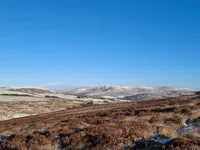
I’ve been -32 in Russia, experienced extreme heat, wind, rain and humidity elsewhere but today on the borders hills at 300m plus could get you in to trouble. Soaked and wind chill blasted in the fashion of getting battered by Mike Tyson. Clocks got the cheek to go forward 😁👍🏼
 
Aye .... simply doing beating in Angus Glen's during the season ... it can be a lovely morning at beating hut but get bit of height and the Angus Glen's aren't spectacularly high in grand scheme of things....but get out beating wagon then wind hits you and you soon see / understand how folks get caught out and can soon be in serious trouble up even a wee hill .
 

Attachments

  • 20241120_095316.webp
    20241120_095316.webp
    268.1 KB · Views: 12
Here we don’t have an actual climate, we just have loads of weather.
Dry, not too windy and 12-14 C is a good day regardless of the date.
 
The challenge with Scottish climate is high moisture content even at sub zero temperatures.

Go to the alps or Scandinavia when its well below, the air is very dry so all that moisture that you expire is transported out through your clothing so you remain dry even when working hard. If you do get sweaty a simple opening of a jacket and you are quickly dry.

In Scotland the air is already full of moisture so you can easily soaked under neath your rain gear, and because there is little gradient in vapour content between under your coat and outside you remain damp, and thus you can get cold very quickly.

As stalkers on the open hill, we make matters worse as you often have to crawl through wet grass, heather, bog etc.

Choice of clothing and especially underlayers is vital. For me only one option and that’s Merino wool. It remains warm even when wet. It’s also worth carrying inside a dry bag / vaccuum sealed back a dry pair of socks and a dry base layer top and a lightweight down jacket. If you have a big sweaty climb in the morning you can then strip off and put on the warmth on the tops.

Key I do think is having the ability to provide yourself shelter in case of difficulty. We can all get the weather wrong, or twist an ankle. Having a bivvy bag / survival bag / poncho in your pack just gets you out of the wind and rain and into the dry. They weigh little but can save your life.

We also seem to want our waterproof layer to be sleek fitting, but I can’t help feeling a poncho type thing keeps the water away from you whilst providing plenty of ventilation. But in strong wind they are a pain. A poncho can also act as shelter, especially when you are forced to wait.
 
I always tell people a sub zero January night with the wind blowing from the north east on Blackpool sea front is the coldest place on earth. Until you’ve experienced -20c in dry cold vs -4c in damp cold it’s hard to comprehend the difference.
 
Wait until you try the Cairgorms in January....no pleasant.
I went to the northern corries one January to go ice climbing (well more frozen turf and icy rock climbing, but you get my drift) and down at the glen more lodge the temperature was c15C!
The ptarmigan looked really pi$$ed off in their white plumage against the green of the grass and heather!!
By the end of the week tho it was Baltic! Welcome to Scotland - no such thing as bad weather, just inappropriate clothing, as the Big Yin used to say!!
 
The other thing I have learnt regarding hills in Scotland is “be bold be cold”

Ie don’t over dress at the start of the day. It’s very easy to put on all warm clothes, hats and gloves at the car. 10 to 15 minutes later you are the equivalent of a boiled lobster.

Much, much better is to dress lightly so that you need to move to keep warm. And have lightweight down jacket or waste coat to provide warmth when you stop. I usually put these on over my water / windproof layer when I stop.

Also don’t forget that a rucksack provides a lot of insulation for your back, again this is often forgotten.

And don’t forget high calorie food. Not sugary but plenty of fat and carbs. Nuts and raisans, biltong, cereal bars etc. Keeping warm burns lots of energy. And drink plenty of water.
 
I climbed Ben Nevis one February day in the late 70's....leaving the glen youth hostel just before dawn, we went up through thick freezing cloud for an hour, then broke through into clear blue sky and sunshine.
The views from the summit were staggering, and we had the luck to see a couple of jet fighters fly past below us, the noise causing chunks of cornice to break off and fall !!

D.
 
Back
Top