Thermal RF v Bino RF

I calculate that the magnification of the optical channel is x2.4
If it was x6 magnification, and used the same sensor, the focal length of the lens would need to be 75mm and if you wanted that lens to have the same aprerture as the 31mm lens (f1.2), the 75mm lens would have a diameter of 62.5mm which is significantly larger than the 50mm f0.9 (55mm diameter) thermal lens on the unit.
I note that the optical channel on Pulsar Thermion Duo XP55 uses a 3840x2160 sensor and a 34mm f4.34 lens to give an optical magnifcation of x4 and up to x32 using digital zoom

Cheers

Bruce
Thank you for this information.
I will maybe have a chance for short test of Raptor RQ50 and I am really curious if daytime channel will be good enough to use it for roe deer hunting in spring.
Of course I do not expect it to be even close to midrange quality glass binoculars (I am using Bushnell Legend-M 8x42), so nothing fancy and expensive).
But an idea of all in one device is really tempting, even doe the price tag on raptors is o_Oo_Oo_Oo_O
 
Yesterday I picked up Raptor RQ50 for a test.

I am quite sure that thermal part of device will be superb.
What I am really interested is its optical part and possibility to use it in these two scenarios:

- Possibility to switch from thermal to digital NV during the night and perform that last inspection on boars feeding station before taking decision which animal is the one to take shot at.
- Using day time colour camera to observe roe deer trying to select which animals should be taken out after the season starts.

After just quick play with raptor at home I am surprised that there is no chance to focus optical channel, which significantly degrades quality of both night time and day time optical picture.

Hopefully optical channel has large depth of field and will be somehow focused at usual observing distances.


If anybody maybe knows how to focus optical channel, I would appreciate any help.


Cheers
 
I’ve no great technical insight but have used a handheld rf, Leica rf bins, swaro non rf bins, pulsar non rf thermal and rf thermal,
If you ever need to range something in the dark, I’d recommend rf on the thermal and not the bins. Try locating the thing you want to range in the dark with rangefinder bins or a handheld standalone rf. It’s also a lot easier to estimate range in daylight. Buy the best non rf bins you can afford. A cheap handheld rf can be handy if you do a lot of target shooting at ‘uncertain’ ranges 😁
Yes a rf thermal is twice the width, so you’ll need a bigger pocket to tuck it into. If that’s too much to cope with, then you might need another solution. 👍
 
  • Like
Reactions: Acm
Yesterday I picked up Raptor RQ50 for a test.

I am quite sure that thermal part of device will be superb.
What I am really interested is its optical part and possibility to use it in these two scenarios:

- Possibility to switch from thermal to digital NV during the night and perform that last inspection on boars feeding station before taking decision which animal is the one to take shot at.
- Using day time colour camera to observe roe deer trying to select which animals should be taken out after the season starts.

After just quick play with raptor at home I am surprised that there is no chance to focus optical channel, which significantly degrades quality of both night time and day time optical picture.

Hopefully optical channel has large depth of field and will be somehow focused at usual observing distances.


If anybody maybe knows how to focus optical channel, I would appreciate any help.


Cheers
The optical channel on the Raptors is fixed focus
The lens in the optical system is 31mm focal length and f1.2 aperture which would indicate a rather narrow depth of field

Cheers

Bruce
 
I have both and would not be without either.
Camera QD attachments to both and my bino harness. Thermal in my daysack during the day and switch them if I stay on for Charlie. With the QD attachments it takes seconds to switch.

If you are only using high seats at night, make range cards for each during the day if you don't have a thermal spotter with an LRF. If most of your shooting is done at night, and you move around, get a thermal with a LRF and make range cards for the regular positions you use during the day.
I had a look at the Raptor, its nice but a bit bulkey for me. Also lots of buttons, I am sure I would get used to them but in the heat of battle who knows :)
 
Hello

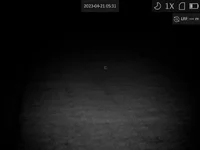
Does anybody know if it is possible to adjust the IR illuminator on Hikmicro Raptor?

The one I have on test is illuminating only lover part of screen.

Illuminator is 940 model so I did not expect long range capability but having it centred in the middle of field of view would be nice.

Like Bruce already explained earlier, optical channel on Raptor is fixed focus so don’t expect high level of details neither by day nor by night.

Luckily thermal channel is so good, that it will produce all the detail you need for legal night hunting.

But Raptor is by no way a device, that could replace daylight binoculars.
 

Attachments

  • 20230421053152.webp
    20230421053152.webp
    145.9 KB · Views: 5
Very, very pleased with my Binox 4,5-18X. Using it all the time but mostly from high seat because it is a bit heavy and bulky. I'd say manual focus is a must on these devices and surprised some brands come without. High Hz is also a plus factor because you tend to move the binos all the time. In clear nights larger animals like boar and moose (and horses) can be spotted 2 km away. With the laser normal distance is like 600 m for smaller animals but near 1 km for humans and 1,5 km for fixed larger items like farm barns.
Recommend the 4,5X version. No real need then to adjust to higher levels and thereby 'pixel out'.
 
Been toying with range finding binoculars for a while now but wondered whether my money would be better invested in upgrading my thermal scanner to one with range finding capability. I’m currently using a Pulsar XM30s which is great but now I’ve used it more and seen footage from higher spec models I’m feeling its limitations.

Binoculars are SLC 10x42 so no point in upgrading just for better glass.

Anyone with experience of both care to comment on the pros and cons of both?

Thanks
Firstly keep your 10 x 42 best binos out there, if your using during the day get yourself a small Leica RF very very small and do the job admirably fit in your pocket and keep your dollar for better things
 
Firstly keep your 10 x 42 best binos out there, if your using during the day get yourself a small Leica RF very very small and do the job admirably fit in your pocket and keep your dollar for better things
Thanks, kept the binos and upgraded to XG 35 LRF. Already have a wee Leica rf but was just another thing to carry.
 
Back
Top