Hey guys.
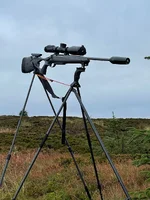
Any ones got any real worldly advice on the Sako S20 in 6.5 creed?
I’ve heard there have been feeding and potentially stock issues.
Just wondered if this was a common thing or a few are far between thing. Not many people post about the positives of things nowadays.
I’m both a woodland and open field stalker , mainly on Roe.
I’ve held it a few times and it ergonomically fits me great but the build quality did feel alittle off, especially up against my Bergarra Carbon Crest and to be brutally honest, my Sako 75 feels like a better build.
Hey guys.
Any ones got any real worldly advice on the Sako S20 in 6.5 creed?
I’ve heard there have been feeding and potentially stock issues.
Just wondered if this was a common thing or a few are far between thing. Not many people post about the positives of things nowadays.
I’m both a woodland and open field stalker , mainly on Roe.
I’ve held it a few times and it ergonomically fits me great but the build quality did feel alittle off, especially up against my Bergarra Carbon Crest and to be brutally honest, my Sako 75 feels like a better build.
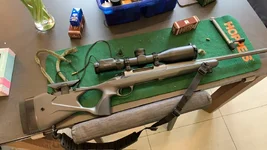
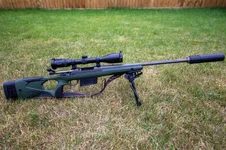
I'm the proud owner of a SAKO S20 in 6.5 Creedmoor, and I'm thoroughly impressed with it. It wasn't until I disassembled the rifle that I truly appreciated its superior build quality. The alloy rail under the barrel and the side M-LOKs, which attach directly to the stock through the alloy chassis, are testaments to its solid construction. Any reviewer who claims otherwise, often just by tapping on the stock, reveals their lack of in-depth knowledge.
I use the S20 for both mid-range hunting and having a play at my weekly long-range F-Class shoots (300-1000 yards). Five hundred yards is its sweet spot for my setup. Typically, my first two shots at this distance are sub-MOA. For some reason, I often get a flyer around the fourth shot before the grouping tightens up again for the remainder. With only 150 rounds fired, I'm still breaking in the barrel. My groups will become more consistent over time.
The barrel is cold-hammer-forged, which is said to offer a longer lifespan, but takes longer to break in.
The stock's alloy subframe is built on the SAKO TRG platform. However, I did encounter a minor issue with the stock. At my first range session, I wasn't happy with the accuracy. As it's a SAKO, I knew the hardware wouldn't be the problem, so I disassembled the rifle and found the butt had a minor assembly issue. One of the two main takedown locking screws was loose; it was an easy fix, but what a simple but major F-up from SAKO. Tightening the screw not only resolved the issue but also significantly improved my groupings. Interestingly, this adjustment altered my point of aim, leading me to wonder if some accuracy problems with the rifle might stem from one loose bolt. I strongly recommend disassembling the rifle for a thorough inspection before zeroing it to ensure optimal performance.
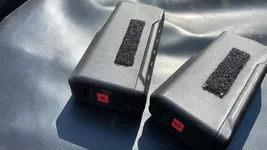
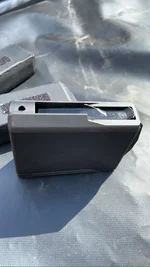
Loading the first round into the magazine can be fiddly, as you need to ensure it's on the correct side. I usually count my rounds as I load to get it right. Despite this, the magazine itself is very compact and has ample capacity for handloads.
For single-cartridge feeding, place the round slightly into the chamber to avoid hooking up; it is simple once you're aware of it.
I've equipped my S20 with a Leica Amplus 6 2.5-15x50i scope, which is a perfect match for handling knocks when hunting and providing clear sight up to 500 yards.
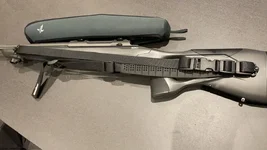
To keep the setup light, I opted for the lightest bipod I could find, the MNT Backcountry, and I run it unsuppressed. I even trimmed unnecessary parts off the sling to save every ounce.
For ammunition, I matched it to SAKO's loads, using SIERRA 6.5 MM 140 GR TGK GAMECHANGER projectiles over 40.5 grains of ADI AR2209 from White River.
And the 2-stage trigger is next level