Wild brown trout fishing Scotland query?

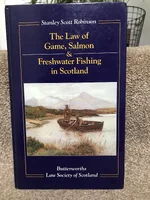
A good read with all the information you would need is

" The Law of Game, Salmon & Freshwater Fishing in Scotland" by Stanley Scott Robinson

As a lad, and later on in life I have always fished freshwater lochs without any bother and if signs indicate stocked or club facilities I have as a matter of course found out where and how to look for permission.

No point in ****ing folk off.

A different story where migratory fish such as salmon and sea trout are present and in that case I would be looking for permission first.

Cheers
Probably the best book on the subject out there 👍🏻

A62FEA5E-D394-4207-85F6-FBA3673C1960.webp
 
I’m not really a fly fisherman .. I can tie a fly on and thrash water with best of em on a stocked trout ponds …
Recently found a channel on YouTube
“Southside Flyfishing”
Where gent goes into wilds on small lochans etc ….
My query … this really appeals … what’s legality of this ? Surely need permission or permits ?
And as an aside what size / weight gear folk using for this ?
Cheers
Paul
Wild trout fishing is generally so cheap I usually pay for it.
Give me a call or invite me for a cuppa and we can discuss where you should go. Often catching wild trout is actually easier than rainbow fishing.
 
The club I am a member of in Devon, we own the fishing rights on one bank, for around 4 miles, it runs through NT and WT owned land, if the truth be known I suspect they would rather they owned it!
We rent another section of the NT, it gets more expensive each year, and will soon be out of our reach.

BTW, I'm typing this having just got in from a fruitless Sea Trout outing, it's 01:14!
 
A stank is an enclosed body of water with no natural inlet or outlet, like a fish pond, where the fish can not be said to live in a natural state.

A question that has haunted me for decades, as I have tramped past (what I now know to be) stanks.

How did the fish get there then?


eagbrxj05sx61.jpg :-|
 
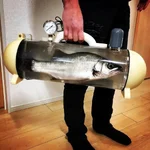
Funnily enough, you might be closer to the mark than you realise! @Stalker1962 ...... Many distant hill lochs were seeded with fry or small trout carried up in barrels/tubs on horseback - hence the widespread populations of Loch Leven strain trout. Fish have always been transferred legally and illegally, both by animals (roe on birds feet was always a favourite) and surreptitiously by anglers trying to "improve" stocks. I know of a couple of lochs that had fish carried up them in thermos flasks and buckets - obviously not now though with our strict transfer rules and regulations!
There is a large number of ruffe and roach in some lochs that were previously unused live bait (for pike etc) that were released at the end of the session which has caused a bit of ecological damage over the years, but humans have an unerring ability to find ways of moving creature around......
 
You might like to buy a copy of Bruce Sandison's Trout Lochs of Scotland- tells you where the main fishing lochs are, how to get there and whether you need permission and who to obtain it from. However it is truly a work of fiction as to what you might to expect to catch as i have found to my cost.

"Bruce Sandison confesses to being one of Britain¿s best-known purveyors of angling lies. His book The Trout Lochs of Scotland is described by his son as being "the finest work of angling fiction ever written".
 
Go in the local hunting, shooting, fishing, hardware, bakers... shop and ask. Someone will have the rights to the local loch you have just driven past and one of the shops will sell you a day ticket for not a lot of money. Don't forget your landing net, did I tell you about the one that got away.
You don't need a rod or game licence in Scotland if you are not targeting sea trout or salmon btw
You don't need them even if you are targeting salmon and sea trout.
Totally invalid point no matter what species you are fishing for.
 
Wild trout fishing is generally so cheap I usually pay for it.
Give me a call or invite me for a cuppa and we can discuss where you should go. Often catching wild trout is actually easier than rainbow fishing.
Used to go up the west coast for two weeks with the missus and fish a different place every day as we travelled and very cheap for sure.

Someone will usually help with info on getting tickets and when up to the old fellas static at Golspie the local hardware is always a gem for info on where to fish.Some of the local wee rivers can be handy for day tickets too although the chances of migratory fish have diminished a good bit these last few years.
 
Many distant hill lochs were seeded with fry or small trout carried up in barrels/tubs on horseback - hence the widespread populations of Loch Leven strain trout.
Loch Leven is a freshwater loch in Central Scotland covering over 3,700 acres (1,500 hectares) and is primarily known as a wild brown trout fishery.
All fishing for wild brown trout on the loch is “fly only” and must be done from a boat as there is no bank fishing permitted. The fishing is under the management of Loch Leven Fisheries which has a well-maintained fleet of modern, Coulam boats made from glass-reinforced plastic. All boats are equipped with outboard motors and life jackets.
All brown trout under 10 inches in size must be returned to the loch. There is no limit to the number of brown trout that can be landed by anglers but we would ask that anglers respect the fact that Loch Leven is a wild brown trout fishery and that they keep what they would like ‘for the pot’ but otherwise practice catch & release. The pink fleshed wild Loch Leven brown trout is delicious to eat and so anglers should have no concerns about taking some home with them to enjoy.
Check out out Instagram posts on the right hand side of this page to see photos of some of the fantastic catches made recently.
Background
Prior to the installation of the sluice gates and the lowering of the water level in the loch in 1830-1832, a large variety of different species of fish were to be found in the nutrient-rich waters of Loch Leven. Historical records suggest species such as atlantic salmon, trout (brown, grey, speckled and black head), charr, pike, eels and flounders were caught.
Once it became impossible for fish to run into the loch from the North Sea, the number of species has dwindled. Nowadays the predominant species is brown trout. Of the others, pike and perch remain and there are clear signs that numbers of both have recovered strongly since almost being wiped out in the later decades of the last century.
Many anglers consider the Loch Leven brown trout to be the perfect trout, both for its graceful form and for its sporting qualities. The species is classified as Salmo Levenensis and, when found in Loch Leven, is clearly distinguishable on account of its dark colouring and pink flesh. The wonderful quality of the trout owes much to the abundance of food which the loch affords.
Over the last 150 years, Loch Leven brown trout have been introduced to waters all over the world, from New Zealand to South America (and most places in between!). The first documented introduction of the Loch Leven trout to North America appears to have been made in Long Pond near St John’s, Newfoundland in 1884 and the species can now be found in every province except Prince Edward Island.
When introduced to other waters, Loch Leven trout interbreed freely with any other brown trout in the water and rapidly lose their distinguishing characteristics. This change in appearance also seems to occur even when there are no other species of brown trout present. The only place to see the trout in its true state is Loch Leven.
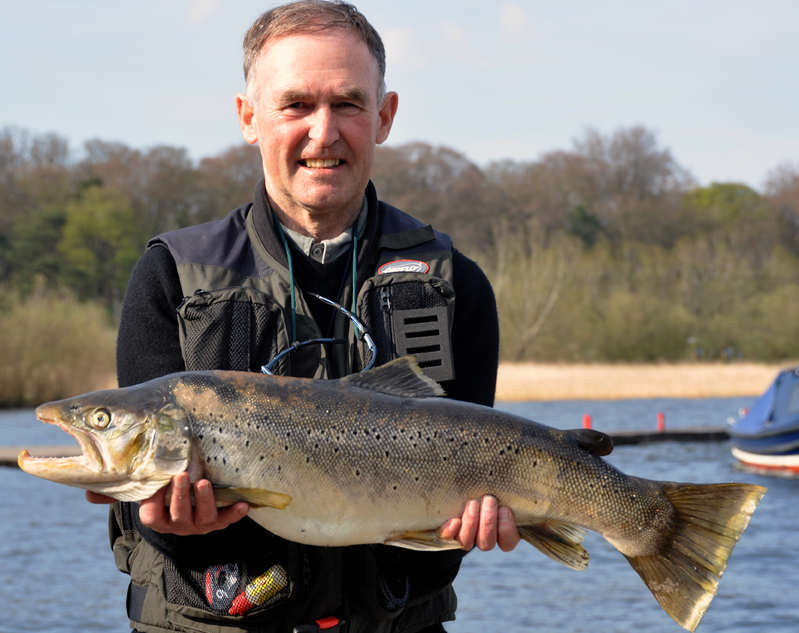
The loch itself does not produce very large fish with the average size of fish caught averaging around the 1.5 lbs mark. However, as the water quality has improved over recent years, so the size of fish being caught is undoubtedly increasing. Last year, trout weighing 6 lbs+ were caught fairly regularly during the main part of the season. The all-time record had stood at 9 lbs 13 ozs for almost exactly a century before being smashed in May 2013 by Alan Campbell with a specimen weighing 11 lbs 3.375 ozs.
Elsewhere in the world, the species has flourished in warmer waters in more temperate climates and have been known to grow to over 20 lbs. On Loch Leven itself, the indigenous brown trout make up for their relative lack of size against their foreign relatives with renowned fighting qualities.

A_Campbell_1r_3.jpg


Alan Campbell with the largest ever brown trout (11lbs 3.375 ozs) caught on Loch Leven in May 2013

 
If you want proper hill loch fishing you’ll want to consider Scourie or Assynt. Brownie heaven.

Tackle up well back from the loch and first cast over the ground to just drop your flies in the edge of the loch. Then gradually cast out from there. You’d be surprised how many times the first cast takes a fish.

Flies catch fisherman not fish. Anything black, red, silver. Zulu, kehe, Pennel, Peter Ross. Brownies are ravenous.

Decent leader though, some of ‘em are monsters.
 
Last edited:
Not the same as being able to fish there, I don't think.
Fishing rights can be retained by a previous landowner, just as shooting rights can, so owning the land or property alongside the watercourse doesn't necessarily make you the owner of the fishing rights. Only the owner of the fishing rights could give someone permission to fish the stretch of water.
In Scotland the riparian owner always has the riparian right and that includes fishing for all none migatory fish and the only right that can be retained is migatory fish rights, eg Salmon
 
Back
Top