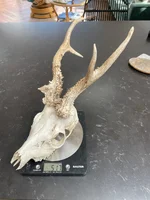
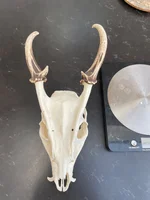
Thanks, the guy that does my heads has someone local so will probably go via him.I could measure them but do it through Basc no cost unless a medal then it’s £35 each
Forget about the scores - some really nice heads! Interesting shapes, slightly unusual.
Thanks.Forget about the scores - some really nice heads! Interesting shapes, slightly unusual.
It will likely be recessive, so hard to purge.Thanks.
The last couple of years there seems to be a prevalent 5 point gene as 80% of the mature bucks shot have had 5 points, I am now trying to see if I can shoot this out over the next couple of years by leaving anything with 6 points (top one is from a different area) and only shooting the 5s. Probably won't work as I have about 1800 acres over 3 farms but there is an estate in the middle that I have vermin, but not deer permission on, so will likely never remove them all, but it will be interesting to see what happens.
Interesting, what makes you think it will be a recessive gene?It will likely be recessive, so hard to purge.
However, by encouraging new males to move into the area, you'll increase heterozygosity, so reduce the expression of it. Easiest way to do that will be shoot hard to create gaps for males to move in from outside. Many of the 6 pointers you see will be carriers, so you may not gain much by leaving them.
That won’t do any harm, but remember, every buck came from his mother, and the genes he carries is also a product of her physiology - if say, mum’s great grandpa was a five pointer, she can pass on the genes. A more effective strategy would be to cull as many females as possible, over say five to ten years, as well as removing any five pointers seen, then hope some better genetically composed females turn up in the vacated areas.It will likely be recessive, so hard to purge.
However, by encouraging new males to move into the area, you'll increase heterozygosity, so reduce the expression of it. Easiest way to do that will be shoot hard to create gaps for males to move in from outside. Many of the 6 pointers you see will be carriers, so you may not gain much by leaving them.
I can’t be certain, but the vast majority of alleles that lead to sub optimal phenotypes are recent mutations, and those are usually recessive.Interesting, what makes you think it will be a recessive gene?
You’re absolutely right, though there’s a small technical error in your wording - genes aren’t a product of physiology. I think you meant ‘product of her genotype’.That won’t do any harm, but remember, every buck came from his mother, and the genes he carries is also a product of her physiology - if say, mum’s great grandpa was a five pointer, she can pass on the genes.
That was going to be my next question, so if it is carried on the female gene then managing the males for this, or any, antler characteristic is fairly pointless?You’re absolutely right, though there’s a small technical error in your wording - genes aren’t a product of physiology. I think you meant ‘product of her genotype’.
The broader point is extremely important and often forgotten by people trying to manage for heads/antlers: the females carry the genes for antler characteristics, but don’t express them. So trying to select for heads by selectively shooting males is missing a major part of the gene pool.
I think @VSS has made this point often, emphasising that if you’re a livestock farmer, you pay much closer attention to your females than your males.
That’s interesting.That won’t do any harm, but remember, every buck came from his mother, and the genes he carries is also a product of her physiology - if say, mum’s great grandpa was a five pointer, she can pass on the genes. A more effective strategy would be to cull as many females as possible, over say five to ten years, as well as removing any five pointers seen, then hope some better genetically composed females turn up in the vacated areas.
But I agree, not an easy thing to achieve.