Decreasing COAL and thereby increasing jump to the lands actually
reduces pressures and MVs. Contrary to common belief, deeper seated bullets increasing fill ratios to the point of charge compression doesn't increase pressures either, even at pretty brutal compression levels with extruded powders. (Anyone who has ever loaded 223 Rem with 77gn match bullets at the cartridge's SAAMI /AR-15 COAL of 2.26", or even much shorter 69gn bullets, for magazine operation is well aware of this as kernels audibly 'crunch' as the press is operated during bullet seating.)
There is a caveat here - charges of ball type powders shouldn't be heavily compressed for reasons I won't go into.
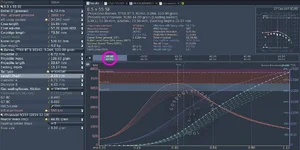
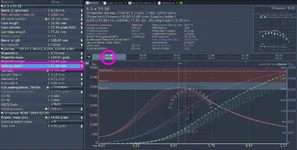
Internal ballistics programs such as QuickLOAD which show peak and overall pressures / MVs rising as COALs reduce are perfectly accurate as long as that COAL relates to the bullet ogive's position in relation to touching the rifling lands - eg the chamber itself only allows a COAL of say 2.900" in 6.5X55mm (compared to the 80mm/3.150" CIP Maximum COAL). However, if that same bullet is loaded to 2.900" giving a massive 250 thou' jump to the start of the rifling, pressures an MVs will reduce significantly, all other things being the same.
The reason for QL's apparent inaccuracies here is that as with all internal ballistics computation, a key input is combustion chamber volume of which that remaining inside the case with seated bullet is only part, albeit the major part. The key value however is that which applies when the bullet reaches the rifling and is either stopped dead, or at the least checked. It's the total amount of space (ie the active combustion chamber volume) behind the bullet that applies at that point that mostly determines PMax as the bullet will normally leave the case and reach the rifling before peak pressures are generated.
Note that this applies solely to rifle type cartridges and their relatively slow burning powders. Small capacity pistol and revolver cartridges employing fast burning powders are a very different animal and a bullet change that reduces remaining internal case capacity greatly can in itself be dangerous through producing a huge pressure spike. IIRC, this was an issue for the old Victorian era British service 450 calibre and WW1 .455 British revolver cartridges when handloaded. (They had a very short case compared to the US .45 Colt, .44 Special and other foreign equivalents.) This issue can still arise today in special / heavy bullet loadings of cartridges like the 9mm Para.
Returning to the rifle cartridges, especially the 19th century Mausers which were long-throated by design to handle very long, heavy RN FMJs as so well illustrated by
@CerebralDistortion with his pic a few posts earlier, many such rifles produce disappointing MVs when loaded with modern bullets in actual rifles (as opposed to pressure barrels used in ballsitics labs) using the loads listed in manuals or calculated by QL. This usually applies to an even greater degree when loading for well used military surplus examples, particularly 7x57mm service rifles, where original long freebore chambers dictated by the early 173gn RNFMJ service bullet allied to considerable throat erosion through use produces very disappointing MVs allied to low pressure signs (case sooting and suchlike) when using charges that may well be considerably above the recommended starting levels in manuals.
A second reason for lower pressures and MVs than expected in this short COAL / large jump scenario is the longer the jump the bullet makes before entering the lands, the less of a check those lands make on its velocity and acceleration. If the bullet clears the chamber / throat area quicker and moves down the barrel more smartly, the overall combustion chamber volume (case capacity + volume of space behind the bullet) increases much more quickly than with a heavily checked bullet that starts out with less jump. The extreme case is that of the 'jammed' bullet seated at a COAL that sees its shoulder heavily engraved by the rifling on chambering the round - the bullet so seated struggles to get moving down the barrel at all and only does so when pressure has already risen to a relatively high figure behind it through charge burn and then its initial acceleration is slower allowing a more rapid pressure build-up behind. QL acknowledges this through its instruction to increase the 'shot-start pressure' value considerably.
If you don't believe this, loading manuals and data sheets used to give actual examples in times past but for some reason or other have now dropped this except for the Norma Reloading Manual where there is a single sentence stating that deeper bullet seating will normally reduce pressure / MV without any supporting data from an example. Viht in an early loading data fold-out pamphlet gave an example of this using a standard 7.62mm NATO round in which examples had the bullet seated progressively deeper in identical steps (can't remember now of what size). The first three or four reductions produced no change in PMax / MV, the final (deepest seated) one a reduction.
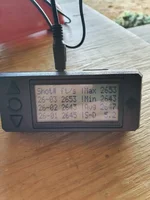
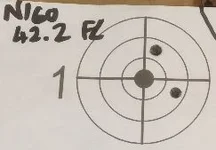
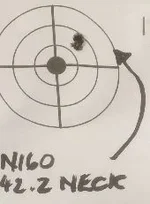
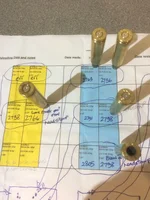
Anyone who does COAL seating tests (for grouping) over a reliable chronograph, all other factors the same (case / primer / bullet / powder and charge weight) will usually see this phenomenon. Here's one that I noted a year or two back trying to find a good COAL for the then new Sierra 183gn MK in 284 Winchester over Viht N165 where the charge weight had been worked up previously with the bullet barely touching the lands.
Base - original COAL 2.520 (C) just touching - 3 rounds ............. 2,738 fps Av / 13 fps ES
5 round deeper seated batches
2.500 (C)" ...................... 2,741 fps Av / 17 fps ES / 6.3 fps SD
2.490 (C)" ...................... 2,740 fps AV / 9 fps ES / 3.4 fps SD
2.480 (C)" ...................... 2,738 fps AV / 11 fps ES / 3.8 fps SD
2.460 (C) ........................ 2,728 fps AV / 12 fps ES / 5.9 fps SD
(COALs shown are obtained using a comparator and aren't actual COALs - so actual bullet positions are accurately changed by the amounts shown.)
So, a modest 10-12 fps MV
reduction through a 60 thou' deeper seated bullet. Conversely, running the shortest and longest versions through QuickLOAD calculates
increases of 20 fps MV and 2,091 psi PMax.