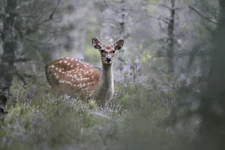
The Future of the "Old Victorian Style Stalking Estates"

The investment value of the asset is reason alone for many to continue with the traditional model of management, these sportings are what tend to interest those wealthy enough to buy their own corner of Scotland, a thing which is in precious short supply, in a Global marketplace that has been, and doubtless will continue to be bouyant.

Much of the changes of management come about when entities which can scarcely afford to invest the sums required to continue to run the estate on a more or less traditional manner try to hang on, when their better option was in fact to sell to the next widget magnate or dot com billionaire, who is prepared to spend the necessary to maintain and enhance the value of the asset. The places and the wealthy folk still exist, and no political party in the U.K. is advocating expropriation of legally owned land and assets; sure the small-minded policies of the Nationalistas do not endear themselves to struggling Lairds, but to those taking the longer view they represent small irritation overall. What tends to happen is that the better estates become more rather than less exclusive, as if you owned it yourself and were a passionate sportsman, why would you spend lavishly on the running of then place only then to offer the cream of the crop of the place for a relative trifle to a stranger?

For sure also, there are ways to generate meaningful income, such as wind- and hydro- electric schemes, which the Nats are all in favour of, which require money, land and water to be harnessed; these are useful income streams to bold and solvent owners, but often out of reach of eg third or fourth generation but comparatively impoverished owning interests, often people who do not share the passion for the hill that the original creator of the forest him- or herself possessed.

To enjoy a week-long or a season rental and stay in the lodge on a traditionally run highland sporting estate with all the facilities at your disposal will always be a most memorable experience; alas, it will never be readily as readily affordable as a day trip up some hill with a guide (as opposed to a full time hill Man) to shoot a single stag of indeterminate stature, but then to compare or conflate one with the other is somewhat missing much of what it is about.

There is plenty of demand still for top drawer places, in spite of the somewhat cloudy sky suggested, it may be worth considering which is the better route for the Country as a whole (in terms of inward investment in the local infrastructure, local businesses and service providers, versus selling off the assets available piecemeal).

No one answer is right or wrong, as different places have different Lairds, with different ideas and visions.

I am kind of worried about much of what you have said , I am not saying you are lying but it is also wrong to be in denial of what is going on .

Put aside the financial side of things for a second and look at the political and obligatory responsibilities that estate owners face by offering sporting within their current models.
When you change your business model from taking 10 high paying guests a year for exclusive sporting to running a family orientated holiday facility the marketing has to change and unfortunately the distaste of hunting in a family atmosphere is far too prevalent in the current political climate.

The reason why I am worried as I do not think those who are working in the industry are ready for the change, it is not just game keepers themselves but it is also their families that suffer. In the past gamekeepers families always lived with the knowledge that they might have to move at a moments notice, and bye the way I know this personally as that was my life, 13 primary schools and 7 High schools is living proof of this, from one estate to the other then from one farm to the other and that was in the 80's and 90's. There is little surprise that the industry we love so much has a heavy suicide rate, couple pressures with access to firearms and not being able to seek help for those pressures makes life very hard for those working in the industry.
We have already seen mass pay-offs, game keeping and stalking is not a guaranteed career, there is too many that rely on the tied facilities that come with it and in the past estates and landowners almost demand that you must take their tied facilities, this makes it hard for anyone in the industry under those circumstances to secure any future assets of their own, such as buying their own house, what makes it worse is that most Keepers and Stalkers have it in their head that they cannot do anything else so if paid off there is a long periods of unemployment and battling with 100's of other keepers for jobs.

I have fallen out with a few people over this prediction, and I am not surprised as it is hard to think that a career that was once inter-generational often being passed from father to son has possibly a very bleak future. New age Landowners (as rightly said in previous posts) do not have the historical attachment to their estates like the family run estates of the past, money and how money is made is the orientation for the new landowners and often staff loyalty is not high on their agenda.

One thing though I would so love to be proved wrong.
 
@Freeforester the main thrust of my (only half tongue-in-cheek) conspiracy theory was to highlight that if those sporting interests are destroyed then there is nothing left to interest those who have the money to invest and nurture Sporting Estates. Which self respecting billionaire is going to buy a few thousand acres of barren hillside to build a windfarm or hydroscheme? The only option then for an impoverished owner looking to cut his losses? The other great ScotGov magic-wand. Community buyout.

The following is an excerpt from a debate in the Scottish Parliament spoken by Roseanna Cunningham on the 21st March 2019:

"That the Parliament agrees that land is one of Scotland’s most important assets; recognises the value of the Scottish Land Rights and Responsibilities Statement in providing a framework for land decisions and land management in Scotland; recognises the close relationship between land ownership and land use; agrees that community ownership of land should be the norm and not simply a response to market failure or disputes with landowners; recognises the importance of the Scottish Land Fund in supporting community land and asset buyouts; recognises that the work of the Scottish Land Commission is making a positive contribution to delivering the Scottish Government’s land reform agenda, and agrees the importance of ensuring that land reform continues to be a key policy priority to change the entrenched and inequitable pattern of land ownership in Scotland so that everyone can benefit from land."

I think that it sums up the position of ScotGov rather neatly. It is not the Lairds that they hate, it is private ownership of land.

Unfortunately the SNP are in complete denial and either ignore the problems as it doesn’t fit their rhetoric or they are completely detached from reality (or a combination of the two). It has been proven that community buyouts tend to not work that well and end up costing the Scottish taxpayer money in both the short and long term.

As a taxpayer who is paying more than my counterparts in England I get incensed when the incumbent idiots at Holyrood, supported by their Green lapdogs throw more money at poor business decisions (Prestwick Airport/CalMac ferries etc etc) and other vanity projects.

If a private landowner wants to spend their money at a loss to manage estates (which a lot of them do) let them; I cannot fathom why the Scottish Government are so eager to spend money they don’t have to do the same but less effectively other than to garner votes whilst simultaneously reducing the likelihood of serious investment from out with the country.
 
The obligations and regulations you mention are equally applied to those who choose to manage their affairs in house or prefer to outsource the work. Quite since when the government of the day were in a position to dictate what is and is not acceptable concerning 'exposure' of families to hunting must have passed by this part of the parish. Perhaps those upset by the notion of tweed clad Victorian types traipsing over the hills in pursuit of their favoured quarry might pause to consider quite what urged the same breed to pour their wealth into the hills, glens, roads and houses, effectively creating the infrastructure of much of highland Scotland well before notions of what may or may not be considered politically acceptable; a touch hypocritical of the #me me generation?

Men of calibre are still being headhunted to help run sporting estates in Scotland by men of means. That there may be rather fewer than hitherto is not in dispute, but nor is their continued existence. That the current political climate is not encouraging such far-sighted, arguably altruistic inward investment is neither disputed. But that is not the same as declaring it an abomination or otherwise wrong, nor can they be fairly portrayed as a monolithic type of employer concerned solely with estate balance sheet considerations above human relations. Scotland as an investment opportunity is still in short supply, but there are still many who retain the hunting instinct inherent in most of us, some of whom are prepared to invest of their time, sweat and monies to enjoy and express this instinct.

The suffering you mention of gamekeepers and their families ... what may be the root cause of that, the encumbent Laird, or the current policies being promoted and propagated by the Heroes of Hollyrood? If it is true that the government are minded to exclude gamekeepers and their dependents from compensation payments available to other rural workers, would this not fall under the scrutiny of the European Court of Human Rights? Is anyone in the land above the Law?

It may be so too, that the gig economy will come to parts of the sporting scene, but what is a beater or a seasonal stalking ghillie, if not a worker in the gig economy, and how long has this been the case? Few jobs indeed are for life nowadays, that is for sure, and most are considered with merit being to the fore, usually ahead of hereditary expectations.

Your own experiences in the 80's and 90's as described seem to suggest that the question of staff loyalty (a coin of two sides) may not be a new phenomenon, nor one wholly absent in the good old days among the 'old guard', nor is it, I would suggest, the sole preserve of the new generation of landowning interests. If anything, employee and tenancy rights have strengthened in the past twenty years, no?

Ms Cunningham, and her vocal minority of those intent on shaking up the encumbent system are curiously less vocal when asked to 'show their workings' when it comes to the P&L sheet relating to their own pet projects and schemes. Doubtless once our current crisis abates, and they find themselves having to 'tighten the belts of their subjects' for yet another decade, they will lay the blame for the outbreak of the virus at the doors of Westminster, the same hand that denies them their determined wish to ignore the respected and considered decision of those in the country who prevailed at the time of the last "once in a generation" Independence referendum, the self-same Westminster that sees that the coffers of Follyrood are 'fair stappit' with a pro rata generous settlement each year. Like a pup, they affect to bite at the hand that feeds them, but all who care to look can see the ridiculousness of both their position, misguided 'reasoning' and also their ever-coming complaints chief among them, "If only we can break free of the shackles of Westminster.."

Who then pray, would foot the bill for their dreams of an acre or two and but 'n' ben for ilka "free man"?

Just because a man of independent means and determination can swim against the preferred run of the tide as dictated by the whims and pet ideologies of the 'here today, gone tomorrow' prevailing administration of the day, this does not by definition make him somehow wrong? There is no 'denying' that both paths are available to the landed interests, it only is determined by the core of the same individual landholding interests, and it may indeed be that the new, though as yet ill-defined vision as espoused by the present 'parcel of rogues' will prevail in the major part of the land; this is not however the same as having universal acclaim, adherence or indeed economic potential; a show of the accounts would clearly demonstrate which of the two models offers the better prospect for a soon to be anew-ly impoverished land.

We can all see what it is that is 'going on', but to equate that to the end of all traditionally based estate management principles and methods is premature.
 
I have dealt with an managed the deer on many estates over the past 33 years in Scotland. Times are changing these days. It goes without saying that to own even a modest Scottish Estate these days is not an easy task and almost certainly will cost more than the income reaped from it.
My experience has all been north of Inverness. The estates I have stalked on and been responsible for the deer management are Forest Farm (approx. 13,000acres) now called Croik Estate, and until fairly recently Amat Estate which adjoins Alladale and Deanich and Croik, 2 years also on Assynt at Lochinver.

I have over the years also stalked and leased deer of the following estates; Sutherlands, Glen Cassley, Inver Cassley, Morvich, Cambusmore, Castle Leod, Lairg to name but a few.
Many of these estates have changed hands on a number of occssions, most are now owned by overseas investors or families. The old style Victorian Estate is now a thing of the past as a rule. The cost of maintaining even a modest estate of 15,000 acres is expensive and almost impossible to make a profit from, in fact you would be lucky to break even. To this end one finds that a great many estates are owned by super rich individuals or companies. The over heads on just maintaining the buildings, and some of the grand lodges is huge. Many estates still let stalking on a daily basis, but they are becoming harder to find. Most want you to take the lodge and the stalking, with possibly some fishing in hand as well.

I still use and work with a number of estates in the highlands, and have one area that is privately leased by a good friend which I stalk on, this is surrounded by a further 40,000 acres that is now managed by a management business who I work with and stalk regularly with clients.

There is a great move to plant native hardwood forests in the highlands, and huge grant money being offered. Some estates have taken this up in a big way, and there is one overseas investor who apparently has bought about 5 estates just to plant trees and has eradicated most of the deer to do so. The political climate has also changed a great deal, and I have not heard or seen many Scots who voted for the SNP.

I am back up again this coming rut period in which it will be my 34th consecutive year in the highlands stalking. Its changed a great deal in this time, but only I feel in the last 10 or so years. Whether stalking will survive the future I dont know, I hope so, because it does make up a huge part of the economy in the highlands. Its a pity those in power dont recognise it. But then like all politicians they dont really care, except for themselves.
 
We can all see what it is that is 'going on', but to equate that to the end of all traditionally based estate management principles and methods is premature.

Another point of note linked to this is that while a large proportion of stalkers would love to be part of a syndicate on what was a traditional ‘Deer Forest’ it wouldn’t be long before decades of management in areas not renowned for great food sources in relation to ‘quality’ beasts (let’s be honest trophies) is ruined as everyone on that syndicate will want to flatten a royal or the biggest one they see.

Accompanied by the fact that a large proportion of these syndicate members will not be local and may only attend a handful of times a year the deer numbers will increase, I struggle to see how they won’t unless syndicates are so large people struggle to get out when they want to.

You then need to be careful what you wish for when the Scottish governments policy is to reduce deer numbers and you find the SNH has slapped a compulsory deer order on you and/or gets in a cull team to do the job before sending you the bill.

Whatever path you take someone will make money out of part of the process whether it is the current set up, a syndicate/sporting agent set up as suggested by the OP or a combination of same. One thing for sure is it won’t be the person paying to stalk so that will be about the only part remaining stable.

Another thing that people are quick to forget is the U.K. still provides some of, if not the cheapest guided stalking opportunities in Europe.
 
Last edited:
Another point of note linked to this is that while a large proportion of stalkers would love to be part of a syndicate on what was a traditional ‘Deer Forest’ it wouldn’t be long before decades of management in areas not renowned for great food sources in relation to ‘quality’ beasts (let’s be honest trophies) is ruined as everyone on that syndicate will want to flatten a royal or the biggest one they see.

Accompanied by the fact that a large proportion of these syndicate members will not be local and may only attend a handful of times a year the deer numbers will increase, I struggle to see how they won’t unless syndicates are so large people struggle to get out when they want to.

You then need to be careful what you wish for when the Scottish governments policy is to reduce deer numbers and you find the SNH has slapped a compulsory deer order on you and/or gets in a cull team to do the job before sending you the bill.

Whatever path you take someone will make money out of part of the process whether it is the current set up, a syndicate/sporting agent set up as suggested by the OP or a combination of same. One thing for sure is it won’t be the person paying to stalk so that will be about the only part remaining stable.

Another thing that people are quick to forget is the U.K. still provides some of, if not the cheapest guided stalking opportunities in Europe.

You only need take a look at countries where the hunting is 'socialised' to see how a race to the bottom ends, and rapidly.
 
One example that has crossed my path recently

SCOTTISH Forest and Land has made this years Snowman Rally the last ever rally . It costs the rally £400 a mile to lease but the FandL have decided to put more wind farms up .

I voted and will vote for SNP . Yes I do not agree with all their land policies but my reason for voting SNP is down to pure numbers. For over ten years the majority of Scotland has voted against the big two parties and still they hold soveriengty over Scotland. In the current system there is no democracy in regards to Westminster for Scotland and whether you like or dislike what I say the Tories ARE and will always be an anti Scottish party, 9 million people in London not to mention the other millions elsewhere vs 6 million in the whole of Scotland its just not a democracy with that kind of numbers. Scotland is different in so many ways we are worlds apart. So I will, like many others, vote SNP until we have independence then I will vote for the party that has Scotlands rural affairs at heart.

We all forget as far as politics goes shooters are a minority voting pool.

Anyways thats bye the bye. @sikamalc is right, this change has been more noticeable in the last ten years and many estates are turning to management groups to run their lands with only retaining minimal responsibilities for revenue.

At the moment yes I agree at what @Freeforester said some keepers will still exist but the job is becoming harder to get with more looking for work and looking into the future those jobs will be less and less.

Yes at the moment there is no government furloughing for keepers or those in the shooting industry and I am one of those effected, but, I will say this with the ecpect of backlash and those who sell stalking will agree, when our OWN community believe that making money selling deer stalking is wrong do you expect ANY difference from ANY government.

That my friends is a sad sad fact, we can be as supportive of countrysports as much as we like but until the community at which the industry supplies, understands that it is businesses that supply their sport it will always be looked at as a luxury recreational sport instead of it being looked at as an industry in its own right.
 
You then need to be careful what you wish for when the Scottish governments policy is to reduce deer numbers and you find the SNH has slapped a compulsory deer order on you and/or gets in a cull team to do the job before sending you the bill.

Would not be worried about this after what happened in Assynt (I'm sure @sikamalc has all the details, I'm only repeating what I read and heard).

Basically, SNH backed down from a compulsory deer order and was then told by the government that its powers regarding this would not be increased as a lot of errors were made.
 
I know that fairly recently the Assynt foundation had somewhat of a disagreement with the John Muir Trust. I also know that the last 500k was given to the Assynt foundation by them, which helped the foundation secure the estate.
We started culling in September, after joining the Assynt Committee in June when they celebrated the purchase. In fact I invited them all to a celebration dinner at the Inchnadamph Hotel outside Lochinver on the following day of their celebration on securing the estate. At the time Stackpolly at the far end of the 44,000 odd acres was already being culled by a local guy. Not I believe to great effect, as July and August the stags are in batchelor herds and high.

The historical annual cull was 200 head, if I remember rightly. I had organised 8 stalkers and the foundation also semi employed a local guy to help out and show us the area. Learning the ground straight out the gate on 40,000 acres was not going to be easy, it would take almost a lifetime. We managed to cull and retrieve some 182 head the first year, followed the second year by 186. We didnt leave one beast out, as the foundation needed the income, and that was all they were going to get for the foreseeable future.
After two years they employed an estate manager and started to put together an employment base for local people, which was badly needed for the local area. One or two of us carried on helping out for a year or two after the initial 2 year period. They have gone through a few managers since I believe!

Trouble is the whole community is the boss, so to speak. I read fairly recently that the lodge, which I am also very familier with has been used more or less like a meeting place for the locals. Drinking and some drug taking has been reported on the premises. I also read that the John Muir Trust wanted more deer shot? nothing changes there!

I have not been back for sometime, my energies and management were needed else where on another estate I was managing.

In the first year on Assynt I did bring over some overseas clients, mostly Americans for the stags. I must say the locals rallied round and managed to cobble together some furniture for the lodge, and it was workable. I made a considerable donation at the time to the foundation as it seemed only right. I was told by Bill Ritchie, one of the main players in the foundation that a plaque was going to be put up in the hall with all those names who financially contributed to the purchase.

Somehow I doubt that happened, not that I am over bothered. However it seems to me that the estate has seen and possibly is still seeing some troublesome times. I hope this is sorted as it is a great asset for the local community. I am also thank full for the wonderful but hard stalking I and my colleagues had on there over the two years. With 3 iconic Munroe's on the estate it is one of the wildest areas I have had the privelage to stalk deer on in Scotland.Bill finch 2007 hunting photos 019.webp

Picture of the famous Munroe Suilevan (probably wrong spelling) taken from the front lawn of the lodge. its about 7 miles to the base of it.
 
Last edited:
My good lady struggles with the animal deaths part of country life. If she had her way it would be humans that made space for animals. That aside she, as myself, is convinced that wildlife will inevitably suffer if the traditional estates are forced to break up. She refers to them as wildlife oases. It does seem inevitable, but terribly sad, that the skills of traditional gamekeepers will be lost. Just as we lost the skills of traditional agricultural workers, who would plough around ground nesting birds, with the full support of the land owners, once the business model of agriculture became largely corporate and left countryside management in its wake.
 
Would not be worried about this after what happened in Assynt (I'm sure @sikamalc has all the details, I'm only repeating what I read and heard).

Basically, SNH backed down from a compulsory deer order and was then told by the government that its powers regarding this would not be increased as a lot of errors were made.

There is a lot of politics both locally and nationally with community buyouts and I’m yet to see a successful one.

Errors made or not I’m sure the SNH just did what they were told by their masters at Holyrood as the SNP will not lose face over a ‘flagship policy’ under any circumstances - like the millions they continue to plough into Prestwick airport every year even though it is still loss making.

The bottom line is when you have different groups attempting to achieve different goals in a relatively small geographical area it is going to cause conflict. However I would suggest that deer issues would only be exacerbated if there were more people involved in the ‘management’ of areas.
 
I know that fairly recently the Assynt foundation had somewhat of a disagreement with the John Muir Trust. I also know that the last 500k was given to the Assynt foundation by them, which helped the foundation secure the estate.
We started culling in September, after joining the Assynt Committee in June when they celebrated the purchase. In fact I invited them all to a celebration dinner at the Inchnadamph Hotel outside Lochinver on the following day of their celebration on securing the estate. At the time Stackpolly at the far end of the 44,000 odd acres was already being culled by a local guy. Not I believe to great effect, as July and August the stags are in batchelor herds and high.

The historical annual cull was 200 head, if I remember rightly. I had organised 8 stalkers and the foundation also semi employed a local guy to help out and show us the area. Learning the ground straight out the gate on 40,000 acres was not going to be easy, it would take almost a lifetime. We managed to cull and retrieve some 182 head the first year, followed the second year by 186. We didnt leave one beast out, as the foundation needed the income, and that was all they were going to get for the foreseeable future.
After two years they employed an estate manager and started to put together an employment base for local people, which was badly needed for the local area. One or two of us carried on helping out for a year or two after the initial 2 year period. They have gone through a few managers since I believe!

Trouble is the whole community is the boss, so to speak. I read fairly recently that the lodge, which I am also very familier with has been used more or less like a meeting place for the locals. Drinking and some drug taking has been reported on the premises. I also read that the John Muir Trust wanted more deer shot? nothing changes there!

I have not been back for sometime, my energies and management were needed else where on another estate I was managing.

In the first year on Assynt I did bring over some overseas clients, mostly Americans for the stags. I must say the locals rallied round and managed to cobble together some furniture for the lodge, and it was workable. I made a considerable donation at the time to the foundation as it seemed only right. I was told by Bill Ritchie, one of the main players in the foundation that a plaque was going to be put up in the hall with all those names who financially contributed to the purchase.

Somehow I doubt that happened, not that I am over bothered. However it seems to me that the estate has seen and possibly is still seeing some troublesome times. I hope this is sorted as it is a great asset for the local community. I am also thank full for the wonderful but hard stalking I and my colleagues had on there over the two years. With 3 iconic Munroe's on the estate it is one of the wildest areas I have had the privelage to stalk deer on in Scotland.View attachment 156471

Picture of the famous Munroe Suilevan (probably wrong spelling) taken from the front lawn of the lodge. its about 7 miles to the base of it.

I stayed at Assynt Lodge about five or six years as a guest of some friends who had taken it for a week. It was comfortable and with a good local cook - but she was clearly unhappy with the overall management. The stalker was around and he took a group of German clients out. One of my friends wanted to go stalking so I took her across to JayB's ground and we had fun day of catch and release type stalking - ie all shootable beasts were either out of range, or sitting just across the boundry. Sadly she died at the end of last year from a brain tumour.

There is still plenty of interest in owning Scottish Lands. With the advent of wind turbines an estate can be a very good income earner. Others want to focus their efforts on planting trees etc. Some still enjoy them as sporting estates. I know one family very well who used to own the estate next door to where Sika Malc used to stalk. He used to call it his hole in the heather and reckoned he put £1 to £2m into it a year. Now he has sold all his shares in the ownership company, but still goes up there - he is delighted - he can have two or three weeks a year up there for c£20,000 to take the whole lodge for hiimself - it does sleep 12.
 
Last edited:
I can not agree with some of the opinion voiced here.

The SNP will do incalculable damage to Scotlands rural prospects before they are finished. Sadly the chances of getting rid of them are remote. Scotland will always be dictated to by the urban central belt, most of whose politicians are not in the least bit interested in the rural population, and even less interested in finding out. Independence under the SNP will only accelerate the damage they will do to us. As far as land ownership is concerned they are little short of marxists. Not a happy prospect at all.
 
One thing that makes me sad about Scotland is that the country was full of people and its now denuded of people - lots of historical reasons I agree. Tourism is nt the answer, but is an answer, but the countryside should be vibrant and self sufficient. Yes it is mountainous and forested terrain but I have seen similar landscapes elsewhere in the world and there are lots of locals doing lots of things to earn a living.

So for example basic buildings - look at any house constructed in the highlands. All built from kit built houses trucked in and yet you have have lots of timber and stone all within easy reach. Small saw mills, even portable mills readily available and affordable and no reason why local timber cannot be used along with local stone for foundations etc.

Yes local timber may be faster growing than imported pine and thus you need to increase the size of the beams - but that doesn't really matter. So rather than having a house built of imported and trucked in kit with timber frame and chipboard panels etc, build it from local timber with timber cladding etc as they do elsewhere, and using local people to do the local jobs etc. In many parts of the Alps they say that you should be able to see the woods from which the house was built, from the the house.

And you can say the same about the food and etc etc etc........

For far too long Scotland has been kind of mothballed into a place not really for people to live, and the latest generation of owners are reinforcing this even more. And many of the owners are public sector and large corporations. Think of the bull**** you have to endure to be allowed to built a small wooden one room cottage up is say the lost valley in Glencoe or up on Assynt, or Torridon - somewhere were a farmer could take his cattle during the summer with a portable milking parlour and stay up there whilst his cattle grazed and could be milked and producing cheese. I sat and drank shnapps with a farmer doing exactly this in the high Austrian Alps with a similar climate and temperature to the mountain pastures of say Torridon or Glencoe. And he produces high quality hand made cheeses up there thats sell for tens of € a kilo, and whilst he is not rich he has certainly a good sustainable living, and he takes his cattle down indoors during the winter and has other jobs as well. And the owner of the estate - about 1,500 ha is very happy to let the farmer graze his cattle - and they go right to the tops of the mountain, because the keep the grass very good which is superb for the Red Deer, which produces trophies that German and Austrians are happy to pay €5 to 10,000 a head for.
 
Think of the bull**** you have to endure to be allowed to built a small wooden one room cottage up is say the lost valley in Glencoe or up on Assynt, or Torridon - somewhere were a farmer could take his cattle during the summer with a portable milking parlour and stay up there whilst his cattle grazed and could be milked and producing cheese. I sat and drank shnapps with a farmer doing exactly this in the high Austrian Alps with a similar climate and temperature to the mountain pastures of say Torridon or Glencoe. And he produces high quality hand made cheeses up there thats sell for tens of € a kilo, and whilst he is not rich he has certainly a good sustainable living, and he takes his cattle down indoors during the winter and has other jobs as well. And the owner of the estate - about 1,500 ha is very happy to let the farmer graze his cattle - and they go right to the tops of the mountain, because the keep the grass very good which is superb for the Red Deer, which produces trophies that German and Austrians are happy to pay €5 to 10,000 a head for.

While there are some similarities in climate and even topography between upland Scotland and the Alps I think the soil quality present in the latter is the main driver for the type of farming that goes on there.

My Austrian friend has a farm and herd of dairy cows (and a few superb red stags resident) which he farms as you describe at various altitudes through the season. Having been up to the high ground in late summer on his farm the difference between the quality of feed available are chalk and cheese compared to any upland areas of the same altitude I’ve experienced in Scotland.

There’s nothing quite like having your milk straight from the milka coo’ in your morning coffee for sure!!

I do however fully agree with a lot of your points regarding not being more self sufficient which is probably more to do with cost and instant availability.
 
Apparently during the 1920s and the Great Depression many estates in the English Midlands to give the local unemployed men work (who were not normally employed on the estate) built walls around themselves. Or at least that is the story told at some places.
 
Tulloch, I can't understand how someone who appears to be so sensible can have such a weird view of Westminster democracy. By head of population Scotland has more MPs than England does. Scotland gets more financial aid per head of the population than England does. Doesn't sound like a very effective form of non-democracy or hatred to me.

David.
 
My experience has all been north of Inverness. The estates I have stalked on and been responsible for the deer management are Forest Farm (approx. 13,000acres) now called Croik Estate, and until fairly recently Amat Estate which adjoins Alladale and Deanich and Croik, 2 years also on Assynt at Lochinver.

Fished Amat a couple of years ago - what a cracking estate that is. The river was low but it meant I could film salmon leaping at Glencalvie falls.

Plenty of deer too, even down by the river.


4D7424AA-6961-4BD0-8D2D-0A43CBCD84A3.webp
 
One thing that makes me sad about Scotland is that the country was full of people and its now denuded of people - lots of historical reasons I agree. Tourism is nt the answer, but is an answer, but the countryside should be vibrant and self sufficient. Yes it is mountainous and forested terrain but I have seen similar landscapes elsewhere in the world and there are lots of locals doing lots of things to earn a living.

So for example basic buildings - look at any house constructed in the highlands. All built from kit built houses trucked in and yet you have have lots of timber and stone all within easy reach. Small saw mills, even portable mills readily available and affordable and no reason why local timber cannot be used along with local stone for foundations etc.

Yes local timber may be faster growing than imported pine and thus you need to increase the size of the beams - but that doesn't really matter. So rather than having a house built of imported and trucked in kit with timber frame and chipboard panels etc, build it from local timber with timber cladding etc as they do elsewhere, and using local people to do the local jobs etc. In many parts of the Alps they say that you should be able to see the woods from which the house was built, from the the house.

And you can say the same about the food and etc etc etc........

For far too long Scotland has been kind of mothballed into a place not really for people to live, and the latest generation of owners are reinforcing this even more. And many of the owners are public sector and large corporations. Think of the bull**** you have to endure to be allowed to built a small wooden one room cottage up is say the lost valley in Glencoe or up on Assynt, or Torridon - somewhere were a farmer could take his cattle during the summer with a portable milking parlour and stay up there whilst his cattle grazed and could be milked and producing cheese. I sat and drank shnapps with a farmer doing exactly this in the high Austrian Alps with a similar climate and temperature to the mountain pastures of say Torridon or Glencoe. And he produces high quality hand made cheeses up there thats sell for tens of € a kilo, and whilst he is not rich he has certainly a good sustainable living, and he takes his cattle down indoors during the winter and has other jobs as well. And the owner of the estate - about 1,500 ha is very happy to let the farmer graze his cattle - and they go right to the tops of the mountain, because the keep the grass very good which is superb for the Red Deer, which produces trophies that German and Austrians are happy to pay €5 to 10,000 a head for.

You just cannot compare The Alps with Scotland....apples and oranges.

The climate is hugely different....which is why the tree line is several thousand feet higher in the Alps than it is in Scotland, and why the deer on the continent grow far bigger horns. Scotland is more of an arctic climate than a continental climate.

Moving beasts up and down hill with the seasons....transhumance...was indeed practised in Scotland many years ago, hence the summer shelings, but I'm afraid that was to support a subsistence existence...the thought of being able to milk cows and make cheese on the hill in Torridon or Glencoe in our summer is not attractive!
 
Back
Top