
Get the series 3 avoid 1 and 2Unless you're sensitive to chromatic aberration. Khales is known for having a bit of that in many of their scopes (and I have seen it first hand, many times). But yes, I'm very sensitive to CA; drives me nuts (most likely due to my slight astigmatism, or so I was told by an optometrist).
You are using an out of date browser. It may not display this or other websites correctly.
You should upgrade or use an alternative browser.
You should upgrade or use an alternative browser.
Scope recommendations
- Thread starter bunnybuster
- Start date

Really? Get a different first focal scope. Like the Kahles mentioned above.Get a scope with the reticle in the 2nd focal plane:
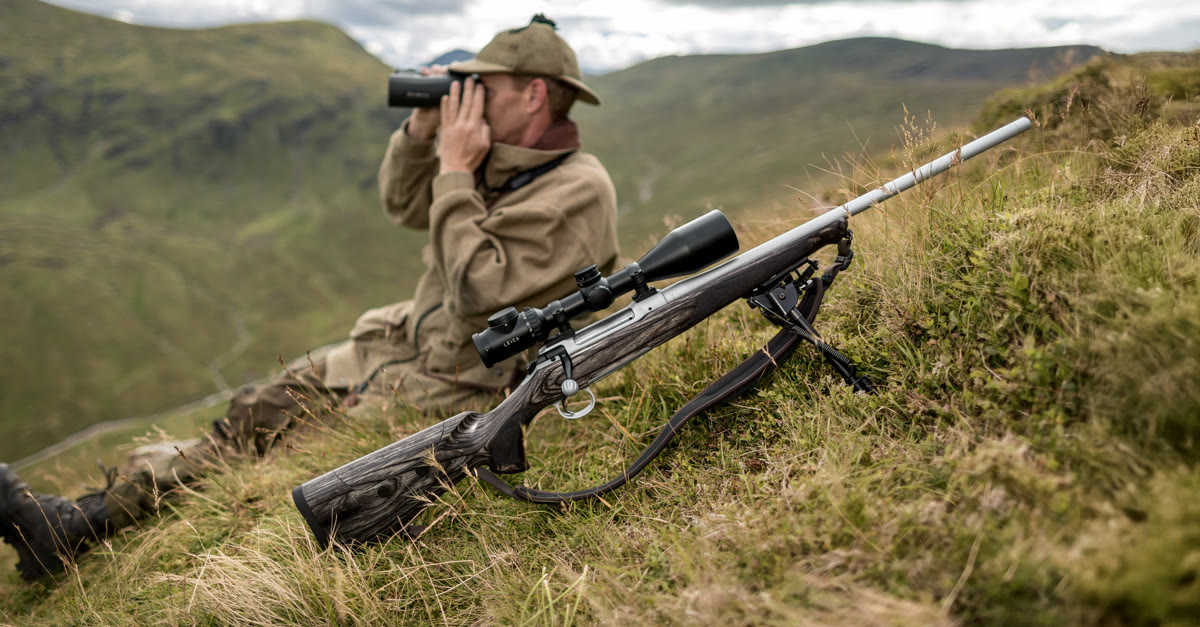
Leica Magnus i - Overview | Leica Camera UK
leica-camera.com
K
If you are going to dial and hold then ffp is a huge advantage in something as dynamic as stalking. If that is your chosen way of shooting of course.

Steff
Well-Known Member
His Swaro Z5 HAS a SFP reticle. The problem occurs when people turn on the illuminated dot even at bright sunlight. This is meant for close quarters on moving game or low light but not for longer range precision shots.Get a scope with the reticle in the 2nd focal plane:
Leica Magnus i - Overview | Leica Camera UK
K
billy_boyle_2010
Well-Known Member
The 4.5-30 Elite is a good shout for around £350 but be aware it really struggles after 20x mag. In my opinion the 4-24 Delta walks all over it with a better reticle and illuminated centre dot.
Yup agreed- although I found the 6500 was OK up to 25x or so.
So a 6500 at 24x vs a delta maxxed out at 24x would be an interesting comparison. You could spend £350-400 on the elite and sell it on with a £50 loss easily enough. The 24x delta is v rare though and I'm guessing would cost near double the elite second hand.
Not had a chance to look through a 24x Delta- would like to!
I have one which is on a rifle I might be moving on. I might sell the scope depending on what rifle/usage I replace the old one with. I tend to use NV add ons, so the Delta's are awesome but if I go back to a dedicated NV scope like a C50, the Delta would probably have to go as it is too expensive for me to have sitting in a box.Yup agreed- although I found the 6500 was OK up to 25x or so.
So a 6500 at 24x vs a delta maxxed out at 24x would be an interesting comparison. You could spend £350-400 on the elite and sell it on with a £50 loss easily enough. The 24x delta is v rare though and I'm guessing would cost near double the elite second hand.
Not had a chance to look through a 24x Delta- would like to!
I have had the older Delta non HD 4.5-30x50 scope which is basically the older Bushnell and the Delta is much much better. The reticle would slightly blur out on higher mag over 20 on the older scope and the picture would get fussy on any magnification beyond 20. It was still a decent scope but not close to the Delta in terms of overall optical quality which is easily better at last light, much better eyebox and usable throughout the entire mag range.
The 3-24x50 HD will mag up all the way to x24 max without issue. Yes the eyebox will get tighter on the top range of magnification but that is the same with all high mag scopes, even the very best. It just tends to minimise the more you spend.
If you want a capped turret higher mag scope with unfussy ret and really good illumination, I don't think you can get better in that price range for a hunting scope that will allow you to take medium range shots out to 500yds on informal targets.
Your other option might be a Delta Stryker HD. I had one of those in SFP flavour which was 5-50x56. For the range of magnification, that scope was an extraordinary feat of optical engineering in terms of a usable mag range without making the scope fussy to use. Certainly it was fine up to about x 45 mag and only beyond that did you start seeing a compromise in ease of use. At night, you could see hares at 500yds on x45 mag through my NV add on in really good detail.
I always regretted selling that scope but they are very heavy which is the main reason why I moved it on. It was just overkill for my needs.
Take a look at a zeiss V4 6-24x50.
You say you want capped turrets but if you want to shoot paper at the ranges you mention then a scope with a elevation turret would be better. The zeiss turret is quite a low profile with a zero stop and the scope is quite light and compact for the mag range.
You can get the zeiss with the elevation turret and capped windage turret as well.
I have a high mag scope on my stalking rifle as I also like to shoot paper and steel at longer ranges as well.
For hunting at longer ranges I don't think I have ever used it above 14 or 15 power.
You say you want capped turrets but if you want to shoot paper at the ranges you mention then a scope with a elevation turret would be better. The zeiss turret is quite a low profile with a zero stop and the scope is quite light and compact for the mag range.
You can get the zeiss with the elevation turret and capped windage turret as well.
I have a high mag scope on my stalking rifle as I also like to shoot paper and steel at longer ranges as well.
For hunting at longer ranges I don't think I have ever used it above 14 or 15 power.
bunnybuster
Active Member
I’ve stretched the budget and gone for a Swarovski z6i 5-30x50 with ballistic turret.
Looking forward to getting it mounted and going out to play!
Looking forward to getting it mounted and going out to play!
billy_boyle_2010
Well-Known Member
Wow lovely!!! Enjoy!
Let us know how you get on- whether you use the full mag range or tend to stick to a certain level most of the time
Let us know how you get on- whether you use the full mag range or tend to stick to a certain level most of the time

hybridfiat
Well-Known Member
Get a 2nd Focal Plane if you are hunting, because I cannot ever remember a time when the quarry stood still long enough for me to calculate the range and then work out which crosshatch to use.
I have the rifle and scope sighted to rise no higher than the vital area and drop no further than the vital area within a set range parameter that:
a) I am comfortable shooting at.
b) That I expect to see my quarry.
So for a fox that means 1.5" high and 1.5" low and a max range close to 300m.
It also means that if I am on a low setting the crosshairs are not invisible and at max setting they don't cover the target.
Use a second focal plane if you are target shooting as you already know the range and have time to dial it up the using the turret.
Use a FFP if you are doing some old fashioned sniping and have to calculate range using your milradians and a knowledge of the height of the average man, the height of a soviet truck's wheels or the length of commonly used bricks and besser blocks. (I have used this on kangaroos as their chin to ear tip is pretty much the same regardless of sex and age. Used to euthanise roos stuck in the mud of a huge tailings dam).
No-one in a modern army does that any more they use laser ranging and self setting scopes.
FFP used to be more robust too as the early models have moving reticles, but that is a thing of the past also, all good scopes are robust now.
I have the rifle and scope sighted to rise no higher than the vital area and drop no further than the vital area within a set range parameter that:
a) I am comfortable shooting at.
b) That I expect to see my quarry.
So for a fox that means 1.5" high and 1.5" low and a max range close to 300m.
It also means that if I am on a low setting the crosshairs are not invisible and at max setting they don't cover the target.
Use a second focal plane if you are target shooting as you already know the range and have time to dial it up the using the turret.
Use a FFP if you are doing some old fashioned sniping and have to calculate range using your milradians and a knowledge of the height of the average man, the height of a soviet truck's wheels or the length of commonly used bricks and besser blocks. (I have used this on kangaroos as their chin to ear tip is pretty much the same regardless of sex and age. Used to euthanise roos stuck in the mud of a huge tailings dam).
No-one in a modern army does that any more they use laser ranging and self setting scopes.
FFP used to be more robust too as the early models have moving reticles, but that is a thing of the past also, all good scopes are robust now.

Each to his own and as considered best for the task at hand.Really? Get a different first focal scope. Like the Kahles mentioned above.
If you are going to dial and hold then ffp is a huge advantage in something as dynamic as stalking. If that is your chosen way of shooting of course.
K

I would have to say for shooting deer ( down to the size or Roe) 12x is more than enough magnification ! Indeed the fixed 8x56, 7x50 and 6x42 have not had a point of dominance though all stalking for no good reason.
By going bigger we add weight, balance , expense, smaller field of view, parallax errors, A 300 yard shot at a 4" ( roe sized perfect hart /lung shot, 6-8" with a red) with a 6x -8x presents just fine and gives the added advantages of faster Aquisition and better situational awareness , no real need to adjust parallax, good brightness / low light performance , less bulk & weight, cheaper cost .
Sure the grouse moor keeper might be better off with a high mag target scope for dealing with longer shots on smaller targets , the long range target shooter certainly so ! A stalker trying to settle their breathing ? who likely shoots the vast majority of beasts under 200 yards , with an odd 300 yard or more ? Think of magnification as " times closer" rather than just a number ie eight times closer , seven times closer ,six times closer , if you then think of open sights of real quality .... could you define and hit the kill zone ? remember also that magnification multiplies the movement you see in the aim point ( which is good when your settling into a longer range prone shot , not so great when free-handing or off sticks for a quick close shot )
By going bigger we add weight, balance , expense, smaller field of view, parallax errors, A 300 yard shot at a 4" ( roe sized perfect hart /lung shot, 6-8" with a red) with a 6x -8x presents just fine and gives the added advantages of faster Aquisition and better situational awareness , no real need to adjust parallax, good brightness / low light performance , less bulk & weight, cheaper cost .
Sure the grouse moor keeper might be better off with a high mag target scope for dealing with longer shots on smaller targets , the long range target shooter certainly so ! A stalker trying to settle their breathing ? who likely shoots the vast majority of beasts under 200 yards , with an odd 300 yard or more ? Think of magnification as " times closer" rather than just a number ie eight times closer , seven times closer ,six times closer , if you then think of open sights of real quality .... could you define and hit the kill zone ? remember also that magnification multiplies the movement you see in the aim point ( which is good when your settling into a longer range prone shot , not so great when free-handing or off sticks for a quick close shot )
My Swarovski 5-25x56i is on my 3006, and I am very content with the combo.
BC.
BC.

Muntybuck5803
Well-Known Member
I’ve got a few different types of scopes, mostly Schmidts and I do like a good bit of mag from time to time to confirm condition of distant deer before stalking.
However my favourite scope at the moment is a little Leica ER 3-14x42 which is light enough with good glass quality to not really have many downsides (apart from being MOA ballistic turrets which is not my preference).
Very clean duplex SFP reticle too.
I think as long as you’re content with the downsides of high mag heavy scopes there’s not much to complain about.
I used to have a Z5 3-18x44 and really wish I’d never sold it. Cracking compromise of weight/mag/quality.
However my favourite scope at the moment is a little Leica ER 3-14x42 which is light enough with good glass quality to not really have many downsides (apart from being MOA ballistic turrets which is not my preference).
Very clean duplex SFP reticle too.
I think as long as you’re content with the downsides of high mag heavy scopes there’s not much to complain about.
I used to have a Z5 3-18x44 and really wish I’d never sold it. Cracking compromise of weight/mag/quality.

WIth respect, I disagree with your logic. Not being able to remember come ups/hash marking is a byproduct of not training/practicing enough, and has nothing to do with the capability of the scope.Get a 2nd Focal Plane if you are hunting, because I cannot ever remember a time when the quarry stood still long enough for me to calculate the range and then work out which crosshatch to use.
I have the rifle and scope sighted to rise no higher than the vital area and drop no further than the vital area within a set range parameter that:
a) I am comfortable shooting at.
b) That I expect to see my quarry.
So for a fox that means 1.5" high and 1.5" low and a max range close to 300m.
It also means that if I am on a low setting the crosshairs are not invisible and at max setting they don't cover the target.
Use a second focal plane if you are target shooting as you already know the range and have time to dial it up the using the turret.
Use a FFP if you are doing some old fashioned sniping and have to calculate range using your milradians and a knowledge of the height of the average man, the height of a soviet truck's wheels or the length of commonly used bricks and besser blocks. (I have used this on kangaroos as their chin to ear tip is pretty much the same regardless of sex and age. Used to euthanise roos stuck in the mud of a huge tailings dam).
No-one in a modern army does that any more they use laser ranging and self setting scopes.
FFP used to be more robust too as the early models have moving reticles, but that is a thing of the past also, all good scopes are robust now.
As to the second highlighted response; this is completely false. SFP scopes have historically always been more reliable simply because there are less lenses and mechanical components that have to fit inside the scope tube. Only until the past 10 years or so, have FFP scopes come close the ruggedness of a SFP (nevermind a non-variable) scope, though usually at the cost of weight (but there are now many that come close to the weight of SFP scopes).
As to ranging and calculating, that is typically done via a BT enabled pair of LRF binos to either a scope or a Kestrel these days, which spits out the corrections within seconds. Nevermind that if someone trains with a FFP scope, they typically either know their come ups by memory, or have it written down on an armboard (which is just prudent for obvious reasons).
Besides, for hunting, with most modern cartridges, the come ups for a reasonable distance, hunting shot, is usually within 1.5 mils of zero, so you don't have to remember that many come up values for holding with the reticle.
Finally, the main strong point of a FFP scope, especially one with a "Christmas tree" reticle, is that a shooter can reliably and extremely accurately, hold for wind. Even at close ranges, in strong winds, your shot can be pushed off it's mark easily. Being able to hold for wind and elevation makes FFP scopes far superior IMHO for hunting. But you have to understand, practice and train with the tools you intend to hunt with, or you're no better off than the so called "fudd" that thinks minute of paper plate suffices for a zero.
I'm always amazed when people disparage hunting with a FFP scope, when in their comments, it becomes pretty obvious it has nothing to do with the scope, but rather their ignorance or lack skill to utilize a FFP scope with a mil reticle to its full potential. i.e. It has more to do with the shooter, rather than the optic. It is why we have hold over stages in competitions; it forces you to use the reticle as well as gain confidence in the reticle. Which in turn makes the shooter more effective in the real world, where shots need to happen in seconds, not minutes.
There's a reason there has been a huge increase in the purchase and use of FFP scopes for hunting, and it not just because the prices have come down, or that there are many, many more options cost effective these days. It's because (IMHO) more of the shooter community has become educated enough, and train enough, to use a FFP. Because it increases their effectiveness with a rifle.
ETA: The more pertinent question IMHO, is why wouldn't you hunt with a FFP scope; especially when hunting from a high seat or in some type of "overwatch" type position? FFP scopes are tailor made for that type of engagement. Coupled with a range card of the area, with TRP's (Tactical Reference Points), a FFP scope allows a shooter to be extremely fast and effective at sending bullets down range accurately on to a target/animal. Far more accurately than using a simple SFP duplex reticle and holding off "about this much" in windage and elevation.
Last edited:

With regard to using a graduated reticle being pointless, consider this scenario…. I stalked in to a group of four hinds and took the first shot at 150m. The calf fell and the remainder scattered in a loose group not knowing which direction the shot came from. The next target was at 200m which pushed the third hind to just under 300m. By using a first focal plane mil dot scope and knowing the trajectory the compensation for every 50m (up to 350m) was known to be 0.3 milradians per 50m range above 150m, the first shot is dead on the crosshairs, the second was 0.3 milradians higher and the third is 0.6 milradians high. All good accurate chest shots that killed each deer within a few feet of where they stood and all taken within a few seconds of each other. No twiddling turrets or faffing around, just a range being communicated effectively from the stalker laid next to me. It’s all about knowing how to use the gear effectively!

This ^^^^With regard to using a graduated reticle being pointless, consider this scenario…. I stalked in to a group of four hinds and took the first shot at 150m. The calf fell and the remainder scattered in a loose group not knowing which direction the shot came from. The next target was at 200m which pushed the third hind to just under 300m. By using a first focal plane mil dot scope and knowing the trajectory the compensation for every 50m (up to 350m) was known to be 0.3 milradians per 50m range above 150m, the first shot is dead on the crosshairs, the second was 0.3 milradians higher and the third is 0.6 milradians high. All good accurate chest shots that killed each deer within a few feet of where they stood and all taken within a few seconds of each other. No twiddling turrets or faffing around, just a range being communicated effectively from the stalker laid next to me. It’s all about knowing how to use the gear effectively!

With regard to using a graduated reticle being pointless, consider this scenario…. I stalked in to a group of four hinds and took the first shot at 150m. The calf fell and the remainder scattered in a loose group not knowing which direction the shot came from. The next target was at 200m which pushed the third hind to just under 300m. By using a first focal plane mil dot scope and knowing the trajectory the compensation for every 50m (up to 350m) was known to be 0.3 milradians per 50m range above 150m, the first shot is dead on the crosshairs, the second was 0.3 milradians higher and the third is 0.6 milradians high. All good accurate chest shots that killed each deer within a few feet of where they stood and all taken within a few seconds of each other. No twiddling turrets or faffing around, just a range being communicated effectively from the stalker laid next to me. It’s all about knowing how to use the gear effectively!
Hard to argue with that mate (although I’m sure someone might try…)
hybridfiat
Well-Known Member
It didn't sound respectful.WIth respect, I disagree with your logic. ............................ it becomes pretty obvious it has nothing to do with the scope, but rather their ignorance or lack skill to
I have been trained to use FFP scopes and have used them in the field.
I reverted to SFP for the reasons I gave.
I have not met many shooters who know how to use their ranging capability or the hold over or windage hatching correctly.
I have shot with many good hunters (and professional hunters Roo and Deer) who clean up using the simplest solution.
I get sick of this rush to complex 'Tactical' equipment that has more w@#K factor than practicality.
Apparently not very well.It didn't sound respectful.
I have been trained to use FFP scopes and have used them in the field.
I reverted to SFP for the reasons I gave.
I have not met many shooters who know how to use their ranging capability or the hold over or windage hatching correctly.
I have shot with many good hunters (and professional hunters Roo and Deer) who clean up using the simplest solution.
I get sick of this rush to complex 'Tactical' equipment that has more w@#K factor than practicality.

All joking aside, SFP vs FFP really does come down to personal choice and training. You chose a SFP scope.
My point was (and I did mean it respectfully), that just because someone doesn't feel comfortable, or want to use a FFP scope, doesn't mean it isn't the right tool for the job for another person.
Last edited:
Similar threads

- Replies
- 35
- Views
- 3K

- Replies
- 7
- Views
- 601


