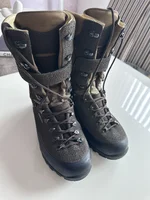
Keeping warm when hunting

The very worst conditions are wet and windy, between 1 and 5 degrees. Almost nothing works for long then.
Totally agree, and Scotland has about the most difficult and deadly winter conditions. When it’s well below freezing the air is very dry and any moisture quickly evaporates. But when its just above freezing and windy and wet you just get sodden with sweat from the inside as the air is saturated with moisture.

You very quickly loose body heat, especially with wind chill and you quickly die.

How many when winter stalking actually carry a bivvy bag / survival bag, especially if on your own. Doesn’t take much to slip, twist or break an ankle and not be able to get back to shelter. At least with a bivvy bag or deer carcass bag you have some means of keeping the worst of the weather at bay, and it makes it lot easier fir the mountain rescue to recover your remains if the worst happens.

Winter has arrived so keep safe and don’t become a statistic. And keep a good eye on the snow pack - even a small wet Scottish avalanche is able to outrun and then kill - they are mostly full of ice and rocks so have the same effect as a concrete mixer. If you don’t know about avalanches Ben More Lodge has some good online videos and courses.
 
Sat for nearly four hours Saturday in -4 with a team of guys on a cull day. Layered up with merino and down and was pretty much fine - just my toes got cold in the end.

What I found interesting was that half the team looked like me - basically like a barrel in their classic cut roomy stalking gear (2x merino base layers, Buffalo 6 shirt, body warmer, 900 down jacket with a smock thrown on top)

Meanwhile, the other half had real tight, almost figure hugging decent branded kit on.

No one complained of having being cold though, which surprised me as they looked like they were dressed for Autumn.

Brought me to the conclusion that some kit really is worth investing in.
 
Totally agree, and Scotland has about the most difficult and deadly winter conditions. When it’s well below freezing the air is very dry and any moisture quickly evaporates. But when its just above freezing and windy and wet you just get sodden with sweat from the inside as the air is saturated with moisture.

You very quickly loose body heat, especially with wind chill and you quickly die.

How many when winter stalking actually carry a bivvy bag / survival bag, especially if on your own. Doesn’t take much to slip, twist or break an ankle and not be able to get back to shelter. At least with a bivvy bag or deer carcass bag you have some means of keeping the worst of the weather at bay, and it makes it lot easier fir the mountain rescue to recover your remains if the worst happens.

Winter has arrived so keep safe and don’t become a statistic. And keep a good eye on the snow pack - even a small wet Scottish avalanche is able to outrun and then kill - they are mostly full of ice and rocks so have the same effect as a concrete mixer. If you don’t know about avalanches Ben More Lodge has some good online videos and courses.
I’ve had arguments with North Americans and Scandinavians about their hunting gear, which I reckon isn’t fit for purpose in Scotland. It’s all designed to be used well below freezing, so copes very poorly with continuous wet. I had a very lengthy back-and-forth with Norrona, who simply refused to admit that design features on their smocks (like water absorbing cuffs) were downright dangerous in Scotland.
 
Any thoughts on the Buffalo pile/pertex system @NigelM ?

I was out yesterday, not stalking but up a hill in Scotland, out all day in a Buffalo shirt worn next to the skin, no baselayer or shell carried. Perfectly comfortable and warm and dry by the time I'd driven home.
Got one too,i wear a thin t shirt or a vest top under it. Find it fine like that,amazing piece of kit actually.
 
I’ve had arguments with North Americans and Scandinavians about their hunting gear, which I reckon isn’t fit for purpose in Scotland. It’s all designed to be used well below freezing, so copes very poorly with continuous wet. I had a very lengthy back-and-forth with Norrona, who simply refused to admit that design features on their smocks (like water absorbing cuffs) were downright dangerous in Scotland.
Agreed. Probably why local stuff and Kiwi stuff works reasonably well given that we both have cold wet climates. I think in Scotland you basically have to assume that you will end up damp with sweat / rain, but then have a warm dry layer in a dry sack inside your pack.

Mind you there is a lot to be said for tweed and wool, At least it keeps you warm when you are wet but its heavy and you smell like a stinking old goat or spaniel.
 
ok
im a sweater ..even when fit as hell back in the day id sweat ....now if moving i layer.... remove outer ..small ruck sack and once stopped and cooling layer back up ...again fine if yer moving and bloods moving yer warm....but cold feet!!! jeezo!...stop for any length of time get cold feet....
decided i need quality socks ...merino mentioned but what good quality socks are out there ??

Paul
Silk liner sock then darn tough socks or woolpower
 
I’ve had arguments with North Americans and Scandinavians about their hunting gear, which I reckon isn’t fit for purpose in Scotland. It’s all designed to be used well below freezing, so copes very poorly with continuous wet. I had a very lengthy back-and-forth with Norrona, who simply refused to admit that design features on their smocks (like water absorbing cuffs) were downright dangerous in Scotland.
who in their right mind would design winter gear that absorbs water??
 
who in their right mind would design winter gear that absorbs water??
Well exactly!

It’s startlingly common. Norrona and Swazi both have cuffs that absorb water, so you can end up wet to the elbows. Norrona also have a weird internal pocket at that back that absorbs water, so you get a wet lower back.

Many Harkila jackets soak up enormous amounts of water in the outermost layers - I had a jacket that must have gained 3-4 kg of water after a wet outing, and took days to dry out.

My conclusion was that a lot of winter gear is either made with subzero in mind, so water isn’t the problem, or it’s made for light use (like standing at the peg or sitting in a hide). It’s rare to find things that seem to fully address the needs of active stalking for long periods in continuous wet.
 
Agreed. Probably why local stuff and Kiwi stuff works reasonably well given that we both have cold wet climates. I think in Scotland you basically have to assume that you will end up damp with sweat / rain, but then have a warm dry layer in a dry sack inside your pack.

Mind you there is a lot to be said for tweed and wool, At least it keeps you warm when you are wet but its heavy and you smell like a stinking old goat or spaniel.
Not all Kiwi stuff. Swazi is useless…
 
Well exactly!

It’s startlingly common. Norrona and Swazi both have cuffs that absorb water, so you can end up wet to the elbows. Norrona also have a weird internal pocket at that back that absorbs water, so you get a wet lower back.

Many Harkila jackets soak up enormous amounts of water in the outermost layers - I had a jacket that must have gained 3-4 kg of water after a wet outing, and took days to dry out.

My conclusion was that a lot of winter gear is either made with subzero in mind, so water isn’t the problem, or it’s made for light use (like standing at the peg or sitting in a hide). It’s rare to find things that seem to fully address the needs of active stalking for long periods in continuous wet.
British Army Poncho. Sheds the rain but allows your body to breath. Not warm but keeps the rain off. I can’t help feeling that the desire to have sleek fitted clothing and keeping rain out is incompatible.

For centuries mankind has used a blanket, cape, poncho, drizabone full kilt type garment that sheds water away from the body, leaving your clothing underneath dry, albeit a bit dampish.

Having a sleek fitted coat that just covers your backside just brings the water down straight onto your trousers which then get wet.
 
Last edited:
Adding to the highseat vs or with stalking scenario; I posed the question last year……

You can get properly hypothermic up a highseat ( as user of six ‘ladder type’ you get too hot walking in, and carry a rucksack full of additional layers is cumbersome and just a pain in the arse…..

I bought a shooterking electric gillet, I have a merino wool base layer- a ridge line thick cotton shirt, gillet and then top layer….. hat and gloves all good… up highseat I turn on the electric and it keeps my core warm…. Perfect solution without the bulk
 
Any thoughts on the Buffalo pile/pertex system @NigelM ?

I was out yesterday, not stalking but up a hill in Scotland, out all day in a Buffalo shirt worn next to the skin, no baselayer or shell carried. Perfectly comfortable and warm and dry by the time I'd driven home.
I like Buffalo gear, I've got the Special 6 top and Belay jacket. I've also used the salopettes in the past. I think it works well but I get a bit sweaty if its too warm.
 
Well exactly!

It’s startlingly common. Norrona and Swazi both have cuffs that absorb water, so you can end up wet to the elbows. Norrona also have a weird internal pocket at that back that absorbs water, so you get a wet lower back.

Many Harkila jackets soak up enormous amounts of water in the outermost layers - I had a jacket that must have gained 3-4 kg of water after a wet outing, and took days to dry out.

My conclusion was that a lot of winter gear is either made with subzero in mind, so water isn’t the problem, or it’s made for light use (like standing at the peg or sitting in a hide). It’s rare to find things that seem to fully address the needs of active stalking for long periods in continuous wet.
You hit the nail on the head. Scandi clothing is made for standing or sitting around in the forest. We don't have to crawl around on wet ground and we don't have very much barbed wire or prickly bushes like in the UK.
 
Chefs and Highland stalkers seem to have lost all heat and pain receptors in their hands…
Stick your hands up to the wrists in the water of a highland burn for about as long as the chappie was dookin’ in the video at #15 and your circulation will be usefully stimulated for the rest of the day, dry cold down to minus 10 to 12 isn’t anything to complain about, wet damp cold around -1 to plus 5 or 6 deg is where the real miserable cold is (maybe it’s a regional thing!).

2520CD5C-D217-41E9-B982-14A546C453A5.webp
…or you can make do with a couple of ‘pocket warmers’ in yer tweeds - that’ll stimulate the circulation too 😂 nae need for mountain rescue, I’m feeling fine, thanks!
 
Back
Top