
This is interesting to read after listening to the Hornady podcast recently with Mike Robinson where he stated the head or heart shot is the one they encourage for deerbox to avoid meat damage and he also said the exclusively use Hornady CX copper bullets. I wondered what the general opinion would be on.
You are using an out of date browser. It may not display this or other websites correctly.
You should upgrade or use an alternative browser.
You should upgrade or use an alternative browser.
Where to aim for neck shots
- Thread starter Mungo
- Start date


This is extremely useful. Thank you.Having read through the preceding posts I have to agree with @75 on this. I am not a fan of neck shots but do use them (high neck) on occasion where that is all that is offered. My reasoning is this. With a neck shot the aim is to disrupt spinal cord function by breaking bone. There are 7 Cervical vertebrae denoted by C1-7, 13 Thoracic vertebrae that have attached ribs denoted by T1-13 and 7 Lumbar vertebrae denoted L1-7.
If you are disrupting the spinal cord then a shot affecting C1-C3 will be fatal as the muscles of respiration will be paralysed and motor function will be lost to all limbs. This equates to the high neck shot. If the spinal cord segments between C4 and T2 are destroyed then there will be immediate tetraplegia (all four limbs will be incapable of movement) but the brain will be fully functional until coup de grace or blood supply to the brain is lost by more peripheral tissue damage. Bear in mind that severing one carotid artery will not cause death as the vascular supply to the brain has a circular layout (circle of Willis) that maintains blood supply in this situation. A severe spinal injury behind T3 will only cause paraplegia (hind limb paralysis). So the so called low neck shot is likely to result in delayed loss of consciousness. Others have already eluded to the eyes following you when you approach the paralysed deer. This surely cannot be considered acceptable from a welfare perspective if another shot was available!
The next important factor is the lack of clear aiming point with neck shots, particularly low neck shots. This can easily result in wounding and failure to recover the deer. The spinal column does not always lie in the middle of the neck and if a shot fails to hit the bone of the spine in the neck it should be regarded as a failed shot. You may get away with it and anchor the deer but be completely honest with yourself that you have failed your task of hitting the spine and reflect on what could have gone wrong.
My preference is to take a hilar shot as first choice and a head or high neck shot as a second choice. It is rare that I cannot get one of these two shots to work. Occasionally in woodland I may find the head and heart/lung area obscured and will then consider a neck shot as a last resort. If there is any movement after the shot (other than legs kicking)?then another round will be sent immediately, even if that means poor shot placement and a spoiled carcass. Anything with a residual blink on approach gets a second shot or is bled.

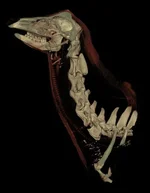

That image is fantastic and shows very clearly that the cervical spine is NOT in the middle of the neck. Many thanks for posting it !!

All the answers you need are here - Shot placement - Wild Deer Best Practice Guidance
IMO this is at least a must read or better still get or print a copy for future reference.
I’ll throw this into the pot, I’ve always tried to place the shot between the eye and the ear when broadside... old mentor who sold Venison at the farmers markets, had two mantras, “shoot for the table” and “meat is money” I can hear him now bless him


Willowbank.
Last edited:

Post #40One thing that hasn't been mentioned is neck shots often split the oesophagus.
That’s superb. Thanks!
Yes.One thing that hasn't been mentioned is neck shots often split the oesophagus.
I have taken the odd neck shot over the years. A very memorable one was a fallow doe. Front on, maybe 40 yards at most. 308 shooting 130gr Fox at a fairly punchy speed. Hit just under the chin. It sucked a fountain of gut contents out of the oesophagus - created a 10 foot green spray across the snow behind.

It has been mentioned further up the threadOne thing that hasn't been mentioned is neck shots often split the oesophagus.

Another quotation from a source I have shamefully forgotten, concerning a shot for the spinal cord:
'Trying to hit a hosepipe running up the sleeve of an overcoat, wrapped in a hearthrug.'
I mainly shoot Roe nowadays as I'm too knackered to be pulling Reds about mostly with head shots to preserve meat (which is why I shoot for my freezer) I do take neck shots high (preferred) and low but only neck shoot if looking straight at me or straight away. I mainly use Remington 95sst which I think gives a bit of margin for error because they frag and hit so well. If chest shooting I use a 75 because I have had jellied whole shoulders on the exit side after a broadside shot and that's when the bullet has missed the shoulder entirely. I hear a lot that is no such thing as overkill but to me throwing away a whole shoulder is verging on the criminal even on small deer. One caveat is that I must be about 100m and have bipod or very good rest with no drift of the crosshairs at all. longer ranges, shooting off the knees I will chest shoot or wait for another day.
Shot a buck the other day with head shot at about 80m the other day as that was all I could see of it when shot taken. I was glassing a mob of five when I noticed a buck keep licking a white patch on it's back, thought it had been rolled by a car, turned out it was pickled in mange. Would have taken the old Texas heart shot in that situation.
Shot a buck the other day with head shot at about 80m the other day as that was all I could see of it when shot taken. I was glassing a mob of five when I noticed a buck keep licking a white patch on it's back, thought it had been rolled by a car, turned out it was pickled in mange. Would have taken the old Texas heart shot in that situation.
And the chest shot has been likened to "trying to hit a grapefruit suspended in a barrel".Another quotation from a source I have shamefully forgotten, concerning a shot for the spinal cord:
'Trying to hit a hosepipe running up the sleeve of an overcoat, wrapped in a hearthrug.'
Both quotes highlight the big advantage of head shots, ie, you can see exactly what you're supposed to be aiming at. No guesswork involved.
That's more a heart-shot, rather than chest. My concept of 'chest' is a hole through the lungs, perhaps including the heart and/or great vessels as a bonus. A much bigger target.And the chest shot has been likened to "trying to hit a grapefruit suspended in a barrel".
This is perhaps a brain/high spine shot, I guess; rather than 'head'? I imagine the guesswork needed for this one relates to the mobility of the target-area relative to that of a chest - as well as its relatively small size?Both quotes highlight the big advantage of head shots, ie, you can see exactly what you're supposed to be aiming at. No guesswork involved.
Initially I was very nervous about taking head shots, largely due to the stigma against it that I've picked up on from this site. However since I started head shooting a significant proportion of my annual cull, I have found that the fear is much, much worse than the reality.This is a brain/high spine shot, I guess. I imagine the guesswork needed for this one relates to the mobility of the target-area relative to that of a chest - as well as its relatively small size?
The thing that really helps is that there is no "clutter" around the target area. No mass of neck or chest, causing you to have to estimate the precise place to try to place your shot. The target size is no different to that for a neck shot, I don't think, but at least you can see the target!
The eyes of the deer will always be in the same place relative to the point on the head that you want to hit, which is more than can be said for using the front leg (for example) as a guide to placing a chest shot. The leg could be forward or back, or the deer could be slightly quartering. So using that as a guide is an estimate at best. However, use the eyes as a guide to head shoot a deer looking straight at you and you know exactly where to aim, without any guesswork and without any distracting other parts of the deer's body in your sight picture.
If sub moa groups are the norm (as most shooters would have you believe) then there really is no challenge. But maybe they're not the norm? Maybe they're only the norm among the targets people post pictures of? The rest of the targets go in the bin.
If the targets people post on here are to be believed then I know that, compared to most, I am a very poor shot indeed!
Last edited:


Does your trophy deer eat any different to hinds/does/calves?I generally don’t favour head shots on deer mainly because the head is highly mobile, it makes for a messy kill, bulging eyes and distorted skull and it wrecks the trophy.
It does work well though and I use it for hinds and calves if that’s what’s offered.
Answer NO, just more reasons this "deer management" bolocks, is just playing at Jurassic Park
After all the heads/feet have been cut off they hang in the Game Dealers and go through the same process.

I have always held this viewpoint and have certainly never been involved in a stalk for trophy purposes....although recently I sold an prepped 11 pointer head for more than I got for the carcase at the dealers, so perhaps there is something to be gained from Dunwater's perspective.Does your trophy deer eat any different to hinds/does/calves?
Answer NO, just more reasons this "deer management" bolocks, is just playing at Jurassic Park
After all the heads/feet have been cut off they hang in the Game Dealers and go through the same process.
(ps neck shot, side on)
Last edited:

levigsp
Well-Known Member
And the " hilar shot" "gives you a clear aimimg point"? and "doesnt easily result in wounding" ? People take the broadside shot for one reason, it gives the largest margin for error, hit in exactly the right spot and its down and out, miss the right spot and the deer will still die, but not instantly.The next important factor is the lack of clear aiming point with neck shots, particularly low neck shots. This can easily result in wounding and failure to recover the deer.
Now hitting the right spot on the " hilar" as every bit as difficult as hitting the right spot on the neck.
That may be, however there is a reason why we have so many deer as they are left for a "couple more years" times that by a very large number and the couple more years equates to a lots more food.I have always held this viewpoint and have certainly never been involved in a stalk for trophy purposes....although recently I sold an prepped 11 pointer head for more than I got for the carcase at the dealers, so perhaps there is something to be gained from Dunwater's perspective.
(ps neck shot, side on)
A GM muntjac will eat just as many of your plants as a doe or one with a couple of stumps.

Similar threads

- Replies
- 3
- Views
- 470


