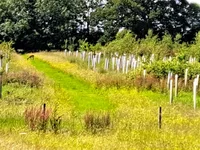
There is loads of natives Dunwater - dont you agree ?
No, a lot of the so called trees listed are shrubs, hawthorn, hazel and spindle to name a few, alder is a waste of space and a few are non viable nowadays because of disease or pests.
Examples, elm, larch, ash. All no longer viable and all were once valuable sources of timber that need replacing.
Spruce beetle is a matter of when, not if, it’s coming and when it does it’s going to have a huge impact.
We need to make thinking about viable alternatives that are both future climate and pest proof.
No doubt we’ll pick a few wrong ones out of the available options, but we need to try.
The thing with non natives - think of naturalised sycamore - just as an example - They cause so much shading so early in the season - things like oak and beech allow so many of the flowers to have their life cycles before they leaf
I’m not going to argue that all trees are suitable or desirable , but some definitely are, walnut and Spanish chestnut are worth a punt in my book.
They’re happy in a warmer climate, they produce both food and timber, the chestnut coppices well and is resistant to rot, the walnut provides high grade timber.
Even the sycamore is worth something, the timber is decent but very plain and it self seeds almost as well as birch does, which fits neatly into the new continuous cover forest management model.
An acre of live sycamore is better than an acre of of dead ash.
I have half a clue what im on about - had a count up the other day and i have planted over 45,000 trees and shrubs on our land these last 5 years - not a bad effort really - with a lot of help from our shoot
Well done, and long may both you and your trees prosper.
The list seems to me to be very restrictive, if we are truly planting for the future, we need to plant for what the future may bring, and that seems to be a warmer, wetter climate which may not suit our traditional cold weather natives.