Any plumbers/heating engineers? Quick question re replacing microbore

freid

Well-Known Member
We've just bought a new house, and I'm looking to replace the existing radiators which are very old, not that efficient in terms of size/heat, and not in the ideal locations.

Carpets are being replaced, so coming up shortly, and rewire happening in the next week or so, so perfect opportunity to deal the radiators.

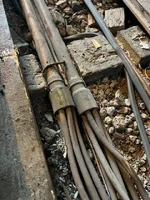
I've established that there is a short length (5m or so) of 22mm Flow and Return from the boiler, which is then reduced to 5x 8mm microbore at a manifold (pic below). The 8mm then runs to each of the rooms radiators.
IMG_8870.webp

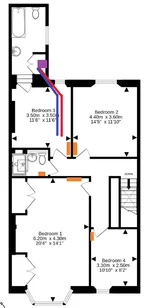
May as well take the chance to replace the microbore, but just wondering what the best thing to do at the manifold is? I've moved/ replaced lots of radiators in my last property, but it already had 22mm stepping down to 15mm tees at each radiator, rather than this sudden reduction from 22 to 8mm all in one location. I've put a wee plan below to show where the 22mm runs too, and where the existing radiators are. The 8mm basically just works it way into the landing before splitting off/returning to/from each room.
1728760745767.webp

Leaning towards using JG Speedfit as been v happy with it in the past.

Any advice welcome!
 
Spent 40 years with British Gas 30 of them as a heating installation fitter. I'm probably old school but would always use copper where possible and never smaller than 15mm. Had to use plastic in the end as told but never really liked it. And always flush all pipework well.
 
For a start, separate the flow and return pipes so that they’re not touching, the heat in the flow will just bridge across to the return rather than being sent to the radiators. Secondly, get all the pipework well insulated.

8mm is only capable of supplying small radiators and then only on very short runs. Typically you would only branch off with 8mm, or even 10mm, close to the main pipework, even then I cannot see the advantage of using such small bore.

I would echo Brighty’s comments and suggest that if you have the ability to use soldered copper, then go with that rather than plastic.
 
Thanks both. Happy to use copper piping where I can, just like the flexibility of plastic if required.

Do you think I should extend the 22mm and tee off 15mm at each radiator, rather than replacing all the 8mm with 15mm from where the manifold is currently?
 
Do you think I should extend the 22mm and tee off 15mm at each radiator, rather than replacing all the 8mm with 15mm from where the manifold is currently?
Yes, and run the 22mm as close to each rad as possible, should be fairly straight forward according to that floor plan. If you are OK with soldering then you are good to go. All the best with it :thumb:
 
I would put a radiator or towel rail in the bathroom, don't just rely on heat from the boiler heating the room.
 
Thanks all. I’ll run 22mm out to the centre of the landing, teeing off for each radiator in 15mm as I go.

Ciscokid- I missed that off the drawing, there is a small radiator in there too!
 
Make sure you flush out the whole system and add a good quality inhibitor when you re fill. Handy to fit an accessible drain cock on the lowest point just in case.
Mate is slowly building a big extension on his sons old cottage. He is using mix of copper and plastic. Plastic is handy for the fiddly bits threading through awkward positions.
D
 
As others have said run 22 as close to the rads as possible and then feed them all with 15 at least. With the rads if you are changing go as big as you can and have double panels. This will future proof you for when gas is no longer a thing and you need to switch to an air to water heat pump. Heat pumps are now running with much higher temps but you get the best efficiency with lower temps so future proofing your pipes and rads now isn’t a stupid thing. Also use the pre insulated push fit Pipework if you can it will make a difference.
 
The system you are thinking of is a two pipe reverse return, plenty of examples on that great God in the ether, Google.
Assuming that you have TRVs on every radiator then you need to have a bypass between flow and return to allow the boiler to circulate water to allow it to measure the system temperature and work properly. This could be a tee between the flow and return near the boiler with a valve incorporated that can be opened just enough to allow some circulation, or better still a towel rail with just manual radiator valves so that it never shuts off with room temperature.

Don’t forget to add a mag filter on the return somewhere between the last tee and the boiler.
 
Plastic is a good solution where it cannot be seen and copper where it can. One advantage of plastic is that it tends to be quieter as it’s not rigid and can flex instead of groan and bang like copper if it is constrained.
 
Back
Top