Interesting. That's a different scenario entirely to just guessing. You do have some load data to start with there for the 405gr cast bullets. I think the important part of any approach to this is that you need to start with a safe load and work up checking for signs of pressure. You might find GRT a useful piece of software to help you do this:
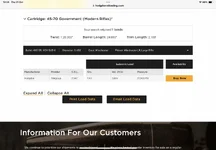
start [Gordons Reloading Tool Community] Although you can in theory use it to find a starting load to work up from, you have load data from the gmdr.com site to start from so I would plug that into GRT and see what it does for the lighter bullet weights, then start from what should be the lowest and theoretically safest load using Titegroup and go up from there whilst looking for signs of pressure. Once you are around the area you want to use and there are no pressure signs you can start looking for accuracy nodes. Lighter bullets will generate less pressure than heavy ones generally but bullet construction also plays a part so err on the side of caution. When you run the loads through GRT you need to pay attention to the pressure chart and make sure you work up from a start load that is well below the max allowable pressure for your cartridge and rifle. Please don't do any guessing, you need to work from known safe loads as closely as possible, this is why manufacturer's data or bullet maker's data are usually the start points for working up a load.
From the gmdr.com site you put up, it looks like you should be starting at 8gr of Titegroup, GRT also shows 8gr of HP-38 doing around 900fps with maximum pressure around 11000psi.
GRT shows 15gr of either Titegroup or HP-38 looking dangerously close to maximum pressure for the 45-70 with some standard settings and a 405gr cast bullet. I definitely wouldn't do that if I were you.