

You are using an out of date browser. It may not display this or other websites correctly.
You should upgrade or use an alternative browser.
You should upgrade or use an alternative browser.
Sarcocystis in Roe Doe
- Thread starter Thunderstick
- Start date

HonestJohn
Well-Known Member
Yes its all bagged up and will be disposed of.
Email has already been sent with images and samples taken and kept in alcohol just incase they later want to be tested.
Anyone else found this in deer before? As I said it's the first time I've seen it in anything other than duck.
Email has already been sent with images and samples taken and kept in alcohol just incase they later want to be tested.
Anyone else found this in deer before? As I said it's the first time I've seen it in anything other than duck.

Brad93
Well-Known Member
The deer has inadvertently eaten fecal matter from a fox or dog that was infected.Yes its all bagged up and will be disposed of.
Email has already been sent with images and samples taken and kept in alcohol just incase they later want to be tested.
Anyone else found this in deer before? As I said it's the first time I've seen it in anything other than duck.

I'd never heard of this but a quick Google search shows it reported in US deer of numerous types as well as in Sika (Japan), Red (Switzerland) and Fallow deer (Lithuania). Seeing no reports from the UK but this is potentially a worrying development for an already challenging UK venison market 
Edit: Just found this Scottish study:
@WW.
Edit: Just found this Scottish study:
In this paper, we analyse the results of surveys of parasites and non-specific signs of diseases carried out on organs from 638 red and 107 sika deer culled in four regions of Scotland between 1991 and 1997. Infections of the lung by Elaphostrongylus spp. were significantly greater in red than sika deer. Older animals were more heavily infected with Elaphostrongylus spp. and Sarcocystis spp., and infections with Sarcocystis spp. tended to be heavier in more recent years.
Given the age of these studies, I'm surprised its not in the DSC1 training material or the BDS' Field Guide!@WW.
Last edited:

Not seen it here in the UK, but a quick search with Google suggests it to be pretty common in roe in mainland Europe, with research studies on Sarcosystis in roe produced in Spain, Lithuania, Romania, etc.Yes its all bagged up and will be disposed of.
Email has already been sent with images and samples taken and kept in alcohol just incase they later want to be tested.
Anyone else found this in deer before? As I said it's the first time I've seen it in anything other than duck.
HonestJohn
Well-Known Member
Maybe synthetically engineered to wipe out the U.K. problem of deerI'd never heard of this but a quick Google search shows it reported in US deer of numerous types as well as in Sika (Japan), Red (Switzerland) and Fallow deer (Lithuania). Seeing no reports from the UK but this is potentially a worrying development for an already challenging UK venison market

Thanks for that - given the amount of material I'm now seeing in other searches I'm truly staggered that DSC1/BDS Field Guide doesn't make reference to this given its prevalence in Europe and elsewhere.
@Thunderstick is the picture diaphragm? If so I'd wonder if this could also be the cystic stages of Taenia cervi (similar to sheep measles for those who've seen it) although it looks more like sarcocystis images. I think it would be crunchy to eat, but not a big risk to humans

If you have any spare samples I'd be interested to take a look.Yes its all bagged up and will be disposed of.
Email has already been sent with images and samples taken and kept in alcohol just incase they later want to be tested.
Anyone else found this in deer before? As I said it's the first time I've seen it in anything other than duck.
If you have any spare samples I'd be interested to take a look.

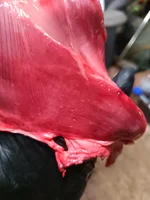
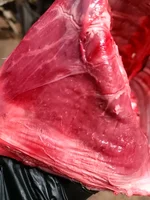
The pictures attached are of the flank where it is most obvious along with the loins but it is throughout the entire carcase.@Thunderstick is the picture diaphragm? If so I'd wonder if this could also be the cystic stages of Taenia cervi (similar to sheep measles for those who've seen it) although it looks more like sarcocystis images. I think it would be crunchy to eat, but not a big risk to humans
Certainly do. I'll pm you.If you have any spare samples I'd be interested to take a look.
The histology would be great, I await @WW. report with interest!The pictures attached are of the flank where it is most obvious along with the loins but it is throughout the entire carcase.
@ThunderstickCertainly do. I'll pm you.
Morning

Did you send any samples to @WW. please?
Very interested in this issue...............
I know right ???Thanks for that - given the amount of material I'm now seeing in other searches I'm truly staggered that DSC1/BDS Field Guide doesn't make reference to this given its prevalence in Europe and elsewhere.
Similar threads

- Replies
- 25
- Views
- 2K
- Replies
- 28
- Views
- 2K


- Replies
- 3
- Views
- 887
