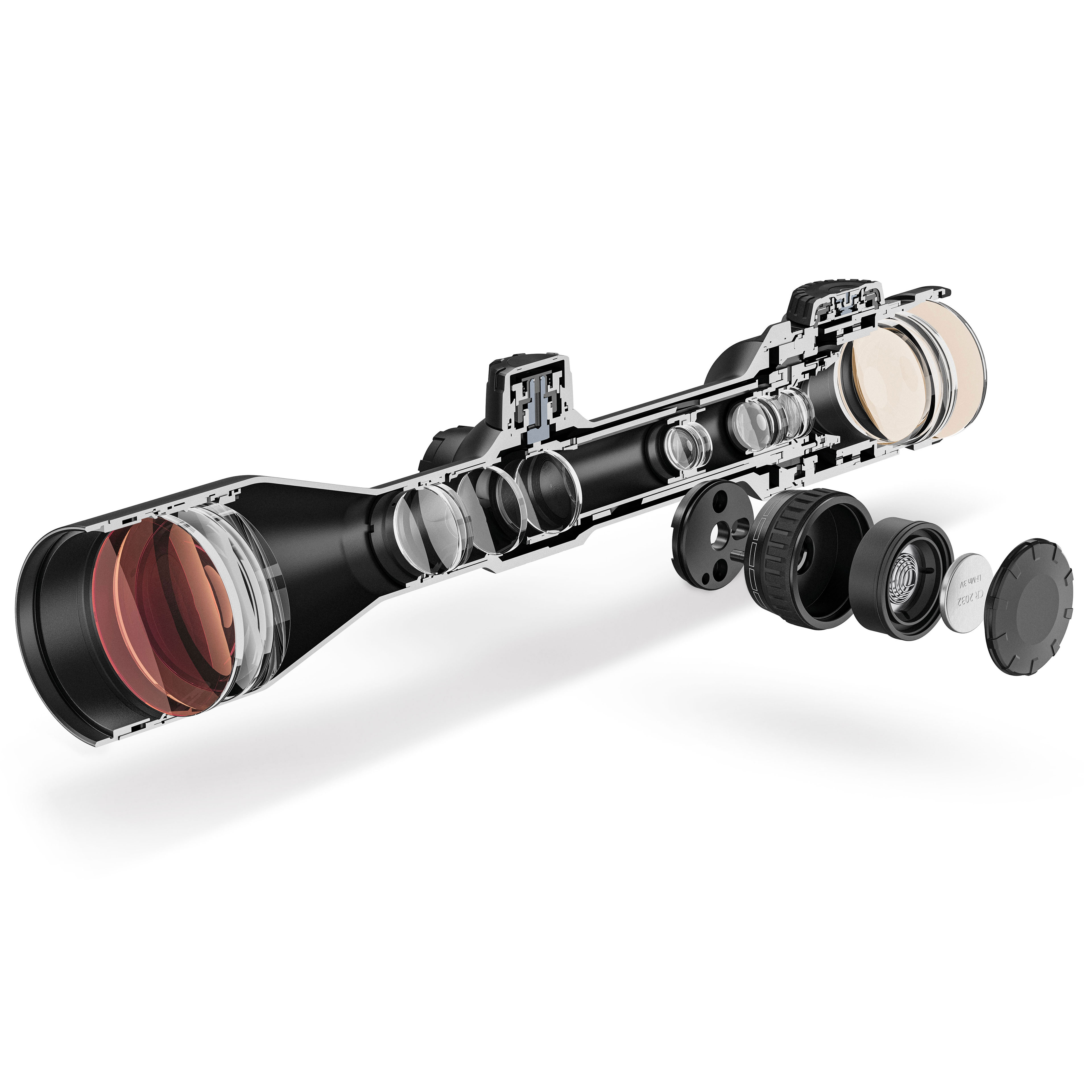
We have explained in the video and in the blog post how the testing was done. 10 members of our team tested the scopes in low light conditions and we evaluated image brightness, details, and illumination system. We did comparison tests of two scopes at once, each one tested against every other. Scopes were covered so that no one know which is which (we used team members from all departments so that only the sales department members could possibly recognize the scopes by their reticles). We tested more or less all the scopes available on the market at the moment and processed all the results.
In each price class, we pointed out the best performers. It is however true that we did not point out the worst-performing scopes since there is no point in bashing some scopes.
We intentionally did not do light transmission rate measurements across the visible spectrum, since we noticed that some scopes had noticeable brighter images due to internal reflections not being sorted well and very bad contrast at the same time. Such scopes would have great light transmission rate results but bad real-world usability at the same time. For this reason, we decided to use 10 humans to perform our real-world tests. To illustrate our intention to produce usable results, we pointed out Meopta and Blaser as top performers in their respective classes and we are not even a distributor of any of these two brands (we are sourcing them indirectly and under not-so-great conditions).
Our intention was to produce a usable video for anyone searching for a low-light hunting rifle scope. We do strongly believe in the results that we got during our tests. I also still hope that you did get at least some useful information from watching our video.


 www.thestalkingdirectory.co.uk