Advice on suitable shotgun cartidges for an old midlands hammer gun

Check the gun thoroughly for any shakes and rattles. Consider having a competent gunsmith who understands old guns have a good look at it and give it a good service. Chances are if it has been sat for a while the internal oil lubrication will have solidified. Inherited guns have often been sat unused for a good while.

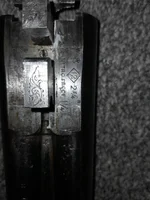
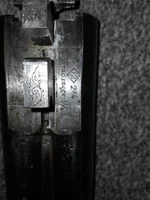
Have a good look at the proof marks. If the chambers were lengthened it will have been reproofed ( you will see two sets of proof marks).

2 3/4” gives you plenty of options. I would stick with a 24, 28 or 30gram load. Most of the major brands have plenty of options and if the gun is in good condition any should be fine.

There will also be plenty of standard steel options available to you. Check no more than 1/2 choke - some old guns were tightly choked, especially in the cheaper more robust game keeper / wild fowling type type guns - full choke used on foxes and sitting targets at greater range or on wildfowl.

The gun could well have been built with 2 3/4” chambers. These date back to the Edwardian era, abd were typically a heavier built gun firing 1 1/8 to 1 1/4 oz of shot for use on live pigeon or wildfowl. Chances are the proof marks will tell you max load.
 
Hammer guns are different to use to hammerless guns. Firstly most don’t have a safety as we are all used to. This gives a view that they are “unsafe”. This is very far from the truth. Indeed when “hammerless” guns were first introduced they were viewed with great suspicion.

A hammer gun has two positions, half cocked and full cock. A more refined rebounding lock will rebound to half cocked after firing. An older or less refined gun will need the hammers pulling back to half cock to open the gun.

The half cock is the safe position. The half cock sear should be cut so that you can’t pull the trigger and the hammer can’t fall.

As you mount the gun your trigger hand should cock one or both hammers. It takes practice, some use the thumb, others use the flat of the hand. In a gun that is in good order if the hammer slips as its partially cocked, the half cock sear should catch it, thus preventing the gun from firing.

Some like to cock both barrels as they mount, others will cock just the one and fire, then drop the butt, cock the other and fire. The latter takes a bit of practice, but dropping the butt and starting the 2nd shot from scratch probably makes you hit the target properly. With a normal double its far to easy just to rattle off two shots in quick succession both missing the bird.

Before you use the gun, take half a dozen cheap cartridges. Cut the crimp off and empty out the shot, wads and powder. You now have half a dozen blanks

Now use these to test and learn the firing mechanism. Load the blanks. On half cock try and pull the triggers, slap the butt, tap the butt etc. You will get a bang if anything slips.

Then try the hammers to full cock, and let them slip before they are fully cocked. They should be caught by half cock sears. If not - bang

Then finally put hammers on full cock and do the slap / bounce test again. They should not slip and the gun should not go off.

Practice putting the gun back on half cock. Pull back hammer with thumb, pull trigger, let them slip before hammer fall a touch abd release trigger. It should be caught on the half cock.

Then once you are familiar and you know gun is in good order try a cartridge in just one barrel, with a blank in the other. When you fire, the recoil should not also set off the other barrel.

If you do get a bang from a blank in any of the above tests, its either operator error, or there is something broken or gummed up inside. In the former, practice, in the case of the latter - grt it looked at by a good gunsmith.
 
I never had a problem with paper cases and if the local gun shop stocked them I'd use them rather horrid smelling plastic. Older shooters may remember the wonderful aroma of burnt paper case, combined with the old recipe Young's 303 and wet spaniel!
I heard of this unique smell from a paper case, im going to have to source some just to experience it!
 
Hammer guns are different to use to hammerless guns. Firstly most don’t have a safety as we are all used to. This gives a view that they are “unsafe”. This is very far from the truth. Indeed when “hammerless” guns were first introduced they were viewed with great suspicion.

A hammer gun has two positions, half cocked and full cock. A more refined rebounding lock will rebound to half cocked after firing. An older or less refined gun will need the hammers pulling back to half cock to open the gun.

The half cock is the safe position. The half cock sear should be cut so that you can’t pull the trigger and the hammer can’t fall.

As you mount the gun your trigger hand should cock one or both hammers. It takes practice, some use the thumb, others use the flat of the hand. In a gun that is in good order if the hammer slips as its partially cocked, the half cock sear should catch it, thus preventing the gun from firing.

Some like to cock both barrels as they mount, others will cock just the one and fire, then drop the butt, cock the other and fire. The latter takes a bit of practice, but dropping the butt and starting the 2nd shot from scratch probably makes you hit the target properly. With a normal double its far to easy just to rattle off two shots in quick succession both missing the bird.

Before you use the gun, take half a dozen cheap cartridges. Cut the crimp off and empty out the shot, wads and powder. You now have half a dozen blanks

Now use these to test and learn the firing mechanism. Load the blanks. On half cock try and pull the triggers, slap the butt, tap the butt etc. You will get a bang if anything slips.

Then try the hammers to full cock, and let them slip before they are fully cocked. They should be caught by half cock sears. If not - bang

Then finally put hammers on full cock and do the slap / bounce test again. They should not slip and the gun should not go off.

Practice putting the gun back on half cock. Pull back hammer with thumb, pull trigger, let them slip before hammer fall a touch abd release trigger. It should be caught on the half cock.

Then once you are familiar and you know gun is in good order try a cartridge in just one barrel, with a blank in the other. When you fire, the recoil should not also set off the other barrel.

If you do get a bang from a blank in any of the above tests, its either operator error, or there is something broken or gummed up inside. In the former, practice, in the case of the latter - grt it looked at by a good gunsmith.
Detailed post thank you, I have shot this gun a good few times in the past, there is no half cock on it it's all or nothing but I can see how having a half cock would be a good thing.
 
If it has come from a reputable source the validity of the proof and chamber length will have been checked. Indeed the gun may bear stamps noting "1 1/4 ounce shot"? Or in a diamond a 12 over a letter C. That C being what to see with the 12. For there were hammer game guns and hammer "duck" guns and hammer guns made (by such as Midland Gun) for export to markets where 2 3/4" cartridges were the local normal fodder.

That said just because you can doesn't mean you should. But in today's market many 70mm length cartridges will carry as payload bit 28 grams (1 ounce) or even 24 grams of shot. Simply scale of manufacture means that it is cheaper for a factory to keep a machine set up for 70mm cases and need to vary only shot load dropped, powder load dropped, and wad length used and not need to readjust final the final crimping and shaping dies.

I'd personally think that you Midland Gun needs to be weighed. If it weighs 7 lbs 4 ozs plus in "old money" I think it was likely a hammer "duck" gun from when made. Especially if a careful inspection shows now other proof marks denoting 2 1/2" cases or a 12 (on its own) in a diamond.

MY ADVICE - GET THE CRACK EXAMINED THOROUGHLY AND IF NEED REPAIRED BEFORE USING ANY CARTRIDGE OF ANY LENGTH IN THE GUN AS IN A WORST CASE EVEN A LIGHT LOADED 2 1/2" CARTRIDGE WILL BE ENOUGH TO MAKE SOME APPARENT SLIGHT CRACKS OPEN FURTHER OR COME ASUNDER.


So much new information there for me thank you, here is a picture of the proof marks it does have a 12 and c with a diamond around it im still not sure what that means.

It also has 1 1/4 so im assing from your post that's the max load it was proofed for? I will weigh it later to see what it weighs.
 

Attachments

  • 20250915_194859.webp
    20250915_194859.webp
    148.1 KB · Views: 4
guns generally get rebarrelled beyond the chamber so that shouldn't change. Even so a compentent gunsmith can measure the chamber length. You can get a good idea by feeling with a finger or posting used shotgun cartridges down. There will be a max proofed load in ounces e.g. 1 and 1/8 oz = 31.9 grams.

you need to watch out because crimped cartridges expand to be longer than original rolled cartridges. But it doesn't sound like you will be anything near the maximum. free to post a picture of the proof marks.
Thank you, here's a photo of the proof marks.
 

Attachments

  • 20250915_194859.webp
    20250915_194859.webp
    148.1 KB · Views: 5
Check the gun thoroughly for any shakes and rattles. Consider having a competent gunsmith who understands old guns have a good look at it and give it a good service. Chances are if it has been sat for a while the internal oil lubrication will have solidified. Inherited guns have often been sat unused for a good while.

Have a good look at the proof marks. If the chambers were lengthened it will have been reproofed ( you will see two sets of proof marks).

2 3/4” gives you plenty of options. I would stick with a 24, 28 or 30gram load. Most of the major brands have plenty of options and if the gun is in good condition any should be fine.

There will also be plenty of standard steel options available to you. Check no more than 1/2 choke - some old guns were tightly choked, especially in the cheaper more robust game keeper / wild fowling type type guns - full choke used on foxes and sitting targets at greater range or on wildfowl.

The gun could well have been built with 2 3/4” chambers. These date back to the Edwardian era, abd were typically a heavier built gun firing 1 1/8 to 1 1/4 oz of shot for use on live pigeon or wildfowl. Chances are the proof marks will tell you max load.

No rattles or loose bits its a good tight gun, I dont actually know what choke is on it im curious now as to what they are, one barrel is definitely tighter than the other. I din't even think of using steel with this gun!

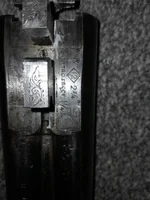
There is 1 1/4 Stamped on the barrell so im assuming that is the max proofed load.
 

Attachments

  • 20250915_194859.webp
    20250915_194859.webp
    148.1 KB · Views: 2
So according to AI 1 1/4 Oz is 35.44 grams


Makes me feel SLIGHTLY better about one time I fired a 36g load through it....
 
Hello, There is quite a few branded 65mm game cartridges around £400 per 1000, Comp X or Eley select would be a good substitute and cheaper around £300 1000,
 
I use a P Webley hammer gun most of the time & I use Eley Classic Game 5's & 6's. Paper cases & kills very well. Patterns tend to tighten up a little with this cartridge.
 
correct, so 1 1/4 oz= c.36 grams and 2 3/4 inches is 70mm. But again be cautious about modern crimps which expand differently from rolled cartridges. Nitro proof basically means its not just for black powder.

Thats pretty decent. A few of my SGs are stamped with 1 1/8 and 2 1/2. I appreciate you don't mean to go near the max and UK proofing is a bit weird, but the old makers knew there stuff and everything was done for a reason, so hopefully you will have more metal around the chamber and action to absorb higher pressures.
 
The 1 1/4 is the "maximum service load" for the gun. So, yes, commented by the OP that is 1 1/4 ounces. The 12 C means that this a 12 bore gun with a long (as in longer than 2 1/2") chamber and the 2 3/4 tells us that this long chamber is for cartridges a maximum length of 2 3/4 inches or 70mm. So in the absence of any other partly erased markings my opinion is that this gun was made as original as a gun with 2 3/4" chambers.

The cartridge length is the length of the case of the cartridge when fired. That is when any crimp be that a six or eight petal or a roll crimp has opened fully out. So in the box and unfired your cartridges will be much shorter than when fired and opened out. But when fired and the open out they will be that 65mm, 67.5mm or 70mm length that nowadays all modern loaded ammunition must have indicated. Printed on both the box and printed on the cartridges.

To not confuse (but to be aware of) is that the OP's gun is for standard 2 3/4" cartridges and does not bear the additional stamp MAGNUM. The now near obsolete and seldom seen 2 3/4" Magnum was a cartridge with 1 1/2 ounces of shot that was designed for old school 3" chambered English guns firing 1 1/2 ounces of shot which could not be safely used with the newly arrived 3" Magnum 12 bore cartridge of American type that fired 1 5/8 ounces of shot.
 
The 1 1/4 is the "maximum service load" for the gun. So, yes, commented by the OP that is 1 1/4 ounces. The 12 C means that this a 12 bore gun with a long (as in longer than 2 1/2") chamber and the 2 3/4 tells us that this long chamber is for cartridges a maximum length of 2 3/4 inches or 70mm. So in the absence of any other partly erased markings my opinion is that this gun was made as original as a gun with 2 3/4" chambers.

The cartridge length is the length of the case of the cartridge when fired. That is when any crimp be that a six or eight petal or a roll crimp has opened fully out. So in the box and unfired your cartridges will be much shorter than when fired and opened out. But when fired and the open out they will be that 65mm, 67.5mm or 70mm length that nowadays all modern loaded ammunition must have indicated. Printed on both the box and printed on the cartridges.

To not confuse (but to be aware of) is that the OP's gun is for standard 2 3/4" cartridges and does not bear the additional stamp MAGNUM. The now near obsolete and seldom seen 2 3/4" Magnum was a cartridge with 1 1/2 ounces of shot that was designed for old school 3" chambered English guns firing 1 1/2 ounces of shot which could not be safely used with the newly arrived 3" Magnum 12 bore cartridge of American type that fired 1 5/8 ounces of shot.
Thank you! You obviously know a thing or two about these old guns, and I have learnt a lot from you and others in this thread about this gun and cartidges that I dint know before.

I'm going to be a pain here and pick your brains once more if you dont mind 😄 in this photo on both of the chambers it is stamped 13 then a line then a 1 like a fraction would appear if that makes sense?? Do you know what that means?
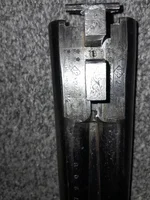
Also I can on the left barrel it is stamped choke but on the right barrel there is no such stamp i can see, im assuming the right barrel (front trigger) isn't choked but the left barrel (rear trigger) Is choked?
 

Attachments

  • 20250915_194917.webp
    20250915_194917.webp
    255.1 KB · Views: 2
Thank you! You obviously know a thing or two about these old guns, and I have learnt a lot from you and others in this thread about this gun and cartidges that I dint know before.

I'm going to be a pain here and pick your brains once more if you dont mind 😄 in this photo on both of the chambers it is stamped 13 then a line then a 1 like a fraction would appear if that makes sense?? Do you know what that means?

Also I can on the left barrel it is stamped choke but on the right barrel there is no such stamp i can see, im assuming the right barrel (front trigger) isn't choked but the left barrel (rear trigger) Is choked?
The 13/1 is the internal diameter of the bore at nine inches from the breech. It's a system I don't know the reasoning behind but other markings that were used in that scheme would be 12, 12/1 and 13. From a later time this was supplanted by a system expressed as decimal fractions of an inch such as .719, .729 and so on. With modern CIP this is now expressed as decimal fractions in millimetres such as 18.4mm or 18.5mm.

It is how much the gun many years later has enlarged from that original measurement that determines (in the British system) if the gun is "in proof" or not. If the internal diameter was more then ten thousandths of an inch greater than the diameter shown by the original stamp the gun was "out of proof". So a buyer could, if they measured the gun, AND HAD THE TOOL OR TOOL NEEDED, have a good idea if it had been lapped out to remove what would otherwise be obvious pitting.

In France and I think Spain the barrels would not only have the bore dimension stamped on them but they'd also be weighed. So a buyer by weighing them (a lot easier to do as you only needed a set of scales) could tell if metal had been lapped out or, I suppose, removed from barrels pitted on the outside by what was called "striking off" as the barrels would weigh less that when that weight marking was applied to them.
 
Also I can on the left barrel it is stamped choke but on the right barrel there is no such stamp i can see, im assuming the right barrel (front trigger) isn't choked but the left barrel (rear trigger) Is choked?
Yes. But of course it doesn't say by how much! On Spanish guns to show how much choke they used stars like asterisks. On FN made Belgian guns stars like asterisks and dashes like hyphens to show how much choke.
 
I also have a Midland double 12 hammer.
Used it once on a pigeon day, very light but I knew I'd shot it the next morning.
On recollection I used 2 3/4 gram nitro.
It's now a cabinet queen with others.
 
Detailed post thank you, I have shot this gun a good few times in the past, there is no half cock on it it's all or nothing but I can see how having a half cock would be a good thing.
Does it rebound after firing so the firing pins are withdrawn from the cases and you can open the gun? If it does that is effectively your half cock, although the hammers are not very far back.

I would get a good smith to look at it as I suspect it should have some form of position where the hammers are held, the chambers are loaded but pins are off the cartridges. I suspect an intercepting sear is probably just gummed with old oil turned to varnish. But I may be wrong.
 
The 13/1 is the internal diameter of the bore at nine inches from the breech. It's a system I don't know the reasoning behind but other markings that were used in that scheme would be 12, 12/1 and 13. From a later time this was supplanted by a system expressed as decimal fractions of an inch such as .719, .729 and so on. With modern CIP this is now expressed as decimal fractions in millimetres such as 18.4mm or 18.5mm.

It is how much the gun many years later has enlarged from that original measurement that determines (in the British system) if the gun is "in proof" or not. If the internal diameter was more then ten thousandths of an inch greater than the diameter shown by the original stamp the gun was "out of proof". So a buyer could, if they measured the gun, AND HAD THE TOOL OR TOOL NEEDED, have a good idea if it had been lapped out to remove what would otherwise be obvious pitting.

In France and I think Spain the barrels would not only have the bore dimension stamped on them but they'd also be weighed. So a buyer by weighing them (a lot easier to do as you only needed a set of scales) could tell if metal had been lapped out or, I suppose, removed from barrels pitted on the outside by what was called "striking off" as the barrels would weigh less that when that weight marking was applied to them.
Brilliant thank you! It's amazing how much i have learned just from these few post!
 
I also have a Midland double 12 hammer.
Used it once on a pigeon day, very light but I knew I'd shot it the next morning.
On recollection I used 2 3/4 gram nitro.
It's now a cabinet queen with others.
Yea they are kicky, I fired 5 shots yesterday with mine it feels like a fired 50!
 
Back
Top