Small hole drilled. Power in, ethernet out (keeps my NAS more secure). Several watts dissipated)
Just warming up your cabinet maybe even makes it worse, turning it into a steamy box. Without either ventilation, (unlikely) or dehumidification, the moisture is going nowhere. Increase the temperature a little = lower relative humidity, but higher absolute humidity. At the end of the day, if you put things into a sealed cabinet, never mind if they are a bit damp too, it seems to me that moisture has nowhere to go. Unless it is actively removed. Either by ventilation (tricky to arrange this in a gun cabinet), or by some other method.
Turn off the heater (power cut, going away, etc) and now you have a cabinet filled with fuggy warm air, cooling down. Guess what is then going to happen, that water vapour is going to condense out onto something. This will happen every day and night as the temperature cycles over the rhythm of the day.
It gets worse:
Go out with a gun, it's chilly outside. No problem. Now return with cold gun, thinking that the right thing to do is to put it straight into your nice warm sealed cabinet. Actually not, possibly the worst thing you could do.
Cold material, warm moist air (OK the "relative" humidity may read low, but the warmer the air the higher the absolute level of moisture that it can hold).
Result: possible condensation. Just as say your glasses steam up when you've been outside in cold weather then return indoors.
Not what you are supposed to do, but maybe warm up your gun on top of a radiator before it goes back into the box.
Or if you are e.g. keen on photography, and like to use your equipment outdoors in cold weather, you may soon learn that the absolute worst thing that you can do is to then bring it into a warm area. Seal it inside a plastic bag, anything really, then let it slowly come up to temperature before opening it.
The coldest air is the driest air. As in say freeze-dried peas. If anything perhaps we should be looking into refrigerating our cabinets (this is not a serious suggestion).
Either put in some active dehumidification, as simple as a big bag of silica gel, regularly rotated, or a small dehumidifier. Or cabinet manufacturers should take note, and come up with a secure way of maintaining the atmosphere inside the cabinet at a safe humidity level, whilst consuming the minimum of power.
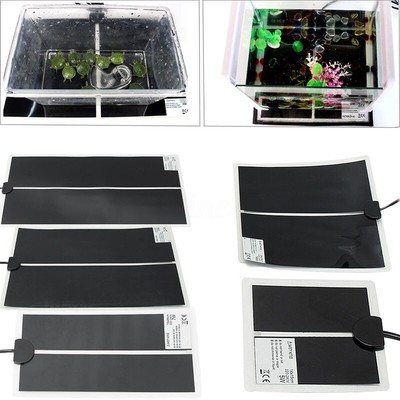
My opinion is that simply putting in a heater, be it something designed for keeping reptiles warm, or germinating plants, or just say a plain lightbulb (much more useful I think), is not addressing the root of the problem, and potentially making it worse. Which is that a decent gun cabinet is pretty much a sealed box. Unless you have some mitigation in place, the humidity inside will basically build up to 100%. Opening the door regularly and wafting in drier outside air is one mitigation. By which I do not mean moist warm centrally heated stuff, but, you know, opening a window and airing the room (and cabinet) with say a fan heater set on cold. Maybe turn on the heater for a few minutes at the end of the process.
Using a desiccant or dehumidifier is another.
Designing a secure gun cabinet with natural ventilation even better, but I've never seen such a thing. A well designed gun room or armoury can be superb, but how many of us can do that ?